Before the facade, there was groundก่อนจะมี Facade ที่ดินมีน้ำหนักของมันอยู่ก่อนแล้ว
A design presentation can make a site look obedient.
There is a boundary line. A north arrow. A road. A building footprint that sits exactly where the drawing asks it to sit.
A site photograph is less cooperative.
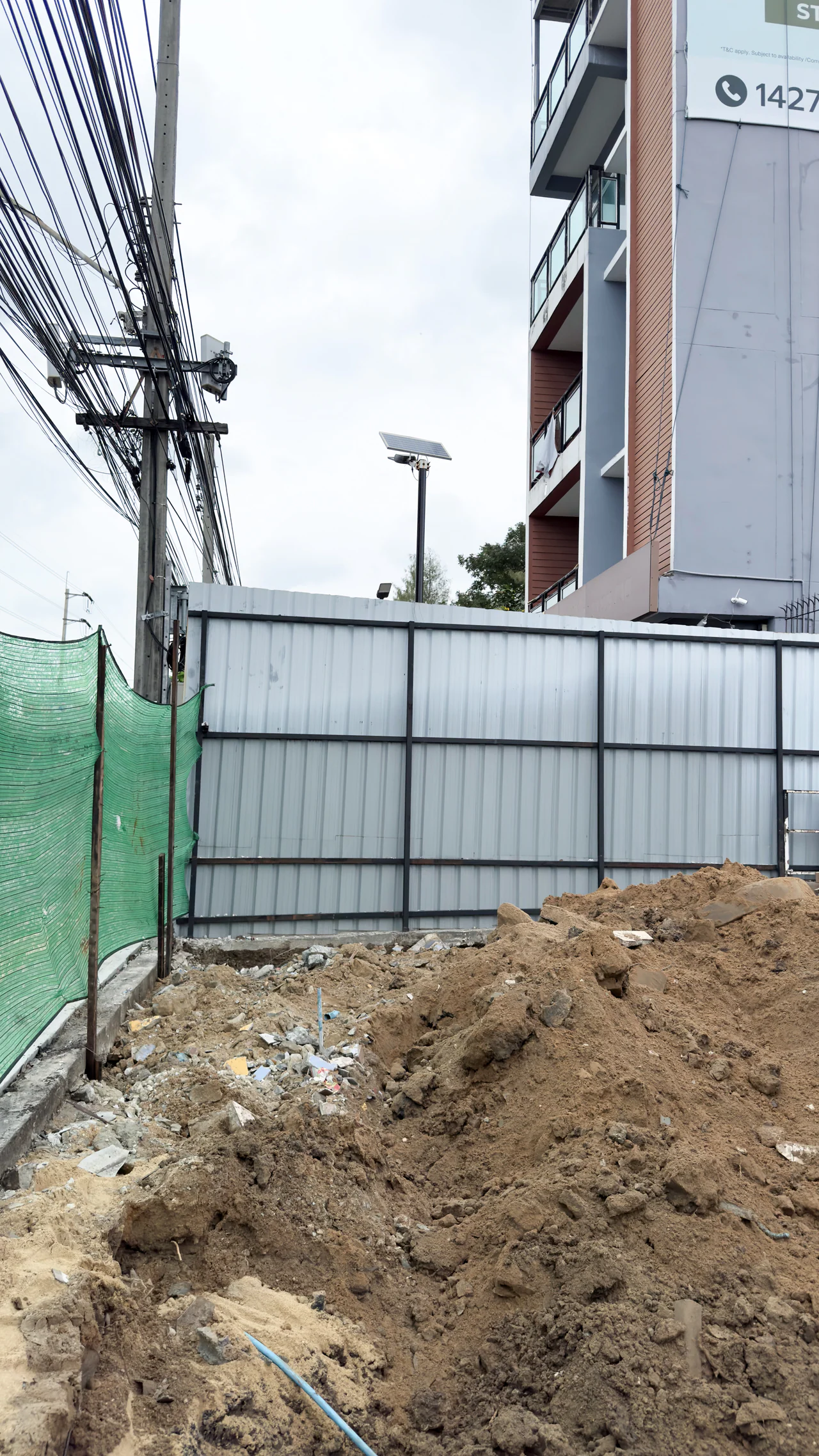
In the demolition-stage images of SUKHUMVIT 105, the ground is uneven. Broken material occupies the foreground. An excavator sits among debris. Temporary fences hold an edge that is not yet architectural. Utility lines, neighbouring buildings and the road remain completely indifferent to the clean geometry of the next drawing.
These are not beautiful interruptions to hide before showing the project.
They are part of the project.
Presentation ทำให้ Site ดูเชื่อฟังได้ง่าย
มีเส้นเขต มีลูกศรทิศเหนือ มีถนน และมี Footprint อาคารที่วางตัวอยู่ในตำแหน่งที่แบบต้องการอย่างเรียบร้อย
แต่ภาพหน้างานไม่ได้เชื่อฟังเราขนาดนั้น
ในภาพช่วงรื้อถอนของ SUKHUMVIT 105 พื้นดินไม่เรียบ เศษวัสดุอยู่เต็มระยะหน้า รถขุดจอดอยู่ท่ามกลางซาก แนวรั้วชั่วคราวกำหนดขอบเขตที่ยังไม่ใช่ Architecture ขณะที่สายไฟ อาคารข้างเคียง และถนนยังคงอยู่โดยไม่สนใจว่าแบบชุดถัดไปจะวาดให้สะอาดแค่ไหน
สิ่งเหล่านี้ไม่ใช่ฉากที่ไม่น่าดูซึ่งต้องรีบซ่อนก่อนเปิดภาพโครงการ
มันเป็นส่วนหนึ่งของโครงการ
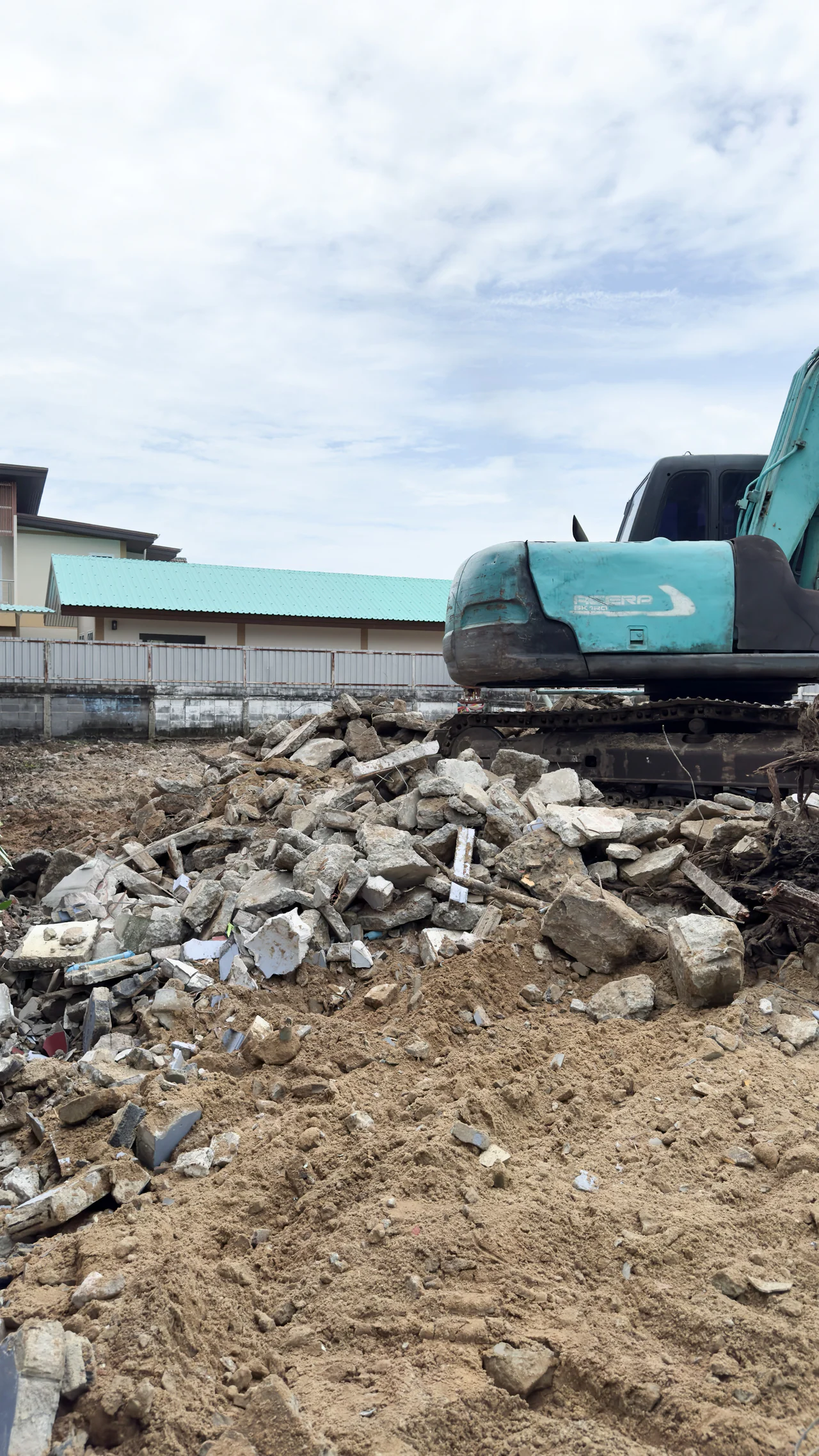
The plot had previously contained a house. The photographs confirm a change in physical condition the earlier structure had been removed and demolition activity was present. They do not, by themselves, explain every reason for that decision. A photograph cannot tell us the full structural condition of what was there, the commercial arguments, or whether another strategy would have been preferable.
That limit is useful.
It forces a distinction between what the camera records and what the designer still has to investigate.
ที่ดินผืนนี้เคยมีบ้านอยู่ ภาพถ่ายช่วยยืนยันการเปลี่ยนแปลงทางกายภาพได้ว่าอาคารเดิมถูกนำออกและมีการรื้อถอนเกิดขึ้น แต่ภาพเพียงอย่างเดียวไม่ได้อธิบายเหตุผลทั้งหมดของการตัดสินใจนั้น
กล้องไม่ได้บอกเราครบว่าอาคารเดิมมีสภาพโครงสร้างอย่างไร เงื่อนไขทางธุรกิจคืออะไร หรือมีทางเลือกอื่นที่เหมาะสมกว่าหรือไม่
ข้อจำกัดนี้กลับมีประโยชน์
เพราะมันบังคับให้เราแยกสิ่งที่กล้องบันทึกได้ ออกจากสิ่งที่นักออกแบบยังต้องตรวจ
Once the building is gone, another temptation appears to call the land “empty.”
It is not.
The edge beside the neighbouring building is still an edge. The road is still where it is. The overhead lines remain. Soil, existing levels, drainage, access, turning movement, temporary construction boundaries and the relationship to adjacent properties do not disappear because the old walls have disappeared.
A cleared site may have fewer objects.
It does not have fewer consequences.
เมื่ออาคารหายไป มีสิ่งล่อใจอีกอย่างหนึ่งคือการเรียกที่ดินว่า “ว่าง”
แต่มันไม่ได้ว่าง
ขอบที่ติดอาคารข้างเคียงยังเป็นขอบ ถนนยังอยู่ที่เดิม สายไฟยังพาดอยู่ ระดับดิน การระบายน้ำ ทางเข้า วงเลี้ยว แนวกั้นชั่วคราวระหว่างก่อสร้าง และความสัมพันธ์กับทรัพย์สินข้างเคียงไม่ได้หายไปพร้อมผนังของบ้านเดิม
Site ที่ถูกเคลียร์อาจมีของน้อยลง
แต่ไม่ได้มีผลตามมาน้อยลง
This is where site photography becomes useful to me beyond documentation.
A drawing tends to tell us what we intend to put there.
A site photograph is good at reminding us what refuses to leave.
The two forms of evidence should not compete. They should correct each other.
The rendering can test how a pale rounded volume might meet the street. The site photograph can return the conversation to the actual width of the approach, the neighbouring mass, the utility lines, the surface at the boundary and the construction conditions that will eventually have to be coordinated.
This is also why I do not want the site images placed on the Projects page as if they were another chapter of the same visual sequence. Their job is different. The Projects page should explain the design proposal. The Journal can hold the less polished evidence that asks whether the proposal is capable of meeting reality.
ตรงนี้เองที่ภาพหน้างานมีประโยชน์กับผมมากกว่าการเป็นเพียง Documentation
แบบมักบอกเราว่าเราตั้งใจจะใส่อะไรลงไป
ภาพหน้างานเก่งในการเตือนว่าอะไรไม่ยอมออกไป
หลักฐานสองแบบนี้ไม่ควรแข่งกัน แต่ควรใช้ตรวจซึ่งกันและกัน
Perspective ช่วยทดลองว่ามวลสีอ่อนที่มีมุมโค้งจะพบกับถนนอย่างไร ส่วนภาพหน้างานพาเรากลับมาดูความกว้างของการเข้าถึง อาคารข้างเคียง สายสาธารณูปโภค ผิวและระดับตรงเขตที่ดิน รวมถึงสภาพก่อสร้างที่ท้ายที่สุดต้องถูกประสานให้ได้
นี่เป็นเหตุผลที่ผมไม่อยากนำภาพ SI ไปวางในหน้า Projects ราวกับมันเป็นอีกตอนหนึ่งของ Visual Sequence เดียวกัน เพราะหน้าที่ของภาพไม่เหมือนกัน
Projects ควรอธิบายข้อเสนอการออกแบบ
Journal สามารถเก็บหลักฐานที่ไม่เรียบร้อยเท่า แต่ถามกลับว่าข้อเสนอนั้นพร้อมจะพบกับความจริงหรือยัง
A clean image is valuable because it lets an idea become visible.
A rough site image is valuable because it prevents the idea from becoming too comfortable with itself.
SUKHUMVIT 105 needs both.
One shows where the project wants to go.
The other reminds us what it has to pass through first.
ภาพที่สะอาดมีคุณค่า เพราะช่วยให้ความคิดมองเห็นได้
ภาพหน้างานที่ยังไม่เรียบร้อยก็มีคุณค่า เพราะมันไม่ยอมให้ความคิดนั้นสบายใจกับตัวเองเร็วเกินไป
SUKHUMVIT 105 ต้องการทั้งสองอย่าง
ภาพหนึ่งบอกว่าโครงการอยากไปถึงไหน
อีกภาพเตือนว่า ก่อนจะไปถึงตรงนั้น งานต้องผ่านอะไรให้ได้บ้าง
SI photographs document demolition-stage site conditions. They are not construction-completion photographs.
ภาพหน้างานบันทึกสภาพพื้นที่ในช่วงรื้อถอน ไม่ใช่ภาพถ่ายงานก่อสร้างแล้วเสร็จ
PROJECT CREDIT
Project SUKHUMVIT 105
Design Direction NATTHA / Natthapon Khemmueang
Design Development & Project Delivery Piaoform Studio
Site photography Natthapon Khemmueang