The Light Gives the Room Awayไฟในห้องบอกอะไรคนข้างนอก
Written by NATTHA / Natthapon Khemmueang
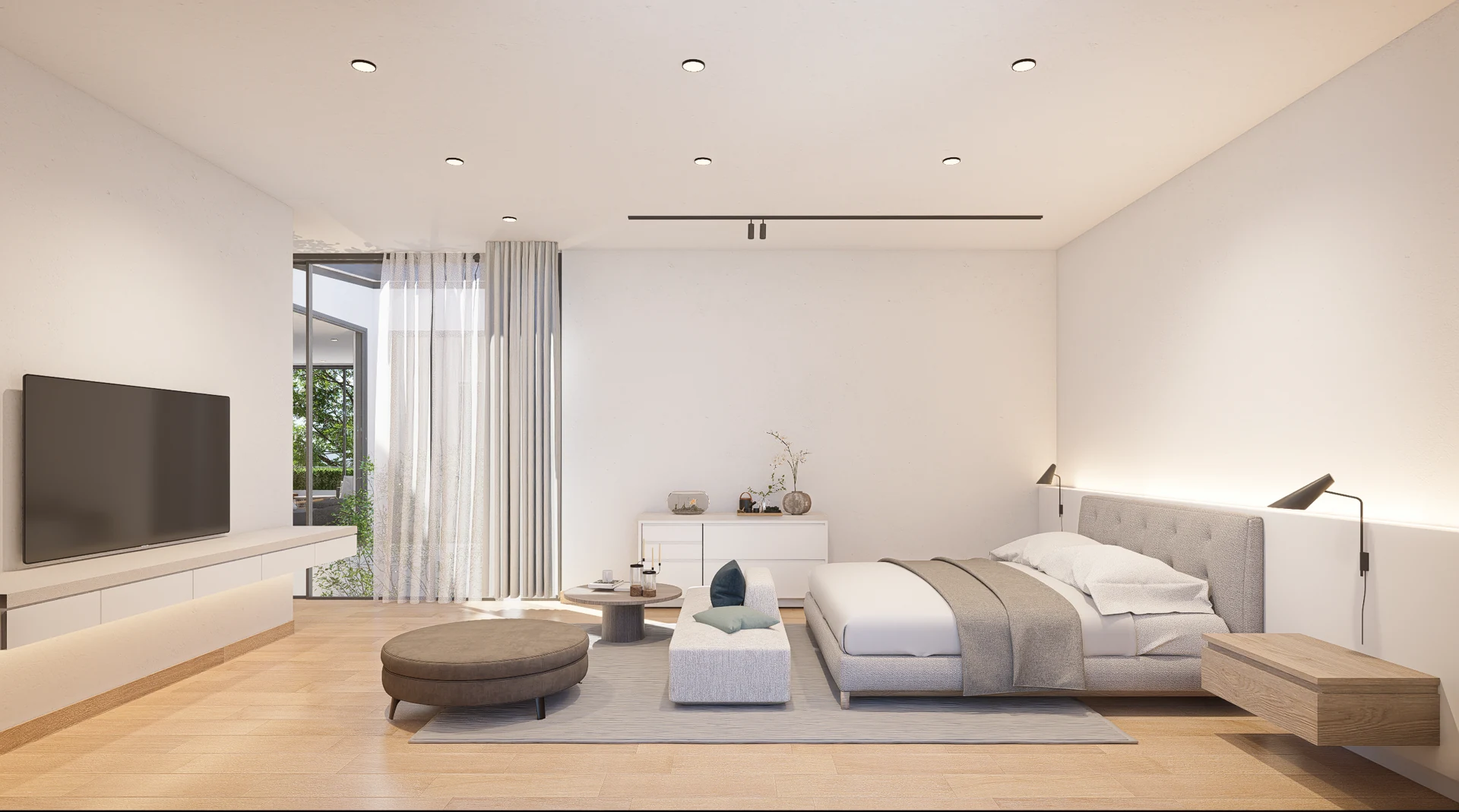
The bed is visible. That is the awkward detail in PRAWET's evening perspective. Upstairs, dark vertical screens sit under the broad roof, making the building look composed and reserved from the road. Downstairs, light spills from a room through a generous piece of glass. Once you notice the bed, the word private becomes harder to use as an adjective for the entire facade. I rather like this moment of disagreement between the image and the easy sentence one might have written beneath it. It asks us to look again, and this time to look at the house as somebody might use it after the photograph has been taken.
ในภาพ PRAWET ยามค่ำคืน มองเห็นเตียงอยู่หลังกระจกชั้นล่าง นี่คือรายละเอียดที่ทำให้คำบรรยายบ้านยากขึ้นเล็กน้อย ชั้นบนมีระแนงสีเข้มอยู่ใต้หลังคาแผ่กว้าง ภายนอกจึงดูสงบและสงวนตัว แต่ใต้ลงมา แสงไฟเปิดเผยห้องหนึ่งผ่านกระจกบานใหญ่ เมื่อมองเห็นเตียงแล้ว คำว่าเป็นส่วนตัวก็ไม่ควรถูกใช้เหมารวมทั้งด้านหน้า ผมชอบความไม่ลงรอยระหว่างภาพกับคำอธิบายง่าย ๆ ที่เราอาจเผลอเขียนใต้ภาพนั้น มันทำให้ต้องย้อนกลับไปดูใหม่ คราวนี้ดูในฐานะห้องที่ใครบางคนจะใช้ชีวิต หลังจากกล้องและคนดูภาพกลับไปแล้ว
That visible bed changes the task of writing about the building. A promotional caption could crop the window out or give the entire frontage a flattering adjective. Neither would help explain the decision a designer has to make. An architectural image is selected to communicate, and selection always leaves something beyond its frame. Here the inconvenient detail remains inside the frame. It asks whether the lower room has the same protection as the screened upper level, and whether the intended openness can be altered when circumstances change. These are questions about one room and one edge, not a verdict on the project as a whole.
การมองเห็นเตียงทำให้หน้าที่ของคนเขียนเรื่องอาคารเปลี่ยนไปทันที ถ้าเป็นข้อความโฆษณา เราอาจครอปหน้าต่างนั้นออก หรือเลือกคำชมที่ใช้ได้กับหน้าบ้านทั้งด้าน แต่ทั้งสองวิธีไม่ได้ช่วยให้เข้าใจการตัดสินใจของนักออกแบบ ภาพสถาปัตยกรรมถูกคัดเลือกมาเพื่อสื่อสารอยู่แล้ว สิ่งที่อยู่พ้นกรอบจึงหายไปโดยธรรมชาติ ทว่าคราวนี้รายละเอียดที่ทำให้เรื่องยุ่งยังอยู่ในกรอบ มันชวนตรวจว่าห้องชั้นล่างได้รับการปกป้องแบบเดียวกับชั้นบนหรือไม่ และความเปิดกว้างที่ตั้งใจไว้เปลี่ยนตามสถานการณ์ได้แค่ไหน นี่คือคำถามต่อห้องหนึ่งและขอบด้านหนึ่ง ไม่ใช่คำตัดสินบ้านทั้งหลัง
A camera is allowed to choose what it reveals. The person living behind the glazing should have a different entitlement. A portfolio image may benefit from a lit interior because it explains depth, furniture and the relationship between levels. That benefit belongs primarily to the viewer of the image. In an occupied bedroom the balance changes. The person inside may want enough light to use the room and little interest in becoming part of an exterior display. This is not a contradiction to be resolved by declaring transparency virtuous or concealment shameful. It is a question of whose purpose has priority at a given hour. The architectural treatment has to make that question answerable rather than bury it under the attractive appearance of a facade.
กล้องมีสิทธิ์เลือกว่าจะเปิดเผยอะไร แต่คนที่อยู่หลังกระจกควรมีสิทธิ์อีกแบบ ภาพ Portfolio อาจได้ประโยชน์จากห้องที่เปิดไฟ เพราะช่วยให้เห็นความลึก เฟอร์นิเจอร์ และความสัมพันธ์ของชั้น ผลประโยชน์นั้นเป็นของคนดูภาพเป็นหลัก แต่พอเป็นห้องนอนที่มีคนใช้จริง น้ำหนักเปลี่ยนไป คนในห้องอาจต้องการไฟที่พอใช้งาน โดยไม่ได้อยากกลายเป็นส่วนหนึ่งของฉากภายนอก ไม่จำเป็นต้องแก้เรื่องนี้ด้วยการประกาศว่าความโปร่งเป็นคุณธรรมหรือการปิดเป็นเรื่องน่าอาย คำถามอยู่ที่ความต้องการของใครควรมีน้ำหนักในเวลานั้น การออกแบบต้องทำให้ตอบคำถามนี้ได้ แทนที่จะซ่อนไว้ใต้หน้าตาของอาคารที่ดูดี
There is a reason such images are made. A glowing interior gives an elevation depth. Furniture tells the viewer that the windows belong to rooms rather than merely to the pattern of a facade. The image becomes easier to read, and perhaps more inviting. But a photograph that explains a room well can describe a condition the occupant would not choose for every evening. The viewer is grateful for the open view in. The person in the room may be thinking about something else entirely, such as getting ready for bed without becoming part of the street's visual activity.
ภาพแบบนี้มีเหตุผลของมัน ห้องที่เปิดไฟช่วยให้รูปด้านมีความลึก เฟอร์นิเจอร์บอกว่าช่องกระจกไม่ได้เป็นแค่ลวดลายบนอาคาร แต่มีห้องจริงอยู่ข้างหลัง ภาพจึงอ่านง่ายและชวนมองขึ้น ทว่าสิ่งที่อธิบายห้องให้ผู้ชมเข้าใจได้ดี อาจไม่ใช่สภาพที่คนอยู่ต้องการในทุกค่ำคืน คนดูภาพยินดีที่มองทะลุเข้าไปได้ ส่วนคนในห้องอาจกำลังคิดเรื่องธรรมดามาก อย่างการเตรียมตัวนอนโดยไม่อยากกลายเป็นส่วนหนึ่งของสิ่งที่คนบนถนนมองเห็น
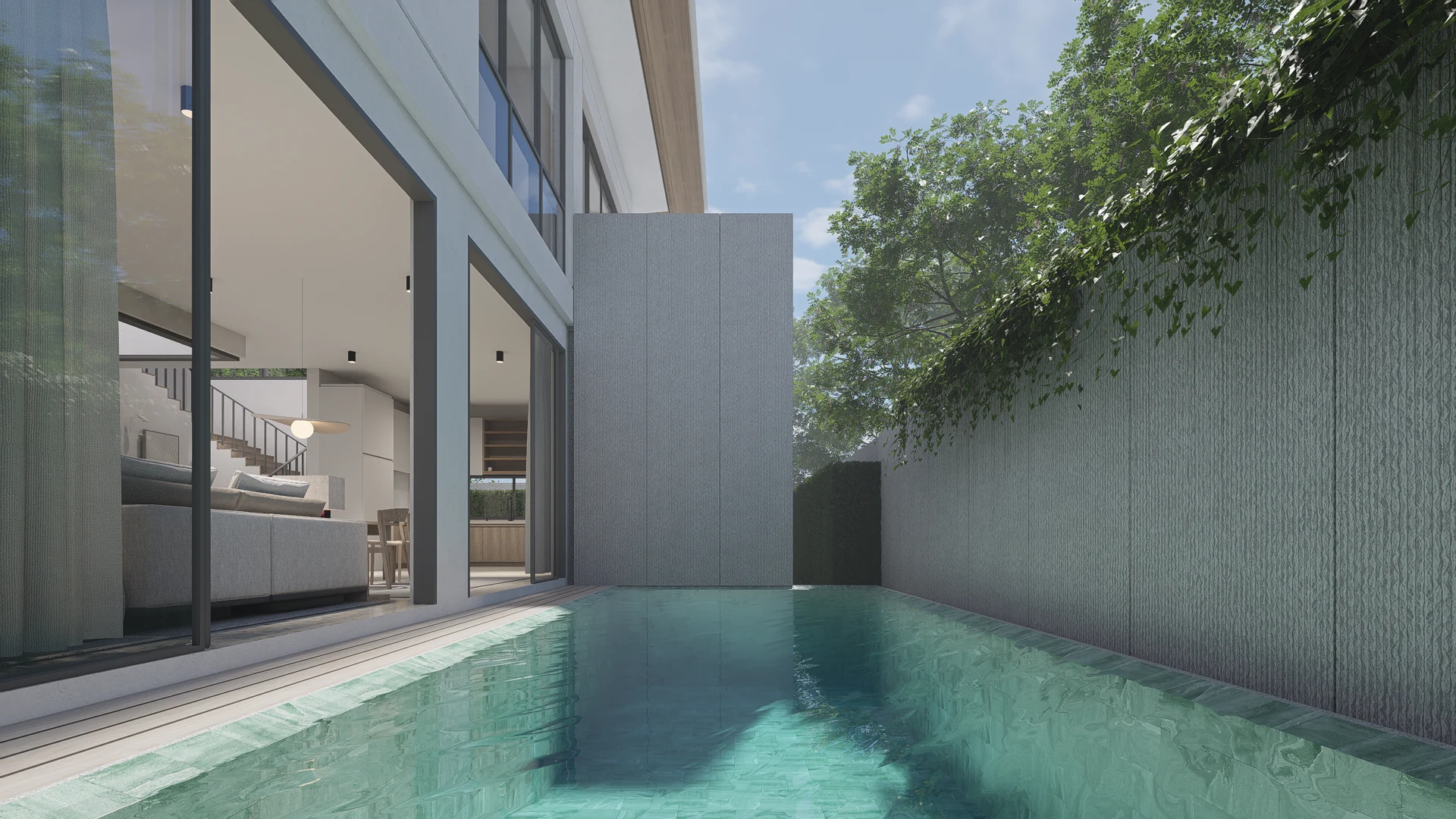
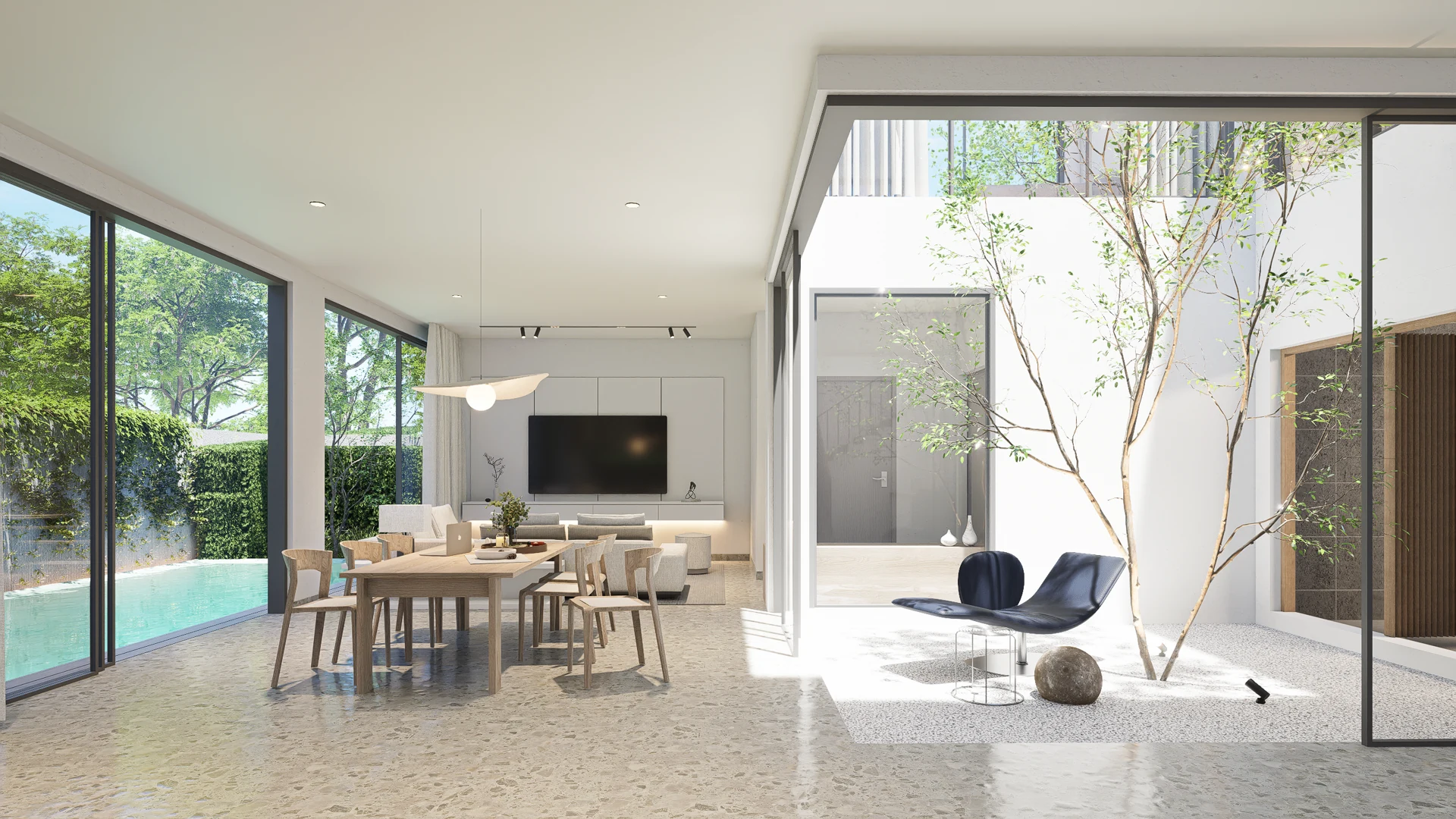
Consider the difference between having a view and becoming a view. From the dining table, the courtyard and the pool are destinations the house has arranged for the occupant's attention. A person on the other side of the front glazing, by contrast, may be looking at a room whose occupant has not agreed to participate in that encounter. The geometry matters, of course, but so does the asymmetry of expectation. Looking at one's own garden is an ordinary use of a home. Being looked at while getting ready for bed is not automatically the reciprocal bargain. A useful privacy strategy must distinguish the two without making daylight the enemy.
ลองแยกคำว่าได้มองวิวออกจากกลายเป็นวิวให้คนอื่นมอง จากโต๊ะอาหาร คอร์ตและสระเป็นปลายทางที่บ้านจัดไว้ให้คนในห้องได้มอง แต่คนที่อยู่ฝั่งตรงข้ามกระจกหน้าบ้านอาจกำลังมองเข้าไปในห้อง โดยที่เจ้าของห้องไม่ได้ตกลงเข้าร่วมการมองนั้นด้วย รูปทรงและระยะมีความสำคัญก็จริง แต่ความคาดหวังของคนสองฝั่งไม่เท่ากัน การได้มองสวนของตัวเองเป็นการใช้บ้านตามปกติ ส่วนการถูกมองขณะเตรียมตัวนอนไม่ได้เป็นข้อตกลงที่ต้องยอมรับโดยอัตโนมัติ แบบที่คิดเรื่อง Privacy อย่างจริงจังควรแยกสองสิ่งนี้ โดยไม่จำเป็นต้องทำให้แสงธรรมชาติกลายเป็นศัตรู
The direction of looking matters because two people rarely enter a view with equal expectations. A resident can sit at the dining table and look toward a tree that the design has placed within the site. A person passing the street frontage has not been invited into the resident's evening in the same way. A large pane of glass may serve both directions optically, yet those directions are not socially equivalent. The design problem is therefore more subtle than choosing an opaque or transparent material. It involves where the pane sits, what lies opposite, how close another person could come and whether the resident can alter the condition at will. Even a modest adjustment can matter if it is within the user's reach.
ทิศทางสายตาสำคัญเพราะคนสองฝั่งไม่ค่อยเข้ามาอยู่ในวิวด้วยความคาดหวังเท่ากัน คนในบ้านนั่งที่โต๊ะอาหารมองต้นไม้ซึ่งแบบจัดไว้ในที่ดินได้ แต่คนที่เดินผ่านหน้าบ้านไม่ได้รับเชิญให้เข้ามาอยู่ในค่ำคืนของเจ้าของห้องด้วยวิธีเดียวกัน กระจกบานใหญ่ทำหน้าที่ได้ทั้งสองทิศในทางแสง แต่สองทิศนั้นไม่ได้เท่ากันทางสังคม โจทย์จึงซับซ้อนกว่าการเลือกวัสดุทึบหรือโปร่ง ต้องดูว่ากระจกอยู่ตรงไหน อีกด้านมีอะไร คนอื่นเข้ามาใกล้ได้แค่ไหน และคนอยู่ปรับสภาพนั้นเองได้หรือเปล่า แม้การปรับเล็ก ๆ ก็สำคัญหากอยู่ในระยะมือของผู้ใช้
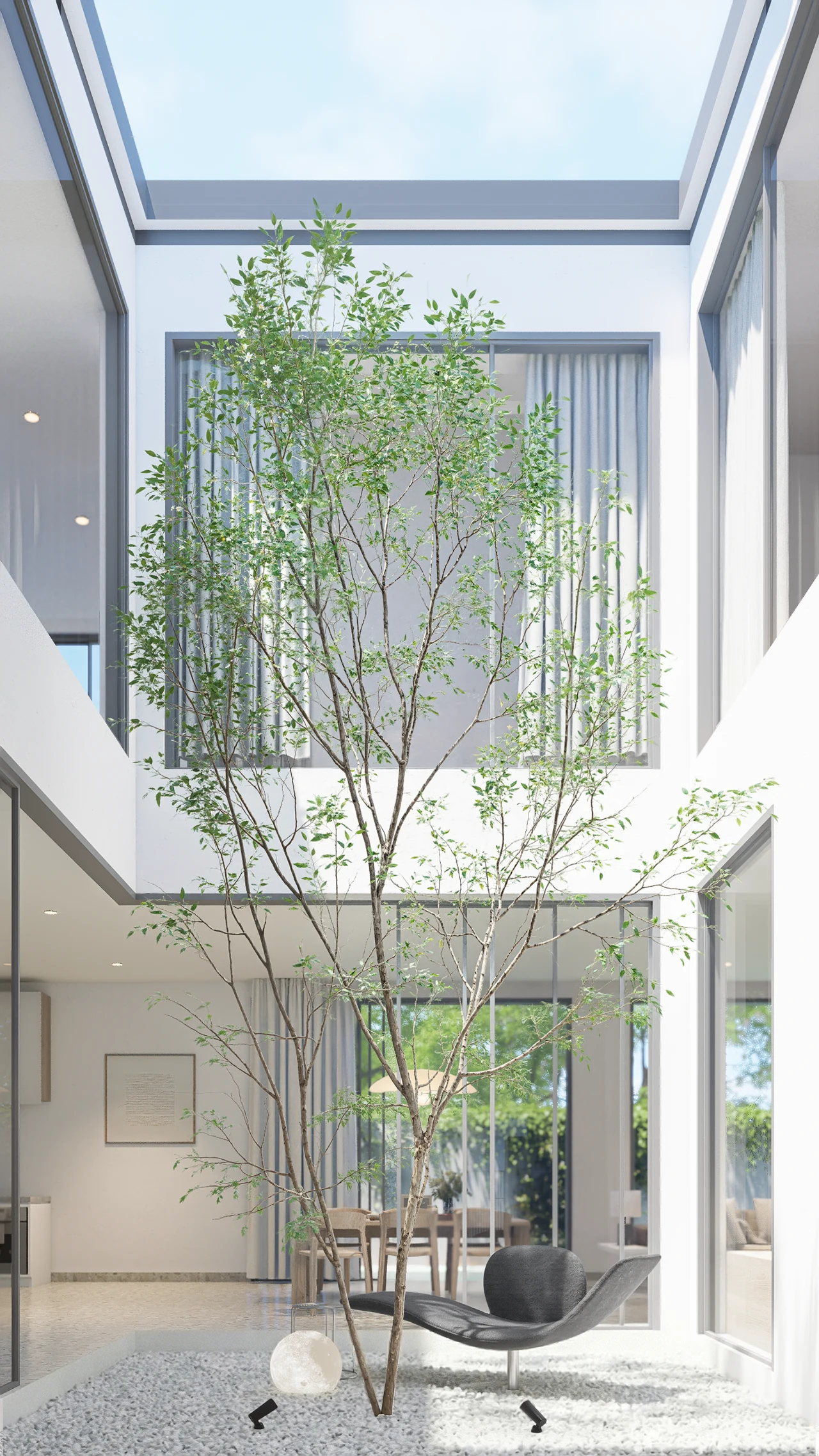
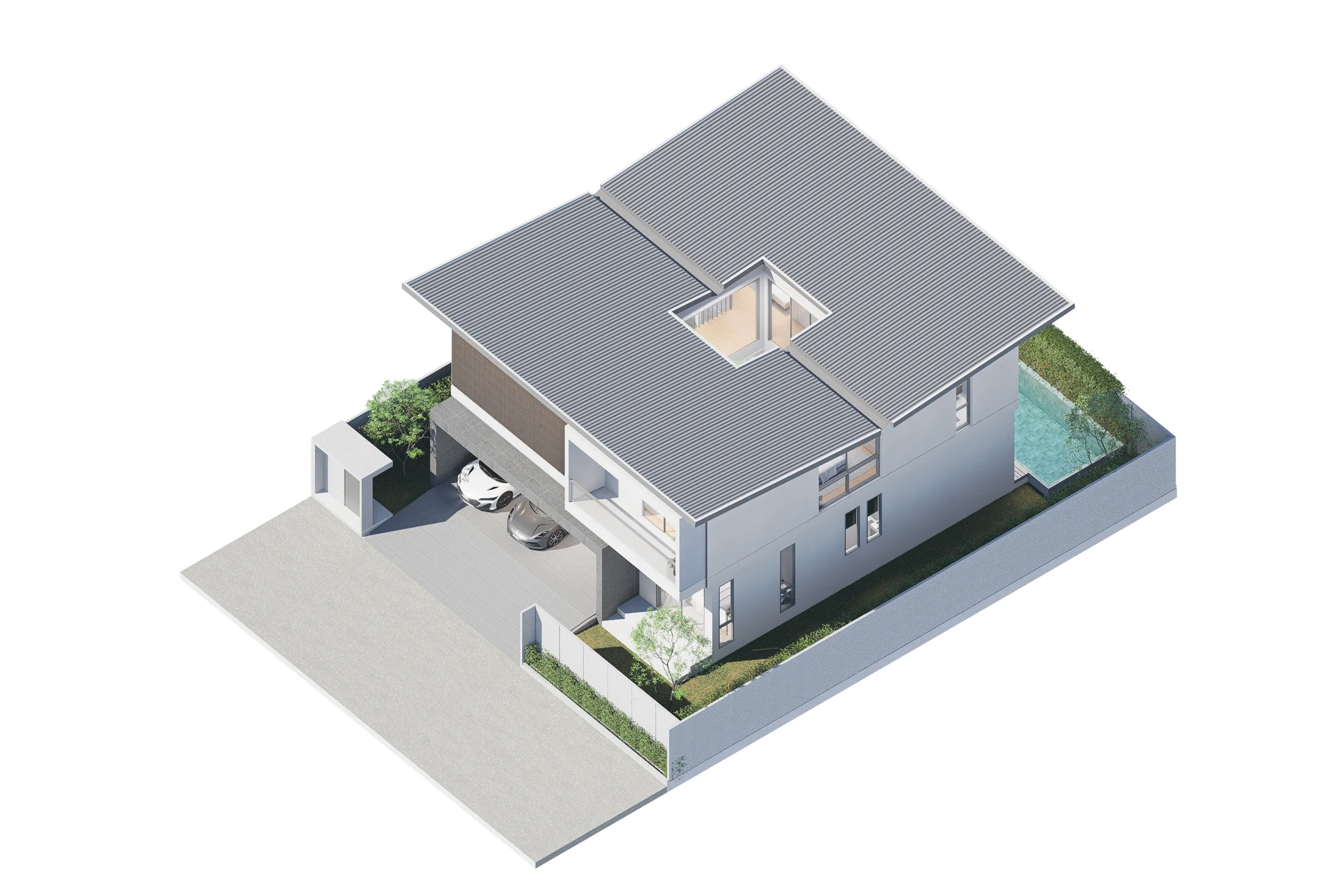
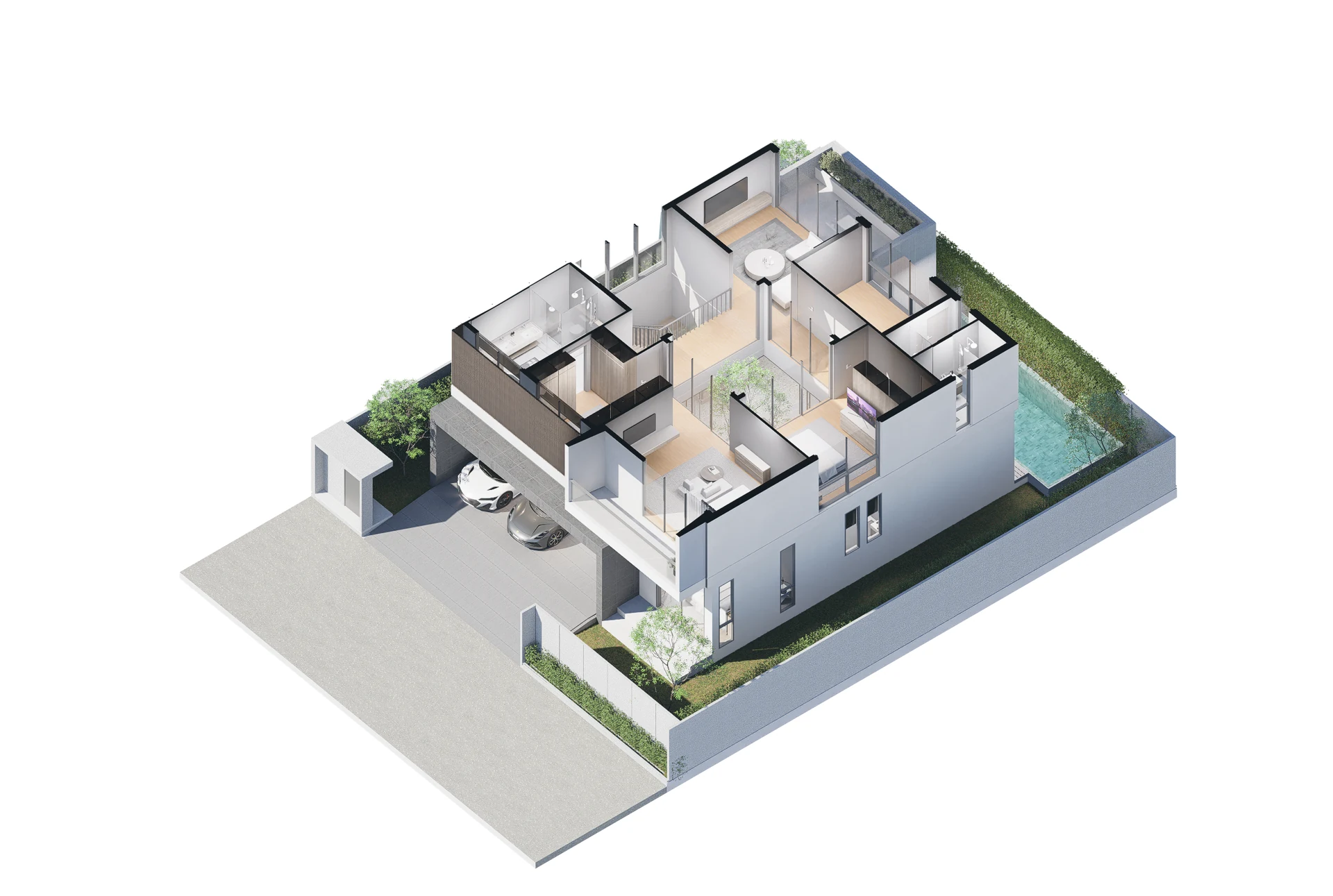
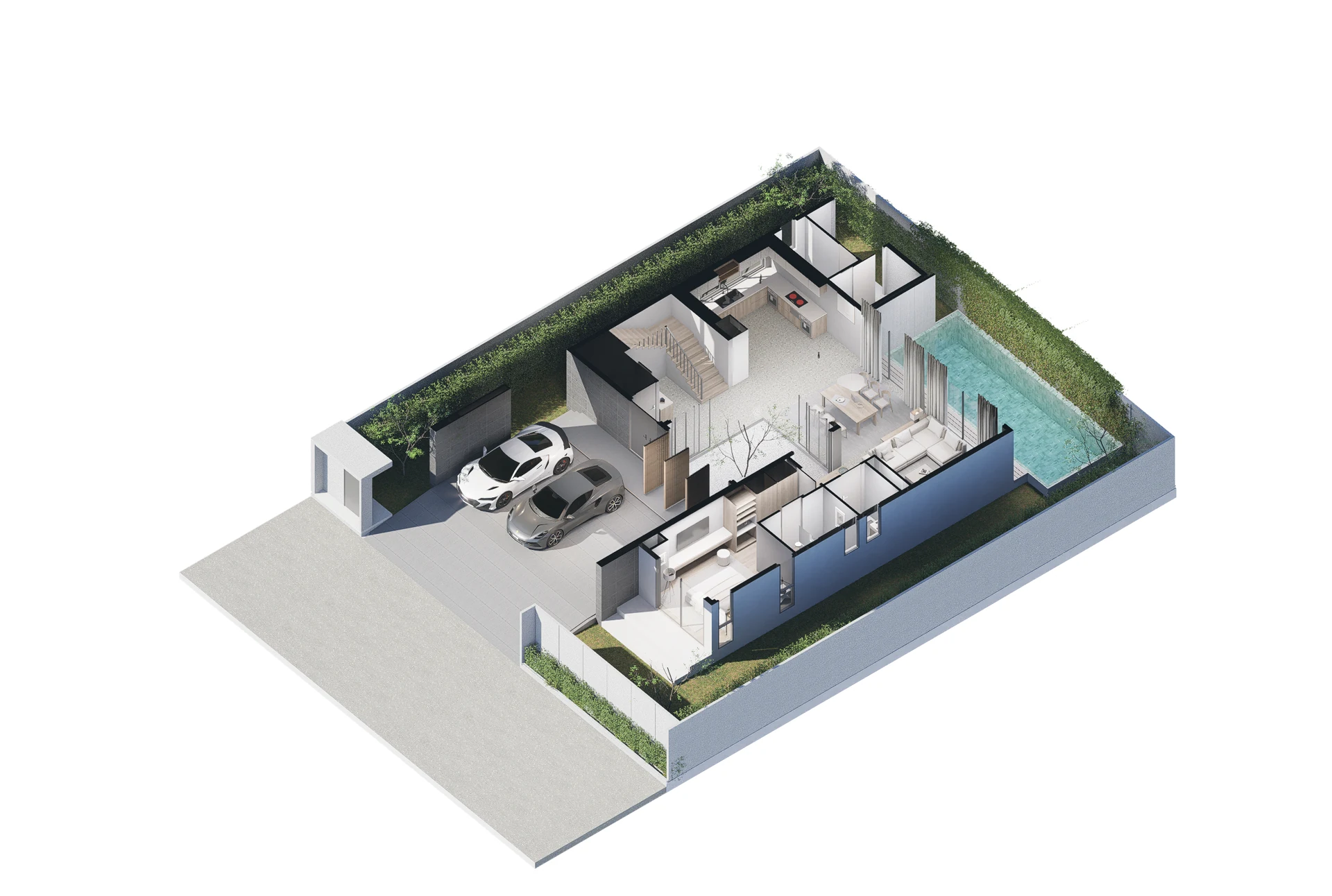
The family brief was quite precise. Daylight and greenery were welcome, yet everyday life should not be unnecessarily exposed to the street or adjoining properties. Notice that the problem is not simply to hide the house. The family wanted to keep looking out. That desire sends the design in two directions at once. Openings toward the inner court and the pool offer landscapes arranged within the site. Along the public approach, roofs, walls, recesses and screens contribute different degrees of separation. There is no single material with which to settle the argument. Each room must negotiate its own view and its own audience.
โจทย์ของครอบครัวชัดเจนว่าต้องการแสงและสีเขียว โดยไม่อยากให้ชีวิตประจำวันเปิดเผยต่อถนนหรือพื้นที่ข้างเคียงเกินจำเป็น ฟังให้ดีจะพบว่าเขาไม่ได้ขอให้ปิดบ้านจนมองอะไรไม่เห็น เพราะยังอยากมองออกไปด้วย ความต้องการนี้ทำให้แบบต้องเดินสองทางพร้อมกัน ช่องเปิดด้านคอร์ตและสระรับวิวที่จัดขึ้นภายในที่ดิน ส่วนด้านที่สัมพันธ์กับทางเข้าสาธารณะมีหลังคา ผนัง ระยะถอย และระแนงช่วยจัดชั้นของการมองเห็น วัสดุชนิดเดียวจบเรื่องนี้ไม่ได้ แต่ละห้องมีทิศทางของสายตาและคนที่อาจมองกลับเข้ามาต่างกัน
There is no single night-time condition. A light in one room may be switched on while the others remain dark, or several spaces may be in use simultaneously. Their relative brightness changes what the exterior image emphasises. A screen that reads strongly in daylight can seem less dominant when light comes from behind it. This is a principle of visibility, not a measured account of what passers-by see at PRAWET. The supplied rendering gives a particular proposed scene at a particular camera position. It is enough to expose an important question, but not enough to certify that a curtain, planting or wall will perform the same way from every angle and at every hour.
กลางคืนก็ไม่ได้มีสภาพเดียว บางห้องเปิดไฟ ขณะที่ห้องอื่นยังมืด หรือหลายพื้นที่อาจถูกใช้พร้อมกัน ความสว่างที่ต่างกันทำให้ภาพภายนอกเน้นจุดต่างไป ระแนงที่เห็นเด่นในเวลากลางวันอาจดูบางลงเมื่อมีแสงจากด้านหลัง นี่เป็นหลักเกี่ยวกับการมองเห็น ไม่ใช่ผลวัดว่าคนเดินผ่าน PRAWET เห็นอะไรจริง ภาพ Render ที่แนบเป็นฉากเสนอไว้จากตำแหน่งกล้องหนึ่งตำแหน่ง มันพอช่วยให้เราเห็นคำถามสำคัญ แต่ยังไม่พอรับรองว่าม่าน ต้นไม้ หรือกำแพงจะทำงานเหมือนกันจากทุกมุมและทุกชั่วโมง
A fixed screen can make a consistent architectural expression, and there are good reasons to choose it. It becomes part of the building rather than something an occupant must remember to arrange every morning. Yet fixed elements also impose their judgement at hours when the person inside might prefer otherwise. Adjustable curtains answer a different need, offering choice but requiring a working mechanism, somewhere to operate it and a willingness to use it. Planting belongs to a third category because it grows and changes its density. Calling all of these devices privacy screens is convenient shorthand. It should not prevent us from examining the different kinds of control each one actually gives.
ระแนงที่ติดตั้งถาวรทำให้รูปด้านมีจังหวะสม่ำเสมอ และมีเหตุผลที่ดีในการเลือกใช้ มันเป็นส่วนหนึ่งของอาคาร ไม่ต้องรอให้คนอยู่จัดใหม่ทุกเช้า แต่สิ่งถาวรก็ตัดสินแทนเจ้าของห้องในเวลาที่เขาอาจต้องการอย่างอื่น ม่านซึ่งปรับได้ตอบโจทย์อีกชนิด โดยแลกกับกลไก ตำแหน่งควบคุม และความสะดวกในการใช้ ส่วนต้นไม้เป็นเงื่อนไขที่สาม เพราะมันเติบโตและความทึบเปลี่ยนไปได้ เราอาจเรียกรวมทั้งหมดว่าฉากกรองสายตาเพื่อให้พูดง่าย แต่ไม่ควรปล่อยให้คำเรียกรวมบดบังว่าอุปกรณ์แต่ละอย่างมอบอำนาจการเลือกให้คนอยู่ต่างกัน
Consider how much difference a few steps can make. The same pane of glass may face a path used by others, a planted edge, or the empty part of a courtyard. From a rendering, those conditions can look equally luminous. To somebody sitting inside, however, the question is not limited to how much light arrives. It includes who might be standing at the far end of the view. This is why privacy should be discussed through particular positions and hours, not sold as an atmospheric quality. A distant wall, an adjustable blind and a dark screen are not interchangeable simply because all three can make an image look restrained.
ระยะเพียงไม่กี่ก้าวเปลี่ยนความรู้สึกจากกระจกบานหนึ่งได้มาก กระจกชนิดเดียวกันอาจหันเข้าหาทางที่คนอื่นเดินผ่าน แนวต้นไม้ หรือช่องว่างในคอร์ต จากภาพจำลอง ทั้งสามตำแหน่งอาจดูสว่างงามไม่ต่างกัน แต่สำหรับคนที่นั่งข้างใน คำถามไม่ได้จบที่แสงเข้ามาเท่าไร ยังต้องถามด้วยว่าอีกปลายของแนวสายตามีใครยืนอยู่หรือไม่ ความเป็นส่วนตัวจึงควรถูกพิจารณาจากตำแหน่งและช่วงเวลา ไม่ใช่ขายเป็นบรรยากาศกำกวม กำแพงที่ตั้งอยู่ไกล ม่านที่เลื่อนปรับได้ และระแนงสีเข้ม ทำหน้าที่แทนกันไม่ได้เพียงเพราะทำให้ภาพดูเรียบร้อยคล้ายกัน
The location of the front ground-floor bedroom complicates the comfortable shorthand that private rooms belong upstairs. A bedroom may have different needs from the public approach only a short distance away, regardless of which level it occupies. The upper screen cannot protect the lower room merely by being the most visible feature of the facade. I would rather assess a particular window against a particular path than say that the front elevation is generally secluded. From what standing height and distance could a view enter? What does the room face if its blind is raised? Can an occupant keep a preferred amount of daylight without exposing an activity they wish to keep private? Each answer belongs to a specific arrangement, not a slogan.
ตำแหน่งห้องนอนด้านหน้าชั้นล่างทำให้คำพูดง่าย ๆ ว่าห้องส่วนตัวอยู่ชั้นบนใช้ไม่ได้ ห้องนอนอาจมีความต้องการต่างจากทางเข้าที่อยู่ใกล้เพียงไม่กี่เมตร ไม่ว่าจะอยู่ชั้นใด ระแนงด้านบนไม่อาจปกป้องห้องข้างล่างเพียงเพราะเป็นองค์ประกอบที่เห็นเด่นที่สุดของรูปด้าน ผมอยากพิจารณาหน้าต่างหนึ่งบานเทียบกับทางผ่านหนึ่งเส้นมากกว่าจะบอกว่าหน้าบ้านมิดชิดโดยรวม คนมองอาจยืนสูงเท่าไรและไกลแค่ไหน ม่านเปิดแล้วห้องหันไปพบอะไร คนอยู่รับแสงตามต้องการโดยไม่เปิดกิจกรรมที่อยากเก็บไว้ได้หรือไม่ คำตอบแต่ละข้ออยู่ในรายละเอียดตำแหน่ง ไม่ใช่สโลแกน
There is also the matter of position. A window facing a planted courtyard can present a protected outlook in one view and an unexpected line toward another room in another view. A wall protects only the sightlines it actually interrupts. A deep overhang shades a portion of a facade but is not a substitute for a blind drawn across a lit bedroom. This is why the plan, elevations and sections need to be read together during design review. A neat photograph at dusk makes a persuasive composition, but only a position-by-position test can begin to show who might see what. The test must be made at the appropriate height, from both sides of an opening, at more than one time of day.
ยังมีเรื่องตำแหน่ง กระจกที่หันเข้าหาคอร์ตอาจเปิดให้เห็นวิวที่ดูเป็นส่วนตัวจากมุมหนึ่ง แต่ในอีกมุมกลับเกิดแนวสายตาไปห้องอื่นได้ กำแพงป้องกันได้เฉพาะแนวที่มันตัดผ่านจริง ชายคาลึกช่วยกรองแสงและกำหนดหน้าตาอาคาร แต่ใช้แทนม่านของห้องนอนที่เปิดไฟไม่ได้ นี่เป็นเหตุผลว่าทำไมตอนตรวจแบบจึงต้องอ่านผัง รูปด้าน และรูปตัดร่วมกัน ภาพยามค่ำอาจเรียบเรียงองค์ประกอบได้ชวนเชื่อ แต่ต้องตรวจตำแหน่งสายตาทีละจุดจึงจะเริ่มตอบได้ว่าใครอาจเห็นอะไร การตรวจควรพิจารณาระดับสายตาจากทั้งสองฝั่งและมากกว่าช่วงเวลาเดียว
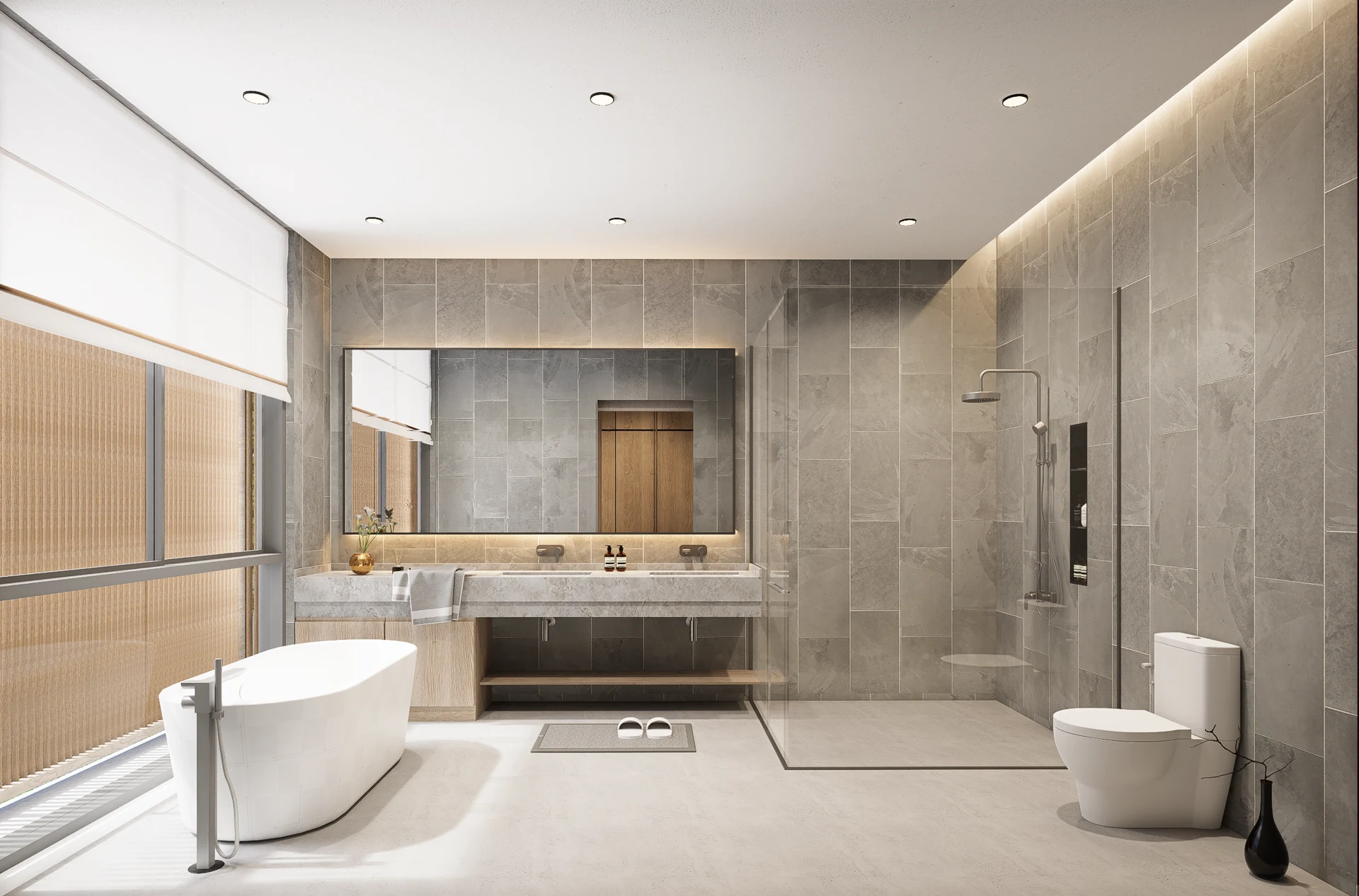
In the bathroom perspective, tall glazing is accompanied by an external screen and a roller blind. It is a useful little lesson in how different layers have different kinds of authority. The screen is built into the architectural arrangement. The blind, if conveniently positioned and operable as intended, allows a person to make a smaller decision at a particular moment. The distinction matters more than the number of layers visible in a rendering. A feature that can be adjusted only awkwardly is a poor substitute for a real choice. Images can show an intended arrangement, but they cannot certify what it feels like to operate.
ภาพห้องน้ำแสดงกระจกสูง พร้อมระแนงด้านนอกและม่านม้วน เป็นรายละเอียดที่ทำให้เห็นว่าชั้นกรองต่างชนิดมีอำนาจต่างกัน ระแนงเป็นส่วนของการจัดอาคารที่คงอยู่ ขณะที่ม่านม้วน หากติดตั้งในตำแหน่งและใช้การได้ตามที่ตั้งใจ ก็เปิดโอกาสให้คนในห้องตัดสินใจเล็ก ๆ ได้ในเวลาที่ต้องการ สิ่งสำคัญไม่ใช่นับว่ามีกี่ชั้นในภาพ แต่คือคนใช้งานปรับมันได้จริงเพียงใด อุปกรณ์ที่ทำให้ปรับลำบากย่อมยังไม่ใช่ทางเลือกที่ดี และภาพจำลองไม่อาจยืนยันความสะดวกในการใช้งานแทนรายละเอียดจริงได้
A useful detail does not merely exist on paper. A roller blind can be drawn in a bathroom perspective and still leave questions about its control, reach and actual installation. The outside screen has a different role because it belongs to the enclosure and may remain in place regardless of the occupant's immediate wishes. The glass itself brings daylight and an enclosure that can be cleaned, repaired and eventually replaced. Thinking about these parts as one decorative layer disguises the practical choices. They ask for different people to take action at different times. A good privacy strategy must be intelligible to the person using it, not just to the designer explaining it.
รายละเอียดที่ใช้ได้จริงไม่ใช่แค่มีอยู่บนกระดาษ ม่านม้วนอาจปรากฏใน Perspective ห้องน้ำ แต่ยังมีคำถามว่าควบคุมตรงไหน เอื้อมถึงหรือไม่ และติดตั้งจริงอย่างไร ระแนงด้านนอกทำหน้าที่ต่างกันเพราะอยู่กับเปลือกอาคารและอาจคงที่ไม่ว่าคนในห้องต้องการอะไรตอนนั้น ส่วนกระจกให้แสงและเป็นผิวที่ต้องทำความสะอาด ซ่อม และอาจเปลี่ยนในวันหนึ่ง การเรียกทั้งหมดเป็นชั้นตกแต่งชุดเดียวทำให้ทางเลือกใช้งานจริงหายไป แต่ละส่วนเรียกร้องให้คนต่างฝ่ายทำงานในเวลาต่างกัน ระบบความเป็นส่วนตัวที่ดีควรอ่านออกสำหรับคนใช้ ไม่ใช่เฉพาะสถาปนิกที่อธิบายแบบ
The bathroom is not an exception that can be solved by an attractive detail alone. Its relationship with daylight has to coexist with a different degree of bodily privacy. What seems gracious in an image, a tall window and a slender screen, is used under circumstances that a photograph cannot show. The person may need to adjust the blind after switching on a light, when their hands are occupied or when they are tired. None of those scenarios describes this family's actual routines. They are ordinary checks a designer should make because the pleasure of a large window has consequences after the image is finished.
ห้องน้ำไม่ใช่กรณียกเว้นที่จะจบด้วยรายละเอียดสวย ๆ เพียงชิ้นเดียว ความสัมพันธ์กับแสงต้องอยู่ร่วมกับความเป็นส่วนตัวของร่างกายในระดับที่ต่างจากห้องรับแขก สิ่งที่ภาพทำให้ดูงาม อย่างกระจกสูงกับระแนงเส้นบาง ถูกใช้งานในเงื่อนไขที่ภาพนิ่งไม่แสดง คนอาจต้องปรับม่านหลังเปิดไฟ ขณะมือไม่ว่าง หรือในเวลาที่เหนื่อย สถานการณ์เหล่านี้ไม่ใช่การอ้างกิจวัตรจริงของครอบครัว แต่เป็นข้อทดสอบธรรมดาที่ผู้ออกแบบควรคิด เพราะความน่าพอใจของหน้าต่างบานใหญ่มีผลต่อเนื่องหลังภาพจบแล้ว
This also makes me suspicious of an easy equation between privacy and secrecy. A person should not have to be concealing something interesting before they can close a curtain. The most ordinary acts deserve boundaries. Reading on a bed, changing clothes, sitting quietly or simply declining to be watched are all sufficient reasons. The design does not need to anticipate or approve each activity. It needs to preserve room for the person who will decide. Too often we praise houses for revealing everything they contain. A home has a different responsibility from a showroom, even when the two are photographed with equally expensive care.
ผมไม่ค่อยไว้ใจการเอาความเป็นส่วนตัวไปปนกับความลับด้วย คนเราควรปิดม่านได้โดยไม่ต้องกำลังซ่อนเรื่องน่าตื่นเต้นอะไร การอ่านหนังสือบนเตียง เปลี่ยนเสื้อผ้า นั่งเฉย ๆ หรือเพียงไม่อยากให้ใครมองก็เป็นเหตุผลเพียงพอ แบบไม่จำเป็นต้องคาดเดาหรืออนุญาตกิจกรรมเหล่านั้นทีละอย่าง แค่เผื่อพื้นที่ให้คนที่จะเป็นผู้เลือก บ้านมักถูกชมเมื่อเปิดให้เห็นทุกส่วนอย่างสวยงาม แต่หน้าที่ของบ้านต่างจากโชว์รูม แม้เราจะใช้ความประณีตไม่ต่างกันในการถ่ายภาพทั้งสองแห่งก็ตาม
People should not have to produce a convincing personal reason before they are permitted to close a blind. A bedroom can remain ordinary and private. A bathroom can receive daylight without asking anyone to become an image for the exterior. The design should be cautious about claiming a single correct level of exposure for every occupant, particularly where several people share a home. Someone may welcome an open outlook while another prefers more separation at the same hour. Those preferences are not evidence of good or bad character. The value of adjustable layers lies partly in leaving the judgment with the people affected. Architecture cannot settle all differences between family members, but it should avoid deciding for them when it has no need to.
คนไม่ควรต้องหาเหตุผลส่วนตัวให้ดูน่าเชื่อก่อนจึงจะได้รับอนุญาตให้ปิดม่าน ห้องนอนเป็นเรื่องธรรมดาและเป็นส่วนตัวได้ ห้องน้ำรับแสงได้โดยไม่ต้องบังคับให้คนกลายเป็นภาพสำหรับภายนอก แบบควรระวังการกำหนดระดับการเปิดเผยที่ถูกต้องเพียงแบบเดียวสำหรับทุกคน โดยเฉพาะบ้านที่อยู่ร่วมกันหลายคน คนหนึ่งอาจชอบเปิดรับวิว ขณะที่อีกคนอยากมีระยะมากกว่าในเวลาเดียวกัน ความชอบเหล่านี้ไม่ใช่หลักฐานนิสัยดีหรือไม่ดี คุณค่าของสิ่งที่ปรับได้อยู่ตรงที่ให้คนซึ่งได้รับผลเป็นผู้ตัดสิน สถาปัตยกรรมแก้ความต่างของคนทั้งครอบครัวไม่ได้ทั้งหมด แต่ก็ควรหลีกเลี่ยงการตัดสินแทนเมื่อไม่จำเป็น
A house need not solve privacy by making its occupants invisible. Someone may deliberately keep a window open to the street or enjoy seeing movement beyond the property. Another person may need exactly the opposite. The moral language of open versus closed is not particularly helpful here. I have heard buildings described as honest because their interiors are exposed, or defensive because their facades are more solid. Those descriptions borrow judgements about people and attach them to materials. PRAWET makes more sense when treated as a set of distinct domestic situations. A screen can be hospitable to light. A wall can help create a garden view. Glass can be generous in one direction and too revealing in another.
บ้านไม่จำเป็นต้องแก้ Privacy ด้วยการทำให้คนในบ้านหายไปจากสายตาทั้งหมด บางคนอาจตั้งใจเปิดหน้าต่างเข้าหาถนนและชอบเห็นความเคลื่อนไหวภายนอก อีกคนอาจต้องการตรงกันข้าม คำตัดสินว่าบ้านเปิดเป็นคนจริงใจ บ้านปิดเป็นคนระแวง จึงช่วยเรื่องนี้ไม่มากนัก มันเหมือนเอาคุณสมบัติทางนิสัยของคนไปผูกกับวัสดุ PRAWET จะเข้าใจง่ายกว่าเมื่ออ่านเป็นสถานการณ์การอยู่อาศัยที่ต่างกัน ระแนงอาจช่วยรับแสง กำแพงอาจช่วยประกอบวิวสวน กระจกอาจใจกว้างในทิศหนึ่งและเปิดเผยมากเกินไปในอีกทิศ ทุกชิ้นต้องถูกตัดสินจากสิ่งที่มันทำจริงมากกว่าคำเรียกที่ฟังแล้วดี
What I cannot tell from the evening image is whether a passer-by at the actual street could see that bed from the same angle, or how the occupants will use their curtains. To turn the picture into a claim of proven exposure would be as careless as calling the whole frontage perfectly shielded. The photograph is evidence of the representation, not a measurement of lived privacy. That limitation is worth stating because it keeps the architectural judgement honest. The question is now specific enough to carry into drawing review and, when possible, an actual sightline check. It is no longer a vague instruction to make the house feel more private.
จากภาพกลางคืน ผมยังบอกไม่ได้ว่าคนเดินบนถนนจริงจะมองเห็นเตียงในมุมเดียวกันหรือไม่ และไม่ได้รู้ว่าคนในบ้านจะใช้ม่านอย่างไร การเปลี่ยนภาพจำลองให้กลายเป็นคำยืนยันว่าเปิดเผยจริงจึงสะเพร่าไม่ต่างจากการบอกว่าหน้าบ้านปิดบังสายตาได้สมบูรณ์ ภาพเป็นหลักฐานของสิ่งที่แสดง ไม่ใช่ผลวัดความเป็นส่วนตัวขณะเข้าอยู่ การยอมรับขอบเขตนี้ทำให้การพิจารณาแบบตรงไปตรงมา และทำให้คำถามชัดพอจะกลับไปตรวจในแบบหรือทดสอบแนวสายตาจริงได้ ไม่ใช่ข้อสั่งกว้าง ๆ ว่าทำอย่างไรก็ได้ให้บ้านดูเป็นส่วนตัวกว่าเดิม
There is a difference between spotting a risk in a representation and certifying a performance result. The view of a bed through glass is plainly part of the PRAWET evening image. It does not tell us the camera's equivalence to an actual pedestrian, the eventual furnishing or the chosen curtain routine. If the aim is to test privacy, the next evidence would be a mapped sightline using actual geometry and likely viewing positions, together with a review of controls and their operation. Such work may confirm or complicate the design intent. An editorial description should leave room for either outcome. Its job is to show the judgement being asked of the designer, not replace the measurement with confidence borrowed from a beautiful picture.
การเห็นความเสี่ยงในภาพนำเสนอต่างจากการรับรองผลใช้งานจริง เราเห็นเตียงผ่านกระจกในภาพ PRAWET ยามค่ำได้ชัด แต่ภาพไม่บอกว่ากล้องอยู่ตรงตำแหน่งคนเดินถนนจริงหรือไม่ เฟอร์นิเจอร์ภายหลังจะเป็นอย่างไร หรือเจ้าของเลือกใช้ม่านแบบไหน หากต้องการทดสอบ Privacy หลักฐานถัดไปควรเป็นแนวสายตาที่ไล่จากเรขาคณิตจริงกับตำแหน่งคนมองที่เป็นไปได้ ร่วมกับการตรวจอุปกรณ์ที่ปรับได้และวิธีใช้งาน ผลอาจยืนยันหรือทำให้ต้องคิดแบบใหม่ บทความควรเหลือที่ให้ผลทั้งสองทาง หน้าที่ของมันคือทำให้เห็นวิจารณญาณที่นักออกแบบต้องใช้ ไม่ใช่เอาความสวยของภาพไปรับรองแทนการวัด
There is a useful distinction between a design that offers possibilities and one that promises experiences. The drawings can show that a room has glazing, that another room sits behind a screen, and that a planted court creates a different outlook. They cannot tell us how a particular family member feels the first night they use the bedroom. Nor can a rendering document the exact illuminance at the bedside or the view of an actual passer-by. This uncertainty does not make design judgement meaningless. It makes the judgement more disciplined. We can defend the arrangement that is visible, identify what should still be tested, and resist the temptation to borrow confidence from the beauty of the presentation.
มีความต่างสำคัญระหว่างแบบที่เปิดโอกาสกับแบบที่รับประกันประสบการณ์ แบบแสดงได้ว่าห้องหนึ่งมีกระจก อีกห้องอยู่หลังระแนง และคอร์ตที่มีต้นไม้สร้างวิวอีกลักษณะ แต่บอกไม่ได้ว่าสมาชิกคนใดรู้สึกอย่างไรในคืนแรกที่ใช้ห้องนอน ภาพจำลองก็ไม่ได้บันทึกค่าความสว่างข้างเตียงหรือแนวสายตาของคนเดินผ่านจริง ความไม่รู้เหล่านี้ไม่ได้ทำให้การตัดสินใจออกแบบหมดความหมาย กลับบังคับให้เราระมัดระวังมากขึ้น เราอธิบายความสัมพันธ์ที่หลักฐานแสดงได้ ระบุสิ่งที่ยังควรทดสอบ และไม่ยืมความมั่นใจจากความสวยของภาพนำเสนอ
PRAWET reminds me that openness is rarely a matter of personal virtue. There is nothing superior about leaving a room visible and nothing shameful about keeping it closed. In a house made for several people, the more interesting promise is that each can decide differently. The bright window, the darker facade and the inner landscape should not be forced to tell one simple story. They are evidence of a house negotiating several needs at once. And the bed in the evening view is where that negotiation becomes wonderfully difficult to ignore.
PRAWET ทำให้ผมกลับมาคิดว่าความเปิดเผยไม่ใช่เครื่องวัดนิสัยของคน การเปิดให้เห็นห้องไม่ได้แปลว่ากล้าหาญกว่า และการปิดก็ไม่ได้เป็นเรื่องน่าอาย บ้านที่มีคนอยู่หลายคนอาจมีคำสัญญาที่น่าสนใจกว่า คือให้แต่ละคนตัดสินใจต่างกันได้ ช่องกระจกสว่าง หน้าบ้านที่ดูทึบกว่า และสวนภายในจึงไม่ควรถูกบังคับให้เล่าเรื่องเดียวกันง่าย ๆ ทั้งหมดกำลังต่อรองความต้องการหลายอย่างในบ้านหลังเดียว ส่วนเตียงในภาพตอนค่ำนั้นก็ทำหน้าที่เตือนเราอย่างดีว่า การต่อรองดังกล่าวไม่ควรถูกมองข้าม
A private house is different from a shop window. Its changing use cannot be summed up by the permanent visibility of its objects. There will be times for visitors and times for no audience at all, though the project sources do not tell us when those moments will occur for this family. The point is that an architectural decision can acknowledge this variability before a routine has been established. Where possible, the occupant should not have to choose permanently between seeing the trees and keeping a room to themselves. The strongest part of PRAWET's story is therefore the attempt to distribute openings selectively, not an assertion that every opening has already reached a perfect compromise.
บ้านส่วนตัวต่างจากหน้าร้านที่จัดของให้คนดู การใช้งานที่เปลี่ยนไปไม่อาจสรุปจากการเปิดให้เห็นวัตถุตลอดเวลา ต้องมีทั้งเวลาต้อนรับผู้มาเยือนและเวลาที่ไม่ต้องมีผู้ชม แม้เอกสารจะไม่ได้บอกว่าครอบครัวนี้จะใช้ช่วงเหล่านั้นเมื่อไร ประเด็นคือแบบสามารถยอมรับความเปลี่ยนแปลงนี้ได้ก่อนที่จะมีใครสร้างกิจวัตรถาวร หากทำได้ คนอยู่ไม่ควรถูกบังคับให้เลือกระหว่างเห็นต้นไม้กับรักษาห้องเป็นของตัวเองไปตลอด ความน่าสนใจของ PRAWET จึงอยู่ที่ความพยายามจัดช่องเปิดแต่ละด้านอย่างเลือกสรร มากกว่าการอ้างว่าทุกบานพบจุดประนีประนอมสมบูรณ์แล้ว
Back at the front window, the bed remains where it was. I would not ask an editor to darken the glass until the room disappears, unless the task were explicitly to revise the design image. I would ask the design team to trace the sightline and explain what the occupant is able to adjust. That is a less dramatic ending for a beautiful house story, but it respects the difference between design intention and daily use. PRAWET's most interesting ambition is not that all its windows reveal or conceal the same amount. It is that openness can be located, moderated and owned by the people living behind it.
พอกลับมาดูหน้าต่างด้านหน้า เตียงยังอยู่ตรงนั้น ผมคงไม่ขอให้บรรณาธิการทำกระจกในภาพให้มืดจนมองห้องไม่เห็น เพียงเพื่อให้คำอธิบายผ่านไปง่าย ๆ เว้นแต่โจทย์คือการแก้ภาพแบบจริง ๆ สิ่งที่ควรขอทีมออกแบบมากกว่าคือการไล่แนวสายตาและบอกว่าคนในห้องปรับอะไรได้บ้าง ตอนจบแบบนี้อาจไม่หวือหวาสำหรับเรื่องเล่าบ้านสวย แต่เคารพความต่างระหว่างความตั้งใจของแบบกับชีวิตที่ต้องอยู่ต่อ สิ่งที่ PRAWET พยายามทำให้น่าสนใจไม่ใช่ทำให้กระจกทุกบานเปิดหรือปิดเท่ากัน หากเป็นการเลือกตำแหน่ง ระดับ และสิทธิในการเปิดเผยของคนที่อยู่หลังกระจก
PROJECT CREDIT
Design Direction NATTHA / Natthapon Khemmueang
Design Development & Project Delivery Piaoform Studio