I'll Be Upstairs for a Whileเดี๋ยวขอขึ้นไปนั่งข้างบนสักพัก
Written by NATTHA / Natthapon Khemmueang
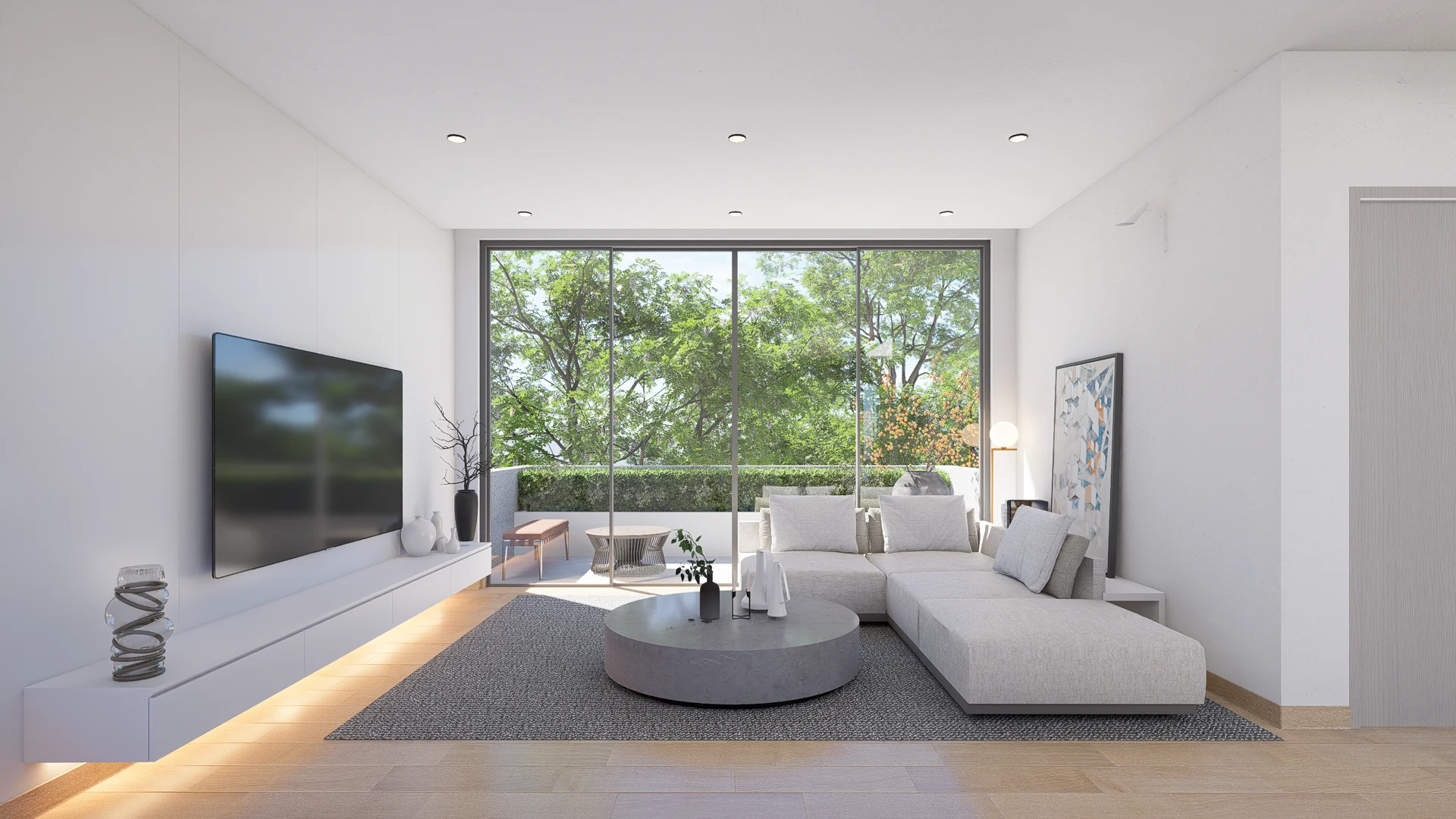
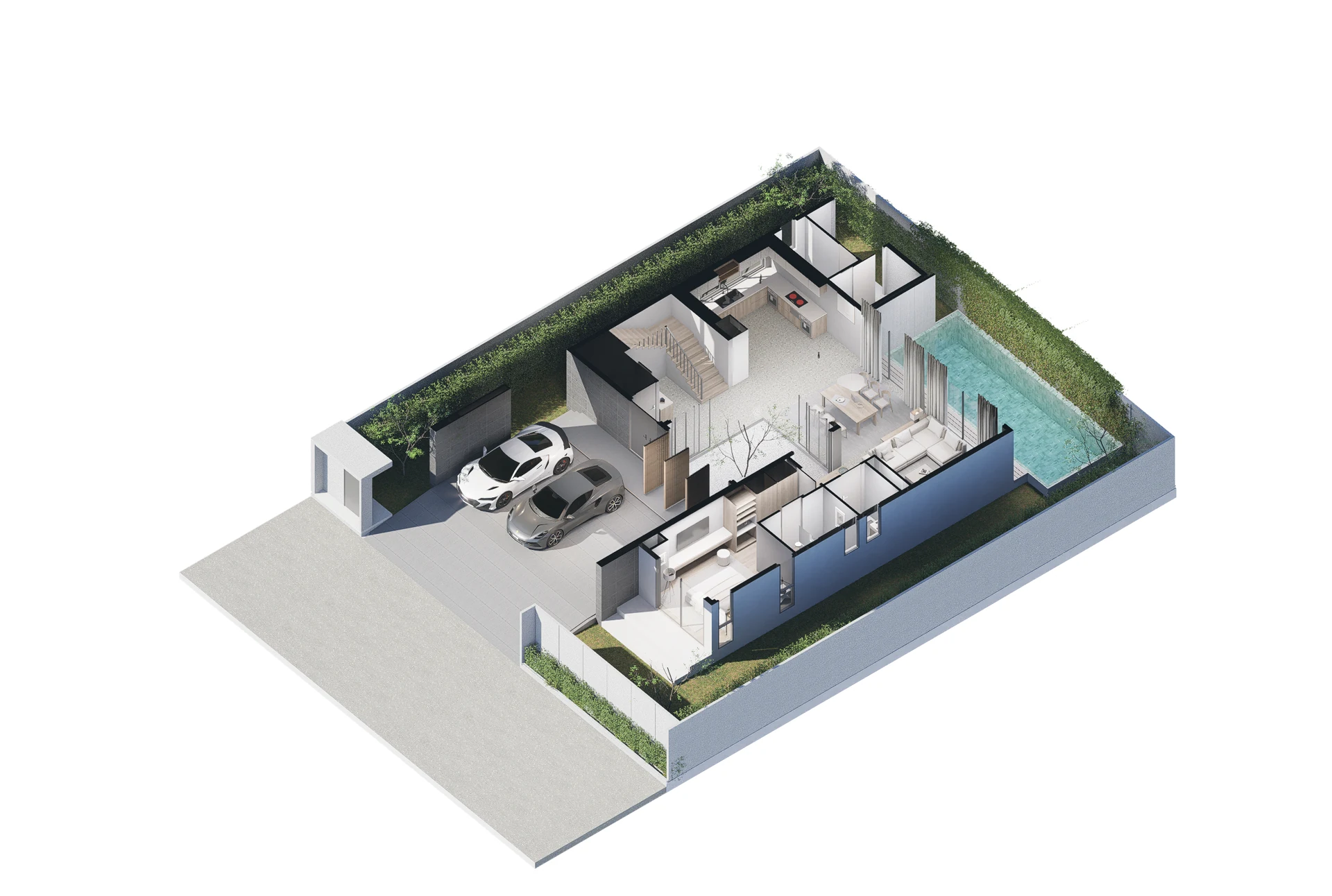
A house with two places to sit seems to have made an expensive duplication. Downstairs at PRAWET, the living, dining and kitchen areas form a connected set of communal rooms. Upstairs there is another sitting area associated with the quieter part of the plan. Why repeat an activity that can already take place below? The answer is not found in the sofa itself. Two people can be sitting at the same hour while wanting entirely different kinds of company. The second room changes the choices available to them even before anyone occupies it.
บ้านที่มีที่นั่งเล่นสองแห่งดูเหมือนกำลังสร้างหน้าที่ซ้ำกันอย่างแพงเกินจำเป็น ชั้นล่างของ PRAWET มีห้องนั่งเล่น อาหาร และครัวอยู่ในกลุ่มพื้นที่ส่วนกลางที่เชื่อมกัน ชั้นบนมีที่นั่งพักอีกแห่งใกล้ส่วนที่สงบกว่า แล้วทำไมต้องทำซ้ำกิจกรรมที่ทำข้างล่างได้อยู่แล้ว คำตอบไม่ได้อยู่ที่โซฟา เพราะคนสองคนอาจนั่งอยู่ในชั่วโมงเดียวกัน แต่ต้องการความใกล้ชิดกับคนอื่นคนละระดับ ห้องอีกแห่งจึงเปลี่ยนทางเลือกของพวกเขาตั้งแต่ก่อนจะมีคนนั่งเสียอีก
There is a difference between a room for being alone and a room to which somebody has been sent. The furniture may be identical, but the choice makes the experience different. PRAWET's owner brief asks for connected communal life and distinct places for individual rest. It does not describe an unhappy family, and the design should not be narrated as a cure for relationships we know nothing about. The architectural issue is more ordinary. People living together can want different levels of company within the same hour. A plan that offers only the shared centre may make those differences harder to accommodate. The second sitting place gives the household another option without making that option an obligation.
ห้องสำหรับอยู่คนเดียวต่างจากห้องที่ใครบางคนถูกส่งให้ไปอยู่ เฟอร์นิเจอร์อาจเหมือนกัน แต่การเลือกทำให้ความหมายต่างกัน โจทย์เจ้าของ PRAWET ขอทั้งชีวิตส่วนกลางที่เชื่อมกันและที่พักของแต่ละคน ไม่ได้บอกว่าครอบครัวนี้มีปัญหาความสัมพันธ์ และเราไม่ควรเล่าแบบราวกับมันเป็นยารักษาสิ่งที่ไม่รู้ คำถามทางสถาปัตยกรรมธรรมดากว่านั้น คนอยู่ด้วยกันอาจต้องการระดับการมีเพื่อนต่างกันในชั่วโมงเดียวกัน ผังที่มีแต่ศูนย์กลางร่วมอาจรองรับความต่างนั้นยาก พื้นที่นั่งพักอีกแห่งให้ทางเลือกโดยไม่ทำให้ทางเลือกกลายเป็นข้อบังคับ
There is a temptation to treat a second sitting room as a luxury because its name repeats the first. Yet room labels are blunt instruments. They tell us what furniture might fit, but not how much social attention a person may be expected to offer while using it. At the dining and living spaces downstairs, several daily activities can overlap. A person at the table may be available to conversation, a passing request or the general life of the common zone. Upstairs, sitting has the possibility of being quieter. That is not a different piece of furniture. It is a different degree of participation. If the plan can make that distinction real, the second sitting area is doing work the first cannot always do.
เรามักตัดสินว่าที่นั่งเล่นแห่งที่สองเป็นความหรูหรา เพราะชื่อห้องซ้ำกับแห่งแรก แต่ชื่อห้องเป็นเครื่องมือที่หยาบมาก มันบอกได้ว่าควรวางเฟอร์นิเจอร์อะไร แต่ไม่ได้บอกว่าคนที่นั่งจะถูกคาดหวังให้ใส่ใจคนรอบข้างมากเท่าไร ห้องอาหารกับห้องนั่งเล่นชั้นล่างเปิดให้กิจกรรมหลายอย่างอยู่ใกล้กัน คนที่โต๊ะอาจอยู่ในระยะบทสนทนา คำขอให้ช่วยบางอย่าง หรือความเคลื่อนไหวของพื้นที่กลาง ส่วนการนั่งชั้นบนมีโอกาสเงียบกว่า นี่ไม่ใช่ความต่างของเก้าอี้ แต่เป็นความต่างของระดับการมีส่วนร่วม หากผังทำให้เลือกได้จริง พื้นที่นั่งพักแห่งที่สองกำลังทำหน้าที่ที่แห่งแรกอาจทำไม่ได้ตลอดเวลา
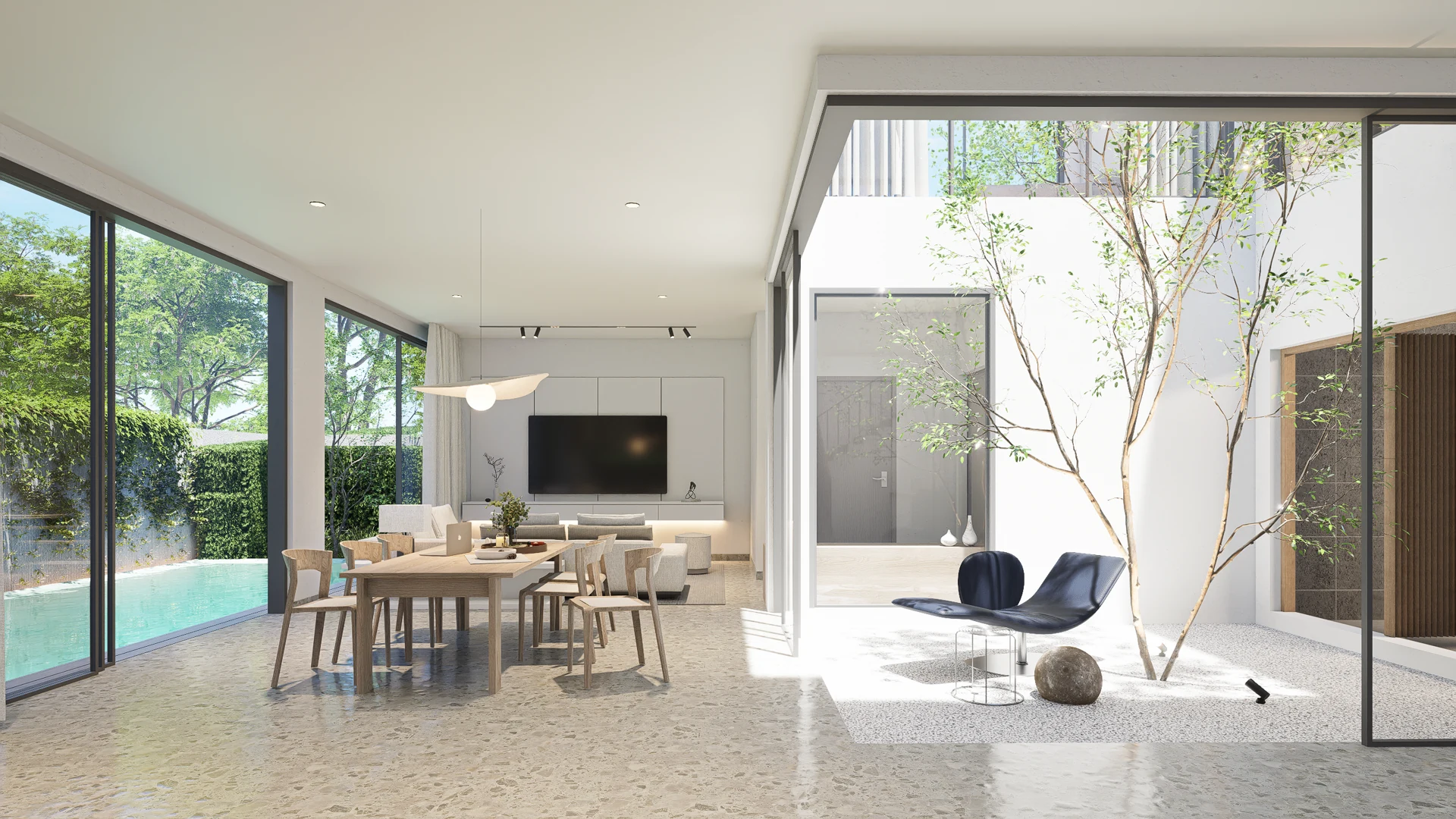
Shared space has a wonderful economy. Somebody preparing food can remain within reach of a conversation. A person at the table can be near others without doing exactly the same thing. That ease is valuable, particularly when the brief explicitly calls for family time together. It can also become tiring if the room has no way to distinguish being present from being available. A body is visible, so someone asks a question. A person is seated nearby, so a conversation continues. These are ordinary possibilities of shared domestic space, not observations about how this particular family behaves.
พื้นที่ร่วมกันมีความประหยัดทางสังคมอย่างหนึ่ง คนเตรียมอาหารยังอยู่ในระยะของบทสนทนา คนที่นั่งโต๊ะอาหารอยู่ใกล้คนอื่นได้โดยไม่จำเป็นต้องทำกิจกรรมเดียวกัน ความสะดวกนี้มีคุณค่า โดยเฉพาะเมื่อโจทย์ให้ความสำคัญกับเวลาของครอบครัว แต่ก็อาจทำให้เหนื่อยได้ถ้าห้องไม่มีวิธีแยกระหว่างการอยู่ตรงนั้นกับการต้องพร้อมตอบคนอื่นตลอดเวลา เห็นใครอยู่ก็ถาม นั่งใกล้กันก็คุยต่อ นี่เป็นความเป็นไปได้ทั่วไปของพื้นที่ร่วม ไม่ใช่ข้อมูลว่าครอบครัว PRAWET มีพฤติกรรมเช่นนั้นจริง
A shared room has its own social acoustics, even before sound insulation is considered. Somebody entering the kitchen is visible to someone at the table. A conversation can cross from the sofa into another activity. The physical ease of being together may become an expectation that everyone remain responsive. That expectation is not drawn with a wall thickness or a doorway symbol. It emerges from how a room is used and how family members negotiate their attention. Architecture can make different positions available, but should not claim to know the household's private habits. Separating a quieter sitting area from the main communal group is a spatial response to possible differences in participation, not proof of an emotional result.
ห้องร่วมกันมีลักษณะทางสังคมของเสียงและการรับรู้อยู่แล้ว แม้ยังไม่พูดถึงฉนวนกันเสียง คนเข้าครัวอยู่ในสายตาคนที่โต๊ะ บทสนทนาจากโซฟาอาจข้ามไปถึงกิจกรรมอีกอย่าง ความสะดวกในการอยู่ร่วมกันอาจกลายเป็นความคาดหวังว่าทุกคนต้องตอบสนองอยู่เสมอ ความคาดหวังนั้นไม่ได้ถูกวาดด้วยความหนาผนังหรือสัญลักษณ์ประตู แต่มาจากวิธีใช้ห้องและการแบ่งความสนใจของสมาชิก สถาปัตยกรรมจัดตำแหน่งหลายแบบให้ได้ แต่ไม่ควรอ้างว่ารู้นิสัยส่วนตัวของครอบครัว การแยกที่นั่งพักเงียบออกจากห้องกลางเป็นคำตอบเชิงพื้นที่ต่อระดับการมีส่วนร่วมที่ต่างกัน ไม่ใช่หลักฐานผลด้านอารมณ์
The distinction is familiar in city life. We can enjoy being in a café without wanting to join every conversation around us. We can sit near a window on a busy street and prefer a little distance from the person at the next table. Shared domestic space works differently because relationships are closer and the expectations less easily suspended. Somebody visible in the living room may be assumed to be free to respond. The family brief for PRAWET recognises the need for both shared time and individual rest, but does not disclose the family's personal agreements. The architecture can provide a location for stepping away. It cannot write the social permission that makes stepping away acceptable.
ความต่างนี้พบได้ในชีวิตเมือง เราอาจชอบนั่งร้านกาแฟโดยไม่อยากร่วมบทสนทนากับโต๊ะอื่น หรือเลือกนั่งริมหน้าต่างที่ถนนพลุกพล่านแต่ยังอยากมีระยะจากคนข้าง ๆ พื้นที่ในบ้านต่างออกไปเพราะความสัมพันธ์ใกล้ชิดกว่าและความคาดหวังมักหยุดได้ยากกว่า เมื่อใครนั่งอยู่ในห้องกลาง ก็อาจถูกคิดว่าพร้อมตอบอยู่เสมอ โจทย์ PRAWET รับรู้ความต้องการทั้งเวลาอยู่ร่วมกันและเวลาพักของแต่ละคน แต่ไม่ได้เล่าข้อตกลงส่วนตัวของครอบครัว สถาปัตยกรรมจัดตำแหน่งให้แยกไปพักได้ ส่วนการอนุญาตทางความสัมพันธ์ให้คนพักโดยไม่รู้สึกผิดนั้นแบบเขียนแทนไม่ได้
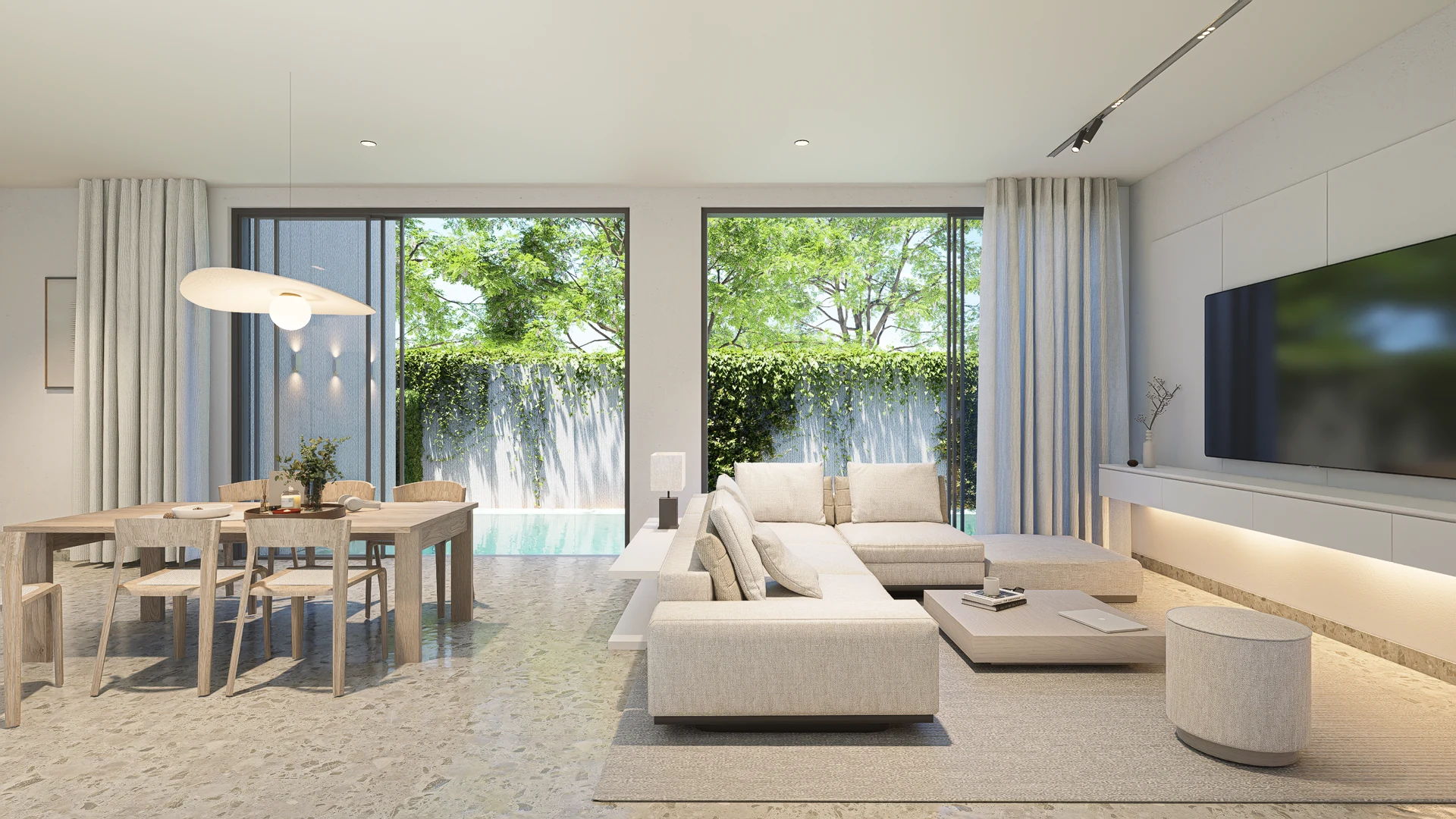
A bedroom offers retreat, but it carries particular expectations. Going to bed can suggest the day is over, or that somebody is unwell, or simply wants to close a door. Not every pause asks for that degree of withdrawal. An upper sitting area can accommodate the less dramatic wish to be quiet while remaining in the house. A chair there need not become a shrine to solitude. The option is useful because a person can take it or ignore it. Architecture creates a place for the decision without dictating what the decision should mean emotionally.
ห้องนอนมีความเป็นส่วนตัวอยู่แล้ว แต่การเข้าไปในห้องนอนก็มักมีความหมายเฉพาะ บางคนอาจเข้าใจว่าวันนั้นจบแล้ว ไม่สบาย หรืออยากปิดประตูจริงจัง ขณะที่การพักจากผู้คนบางครั้งไม่ได้ต้องการระยะห่างขนาดนั้น พื้นที่นั่งพักชั้นบนรองรับการอยากเงียบโดยยังอยู่ในบ้านได้ เก้าอี้ตรงนั้นไม่จำเป็นต้องถูกยกเป็นสัญลักษณ์แห่งความสันโดษ ทางเลือกนี้มีประโยชน์เพราะคนจะใช้หรือไม่ใช้ก็ได้ สถาปัตยกรรมจัดที่ให้การตัดสินใจ โดยไม่กำหนดแทนว่าความรู้สึกของคนที่เลือกควรเป็นอย่างไร
The separation cannot be judged by a photograph of an empty upper room alone. A place may look serene yet sit directly beside a busy circulation route. It may offer privacy from sight while remaining open to sound, or provide quiet at the price of making daily movement inconvenient. These are design questions to test with plans, sections and details. The supplied project material establishes the presence of a distinct upper sitting area, not a measured acoustic performance. A proper discussion of its value must therefore consider what it is separated from, what it remains close to and what effort is required to return. The character of a retreat lies partly in its route back to ordinary life.
ภาพห้องชั้นบนที่ไม่มีคนอยู่อย่างเดียวใช้ตัดสินความแยกตัวไม่ได้ ห้องอาจดูสงบแต่ตั้งชิดทางเดินที่คนผ่านมาก มันอาจเป็นส่วนตัวจากสายตาแต่รับเสียงเต็ม ๆ หรือเงียบดีแต่ต้องเดินไกลจนไม่สะดวก เรื่องเหล่านี้ต้องทดสอบกับผัง รูปตัด และรายละเอียด เอกสารที่มีบอกว่ามีพื้นที่นั่งพักชั้นบนแยกออกมา ไม่ได้ยืนยันผลกันเสียงที่วัดจริง การพูดถึงคุณค่าจึงต้องดูว่ามันแยกจากอะไร ยังใกล้อะไร และคนต้องออกแรงเดินกลับมากเท่าไร บุคลิกของที่พักส่วนตัวมีส่วนอยู่ในเส้นทางกลับเข้าสู่ชีวิตธรรมดาด้วย
It matters that the alternative to the common room is not only a bedroom. A bedroom has practical and emotional associations with sleep, illness, dressing and the end of a day. A person who wants half an hour away from conversation does not necessarily need that full degree of enclosure. A smaller sitting place or a separate lounge can occupy the useful interval between company and seclusion. Whether PRAWET's upper room offers acoustic quiet, convenient access and the right furniture would require drawings and eventual observation. The arrangement at least gives the design team a specific question. Can somebody be present in the house without being required to participate in every moment of its common life?
สำคัญด้วยว่าทางเลือกของห้องส่วนกลางไม่ได้มีแค่ห้องนอน ห้องนอนเกี่ยวข้องกับการนอน ป่วย แต่งตัว หรือจบวัน บางคนที่อยากพักจากบทสนทนาครึ่งชั่วโมงไม่จำเป็นต้องปิดตัวเองถึงระดับนั้น มุมนั่งหรือห้องพักอีกแห่งอาจอยู่ในระยะกลางระหว่างการมีคนอยู่ด้วยกับการแยกตัว ส่วนพื้นที่ชั้นบนของ PRAWET จะกันเสียงได้จริง เดินถึงสะดวก และมีเฟอร์นิเจอร์เหมาะสมเพียงใดต้องดูแบบกับการใช้งานเพิ่มเติม แต่การจัดผังอย่างน้อยก็ทำให้ทีมมีคำถามเฉพาะว่า คนจะอยู่ในบ้านโดยไม่ต้องร่วมทุกช่วงเวลาของชีวิตส่วนกลางได้ไหม
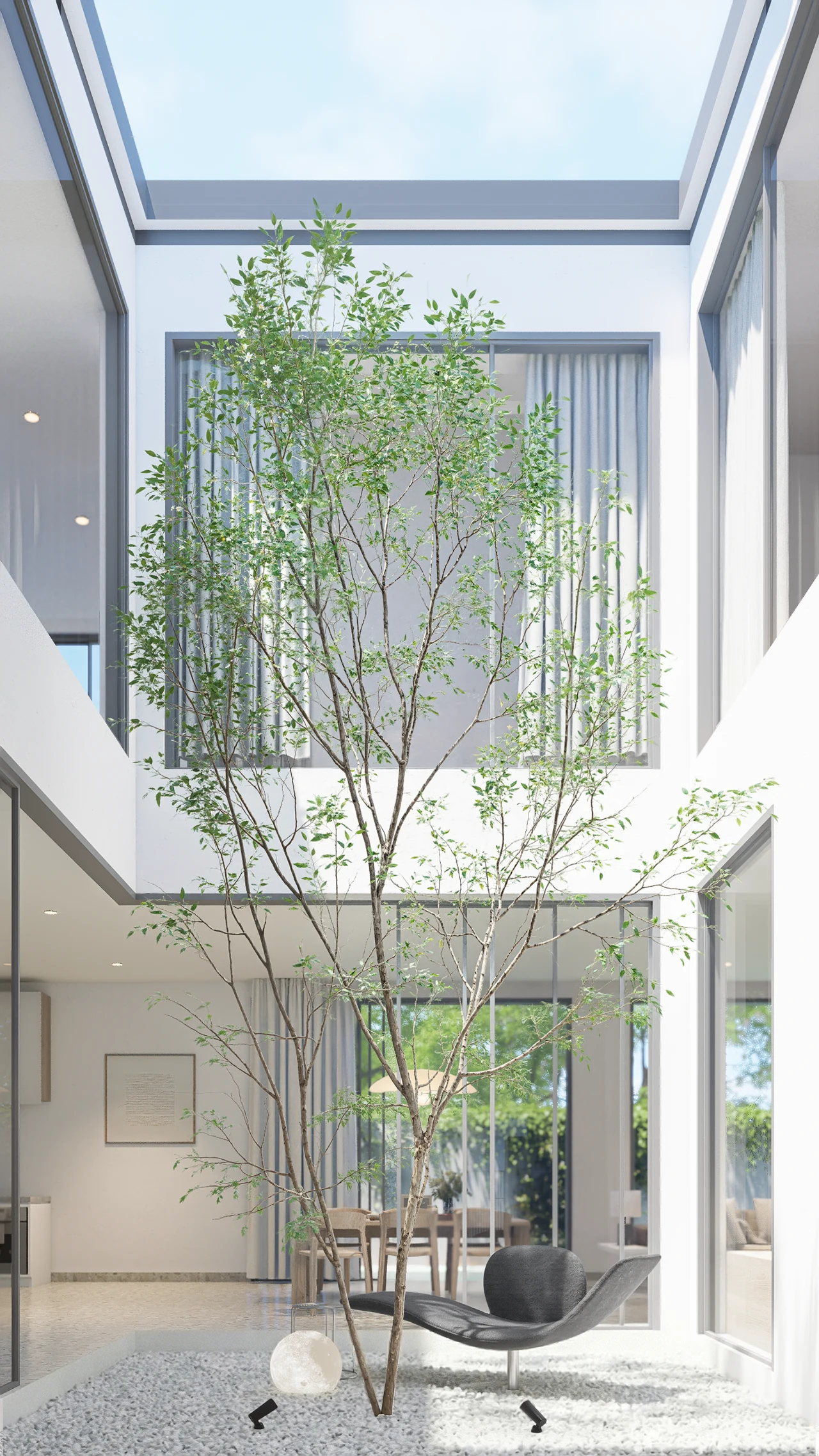
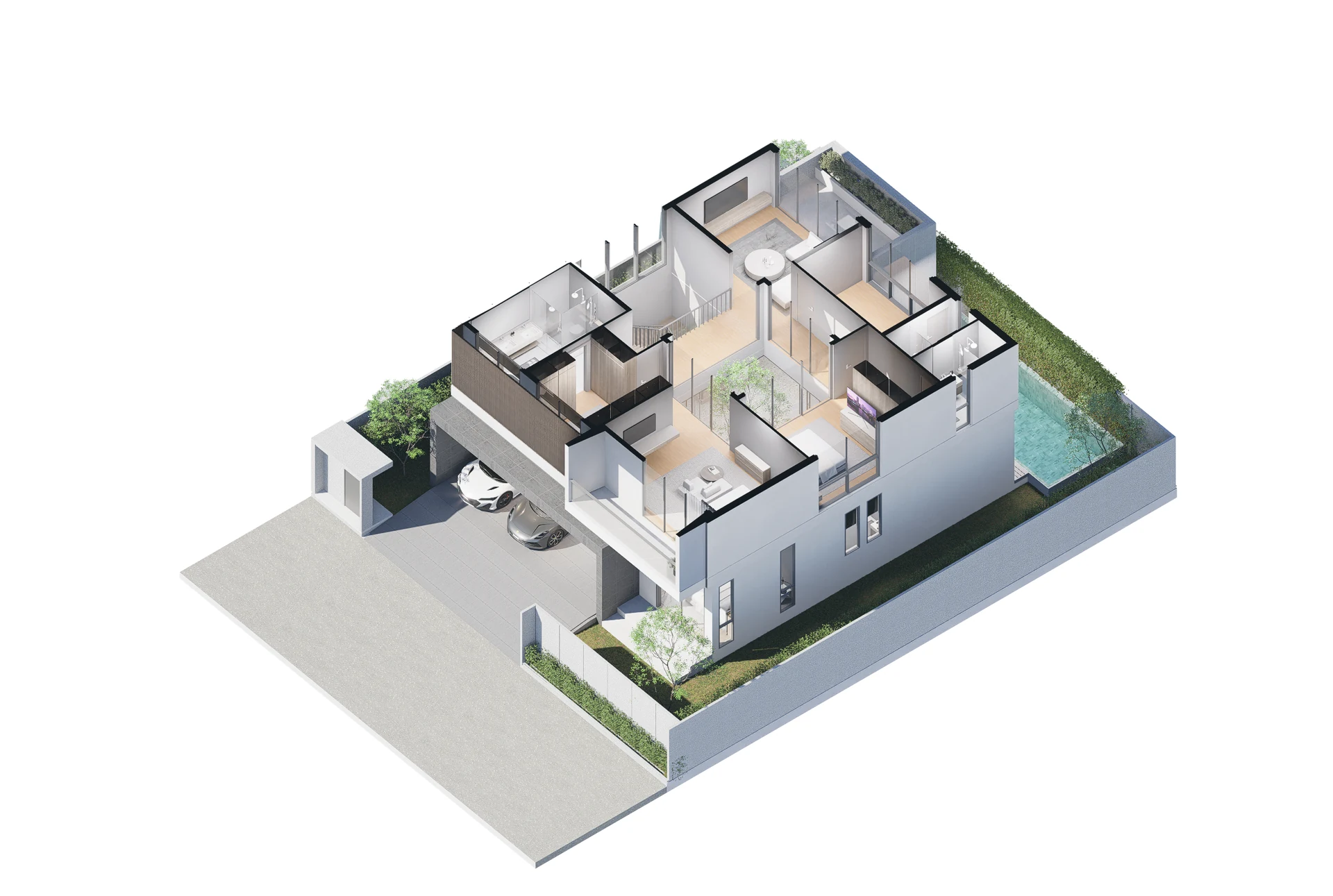
The courtyard adds a peculiar form of connection. Across the open centre, rooms on different levels can recognise the tree and parts of the same spatial composition. That makes the distance between floors visually legible without demanding direct participation in everything happening below. It is tempting to say the court keeps a family close. The responsible statement is narrower. It allows a shared point of reference and a possible awareness of elsewhere in the house. A view cannot stand in for a conversation, any more than it can guarantee that a person has been heard.
คอร์ตทำให้การเชื่อมต่อมีหน้าตาอีกแบบ จากคนละระดับ ห้องมองเห็นต้นไม้และบางส่วนของพื้นที่กลางเดียวกัน จึงรับรู้ระยะระหว่างชั้นได้โดยไม่ต้องเข้าร่วมทุกกิจกรรมข้างล่าง เราอาจอยากพูดว่าคอร์ตทำให้ครอบครัวใกล้ชิดกัน แต่ถ้ารับผิดชอบต่อหลักฐานควรพูดให้แคบกว่านั้น มันทำให้คนมีจุดอ้างอิงร่วมกันและอาจรับรู้ว่ามีพื้นที่อื่นอยู่ในบ้าน สายตาใช้แทนบทสนทนาไม่ได้ เช่นเดียวกับการมองเห็นใครสักคนก็ไม่ได้หมายความว่าเราได้ฟังเขาจริง ๆ
The courtyard gives this arrangement a shared point of reference without creating compulsory togetherness. People on different levels can encounter parts of the same void and tree, while the upstairs sitting room also looks toward another group of trees beyond its own opening. That difference is a strength if the brief calls for more than one form of rest. A person need not lose all connection to the house in order to leave a conversation. Still, visible proximity is not proof that a family member feels supported or that a relationship is healthy. The design can permit distance and return, and the people involved will give those options their social meaning.
คอร์ตทำให้การจัดห้องมีจุดอ้างอิงร่วมกัน โดยไม่ได้บังคับให้ทุกคนต้องอยู่ด้วยกัน คนต่างชั้นมองเห็นบางส่วนของช่องว่างและต้นไม้เดียวกัน ขณะที่พื้นที่พักชั้นบนยังมีวิวต้นไม้ภายนอกอีกชุดด้วย ความต่างนี้มีคุณค่าเมื่อโจทย์ต้องการการพักมากกว่าหนึ่งแบบ คนไม่จำเป็นต้องตัดขาดจากบ้านทั้งหลังเพื่อออกจากบทสนทนา แต่การมองเห็นกันก็ไม่ใช่หลักฐานว่าคนในครอบครัวรู้สึกได้รับการดูแล หรือความสัมพันธ์ดีต่อกัน แบบเพียงเปิดทางให้เว้นระยะและกลับมา ส่วนคนที่เกี่ยวข้องจะให้ความหมายทางสังคมกับทางเลือกนั้นเอง
The court helps clarify the relationship between separation and disconnection. From parts of the upper level, the tree and open centre remain within view. The upper room has its own outlook to trees beyond its opening as well. The house therefore does not rely on a single corridor or a single common room for every form of connection. Some relations are visual, some depend on movement, and some are established by the knowledge that a shared place remains nearby. This is a spatial possibility, not a psychological treatment. One should not claim that looking at the same tree automatically repairs a strained family relationship. The court can give people a shared orientation while allowing the right not to speak.
คอร์ตช่วยแยกความหมายของการอยู่ห่างออกจากการขาดการติดต่อ จากบางส่วนของชั้นบน ยังมองเห็นต้นไม้กับช่องว่างกลางบ้าน และพื้นที่พักชั้นบนเองก็มีวิวออกหาต้นไม้นอกช่องเปิดของมันด้วย บ้านจึงไม่ได้พึ่งทางเดินหรือห้องส่วนกลางเพียงแห่งเดียวเพื่อสร้างความเชื่อมต่อ ความสัมพันธ์บางอย่างเกิดจากสายตา บางอย่างจากการเคลื่อนไหว และบางอย่างเพียงจากการรู้ว่ามีพื้นที่ร่วมอยู่ไม่ไกล นี่เป็นความเป็นไปได้เชิงพื้นที่ ไม่ใช่วิธีรักษาทางจิตใจ เราจึงไม่ควรกล่าวว่าการมองต้นไม้ต้นเดียวกันทำให้ความสัมพันธ์ในครอบครัวดีขึ้นโดยอัตโนมัติ คอร์ตอาจทำให้คนรับรู้ทิศทางร่วมกัน ขณะที่ยังมีสิทธิ์ไม่พูดอะไรเลย
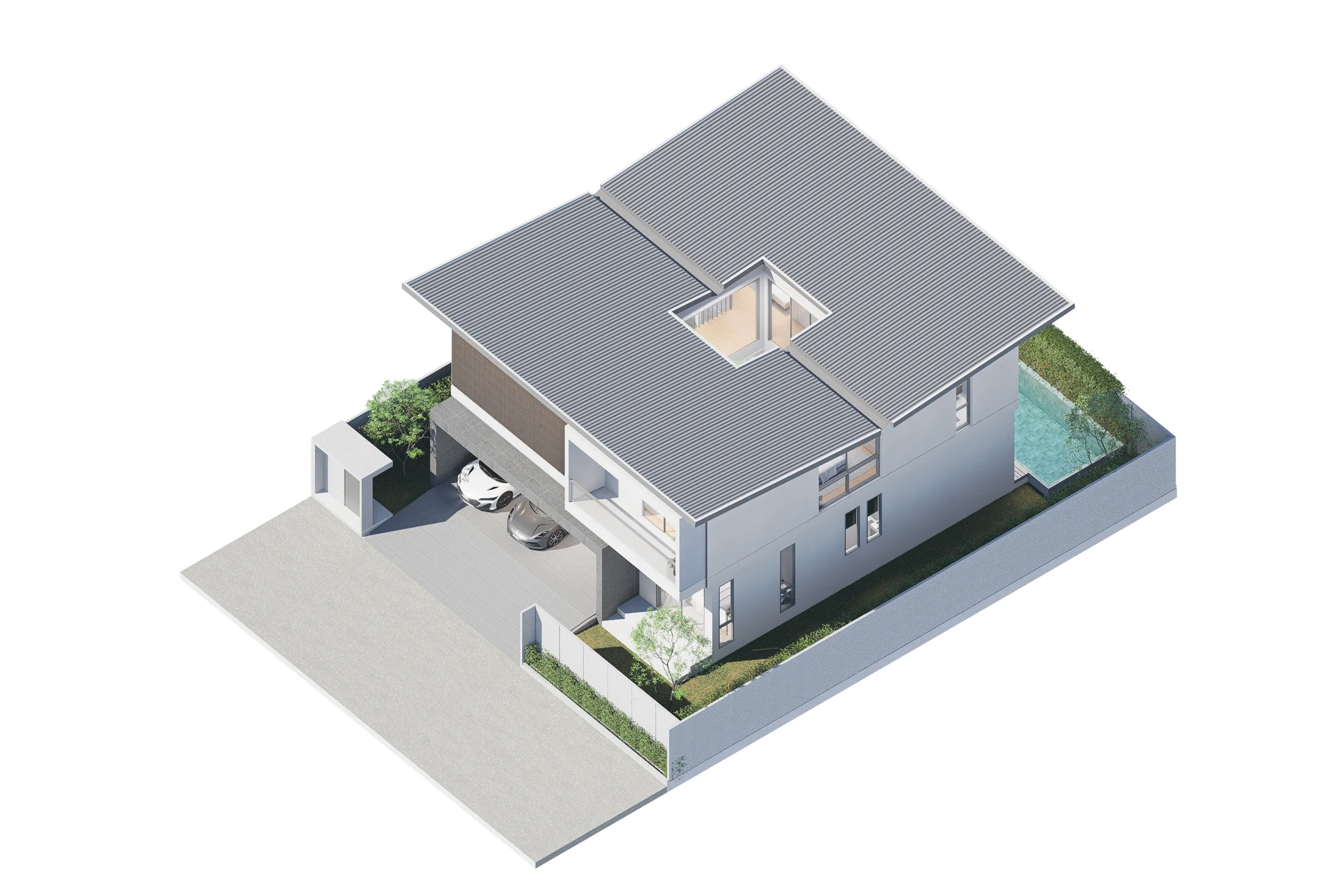
There is a qualification to this pleasant account of retreat. A quiet chair upstairs cannot make the household's other responsibilities disappear. Someone may have to continue preparing a meal, answer the entrance or look after the shared rooms while somebody else steps away. The division of those responsibilities is not visible in the project brief, and the plan cannot solve it by itself. The design offers distinct places. Whether everyone has a fair chance to use them depends partly on agreements among the people who live there. A room can support respect without manufacturing it.
แต่ภาพของการได้หลบไปพักก็มีด้านที่ควรคิด เก้าอี้เงียบ ๆ ชั้นบนไม่ได้ทำให้งานในบ้านหายไป ใครบางคนยังอาจต้องเตรียมอาหาร เปิดประตูรับคน หรือดูแลห้องส่วนกลางขณะที่อีกคนขึ้นไปพัก โจทย์ไม่ได้บอกว่าครอบครัวนี้แบ่งหน้าที่กันอย่างไร และผังก็แก้เรื่องนั้นแทนคนไม่ได้ แบบเพียงเสนอพื้นที่หลายลักษณะ ส่วนทุกคนจะมีโอกาสใช้อย่างเป็นธรรมหรือไม่ขึ้นอยู่กับข้อตกลงของคนอยู่ด้วย ห้องช่วยรองรับความเคารพกันได้ แต่สร้างความเคารพขึ้นแทนคนไม่ได้
A private place can also become a privilege distributed unequally. One person may enjoy silence because someone else continues preparing meals, answering visitors or managing the common area. The R17 essay cannot tell us who does those things at PRAWET. But it should recognise that the freedom to withdraw has material and social conditions. A second sitting area makes possible a different kind of occupation. It does not distribute time, care or permission by itself. If a design description praises solitude while erasing the people sustaining shared life, it mistakes a spatial opportunity for an achieved social arrangement. The more responsible statement is that the house contains an option, not that everyone has already been given an equal share of it.
ที่พักส่วนตัวอาจเป็นสิทธิพิเศษที่กระจายไม่เท่ากัน คนหนึ่งอาจได้นั่งเงียบเพราะอีกคนยังเตรียมอาหาร รับแขก หรือจัดการพื้นที่ร่วม บทความ R17 ไม่รู้ว่าใครทำเรื่องเหล่านั้นที่ PRAWET แต่ควรยอมรับว่าอิสระในการไปพักมีเงื่อนไขทางวัตถุและสังคม พื้นที่นั่งพักที่สองสร้างโอกาสใช้พื้นที่ต่างออกไป แต่ไม่ได้แบ่งเวลา งานดูแล หรือการอนุญาตแทนคนอยู่ หากคำบรรยายชมความสันโดษโดยลบคนที่ทำให้ชีวิตส่วนกลางดำเนินต่อ เรากำลังเอาโอกาสทางพื้นที่ไปอ้างเป็นผลสำเร็จทางความสัมพันธ์ ข้อความที่รับผิดชอบกว่าคือบ้านมีทางเลือก ไม่ใช่ทุกคนได้รับส่วนแบ่งเท่ากันเรียบร้อยแล้ว
The best opposing case is not that family members should always be together. It is that extra rooms consume real resources. A two-storey house of about 425 square metres still has a finite footprint, costs and circulation demands. An upper sitting area could be underused, while additional storage or a better service area might have served a particular family more often. Those alternatives must be considered against the actual brief. In PRAWET, however, the wish for distinct individual rest is explicit, rather than an afterthought imposed by the designer. The value of the extra sitting place can therefore be defended as a response to a stated need without claiming every home should have one.
ข้อค้านที่แรงที่สุดไม่ใช่การบอกว่าครอบครัวต้องอยู่ด้วยกันตลอด แต่คือห้องอีกแห่งใช้ทรัพยากรจริง บ้านสองชั้นประมาณ 425 ตารางเมตรก็ยังมีพื้นที่จำกัด ต้นทุน และทางสัญจร พื้นที่นั่งพักชั้นบนอาจถูกใช้น้อย ขณะที่ที่เก็บของหรือพื้นที่สนับสนุนที่ดีกว่าอาจมีประโยชน์บ่อยกว่าในบางครอบครัว ทางเลือกเหล่านี้ต้องถูกพิจารณากับโจทย์จริง แต่ใน PRAWET ความต้องการมีที่พักของแต่ละคนถูกระบุไว้ชัด ไม่ใช่ความคิดเสริมที่สถาปนิกนำเข้าไปเอง เราจึงอธิบายคุณค่าของพื้นที่นั่งพักเพิ่มในฐานะคำตอบต่อโจทย์นี้ได้ โดยไม่ต้องอ้างว่าบ้านทุกหลังจำเป็นต้องมี
One might object that an extra place to sit consumes floor area better used for storage or a more flexible shared room. That objection deserves a serious answer. Area and construction resources are finite, even in a substantial two-storey house. If the family had not valued separate moments of rest, a duplicate sitting area might indeed be an extravagant response. But PRAWET's brief specifically asks that members can spend time together while preserving places to withdraw. The question becomes how the plan serves that requirement without making circulation more difficult or wasting space. We can defend the decision as consistent with the brief while leaving actual frequency of use unknown.
อาจมีคนค้านว่าที่นั่งอีกแห่งใช้พื้นที่ซึ่งเอาไปเก็บของหรือทำห้องกลางให้ยืดหยุ่นขึ้นได้ ข้อค้านนี้สมควรได้รับคำตอบจริงจัง พื้นที่กับทรัพยากรก่อสร้างมีจำกัด แม้บ้านสองชั้นขนาดไม่น้อย หากครอบครัวไม่ได้ให้ความสำคัญกับเวลาพักส่วนตัว ที่นั่งซ้ำอาจเป็นทางเลือกฟุ่มเฟือยก็ได้ แต่บรีฟ PRAWET ระบุว่าต้องการทั้งการอยู่ร่วมกันและที่ถอยไปพักของแต่ละคน คำถามจึงเป็นผังตอบความต้องการนี้ได้อย่างไรโดยไม่ทำให้ทางเดินยากหรือเสียพื้นที่เปล่า เราปกป้องการตัดสินใจได้เพราะสอดคล้องกับบรีฟ ขณะเดียวกันยังไม่รู้ว่าคนจะใช้บ่อยเพียงใด
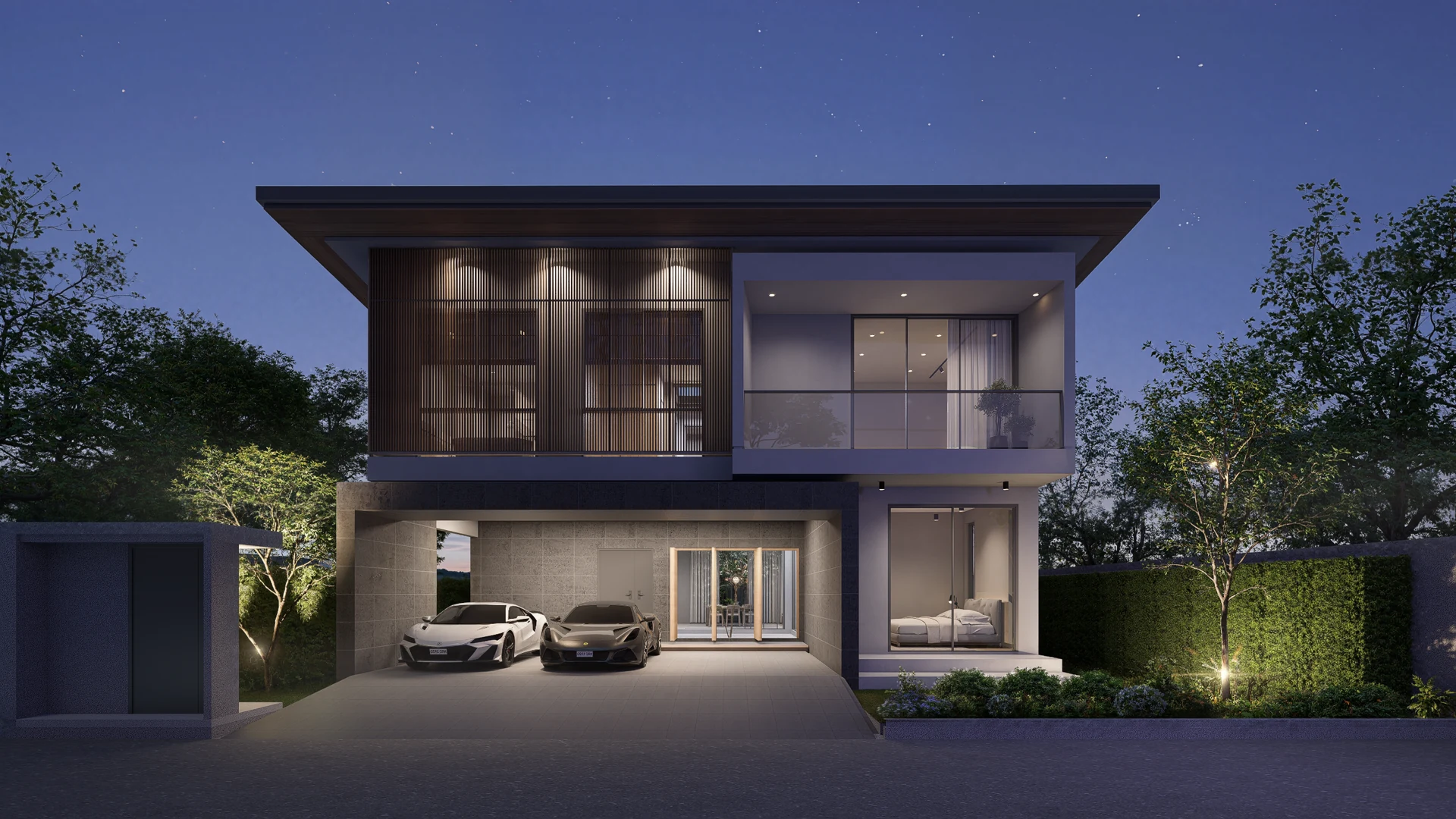
The ground floor complicates a neat story about private rooms always being upstairs. PRAWET has a bedroom at the front of the lower level as well as bedrooms above. That fact prevents privacy from being reduced to altitude. The lower room negotiates with the approach and frontage, while the upper sitting space is part of a different set of relationships. The same word private covers several kinds of boundary. The useful question is not which floor is more secluded in general. It is what each room needs protection from and what it still wants to remain connected to.
ชั้นล่างเองก็ทำให้เรื่องเล่าที่ว่าพื้นที่ส่วนตัวอยู่ข้างบนทั้งหมดใช้ไม่ได้ เพราะ PRAWET มีห้องนอนอยู่ด้านหน้าชั้นล่างด้วย นอกเหนือจากห้องนอนบนชั้นสอง ความเป็นส่วนตัวจึงไม่ใช่เรื่องของความสูงเพียงอย่างเดียว ห้องชั้นล่างต้องสัมพันธ์กับทางเข้าและด้านหน้าบ้าน ส่วนพื้นที่นั่งพักชั้นบนอยู่ในความสัมพันธ์อีกชุด คำเดียวว่าพื้นที่ส่วนตัวครอบคลุมขอบเขตต่างชนิดกัน คำถามที่มีประโยชน์คือแต่ละห้องต้องการป้องกันอะไร และยังอยากเชื่อมต่อกับอะไรอยู่
A separate room cannot make domestic labour disappear. One family member may be able to withdraw because another continues cooking, receiving visitors or attending to shared spaces. We do not know how such work is divided in this home. The plans cannot establish whether every occupant receives an equal chance to rest. This is precisely the reason an essay about private space should not stop at the pleasant image of a person reading alone. Rest has social conditions, and architecture participates in those conditions without controlling all of them. A well-designed room can make withdrawal easier, but whether it is fair, welcome or understood belongs also to the household's relationships.
ห้องที่แยกออกไปไม่ทำให้งานในบ้านหายไป สมาชิกคนหนึ่งอาจพักได้เพราะอีกคนยังทำอาหาร รับแขก หรือดูแลพื้นที่ร่วม เราไม่รู้ว่าบ้านนี้แบ่งงานกันอย่างไร ผังก็พิสูจน์ไม่ได้ว่าทุกคนมีโอกาสพักเท่ากัน นี่เองเป็นเหตุผลที่บทความเรื่องพื้นที่ส่วนตัวไม่ควรจบแค่ภาพคนอ่านหนังสือคนเดียวอย่างสงบ การพักมีเงื่อนไขทางสังคม และสถาปัตยกรรมเกี่ยวข้องกับเงื่อนไขนั้นโดยไม่ได้ควบคุมทั้งหมด ห้องที่ดีช่วยให้การแยกไปพักง่ายขึ้น แต่การพักนั้นยุติธรรม เป็นที่ยอมรับ หรือได้รับความเข้าใจหรือไม่ ยังขึ้นอยู่กับความสัมพันธ์ของคนในบ้านด้วย
The lower front bedroom adds an important counterexample to the easy division of a public ground floor and a private upper floor. The same house contains a personal room near the approach and a separate place for quiet on another level. They cannot be protected or connected in exactly the same way. The bedroom may need attention to external sightlines and how its glazing operates after dark. The upper sitting place calls for another assessment of separation from communal activity and convenience of return. A plan attentive to family life must recognise these differences, not simply colour all bedrooms and upper rooms as private in the diagram.
ห้องนอนด้านหน้าชั้นล่างเป็นข้อยกเว้นสำคัญต่อการแบ่งง่าย ๆ ว่าชั้นล่างสาธารณะ ชั้นบนส่วนตัว บ้านเดียวกันมีห้องส่วนบุคคลใกล้ทางเข้า และมีพื้นที่พักเงียบบนอีกระดับ ทั้งสองไม่อาจป้องกันหรือเชื่อมต่อแบบเดียวกันได้ ห้องนอนต้องสนใจแนวสายตาจากภายนอกและกระจกหลังค่ำ ส่วนที่นั่งชั้นบนต้องตรวจระยะจากกิจกรรมกลางและความสะดวกในการกลับมา ผังที่ใส่ใจชีวิตครอบครัวควรยอมรับความต่างนี้ ไม่ใช่ระบายสีห้องนอนและห้องชั้นบนทั้งหมดว่าพื้นที่ส่วนตัวใน Diagram อย่างเดียว
I would judge the second sitting area by its return journey. Is it sufficiently separate that a person can pause, yet close enough that rejoining ordinary family life does not become an expedition? Does getting away for half an hour mean withdrawing from everyone, or simply changing the pressure to participate? The drawings offer a spatial answer to these questions, though actual acoustic privacy and lived comfort would need further evidence. The aspiration is ordinary and quite demanding. Make it possible for people to choose different levels of company without treating either choice as a rejection.
ผมอยากประเมินพื้นที่พักชั้นบนจากการเดินกลับลงมามากพอ ๆ กับการเดินขึ้นไป มันแยกพอให้คนพักได้ แต่ใกล้พอให้กลับมาร่วมชีวิตธรรมดาโดยไม่ต้องรู้สึกเหมือนเดินทางไกลหรือไม่ การขอแยกตัวครึ่งชั่วโมงหมายถึงการไม่เอาใครเลย หรือแค่ลดความจำเป็นที่จะต้องตอบทุกบทสนทนา แบบเสนอคำตอบเชิงพื้นที่บางส่วนได้ แต่การกันเสียงและความสบายขณะใช้งานจริงยังต้องมีหลักฐานเพิ่มเติม ความตั้งใจฟังดูธรรมดาแต่ทำยาก คือให้คนเลือกระดับการอยู่ร่วมกันได้ โดยไม่ทำให้การเลือกแบบใดกลายเป็นการปฏิเสธอีกคน
The front bedroom on the ground floor introduces another kind of privacy. It is located closer to the approach rather than occupying the supposedly more secluded upper storey. Its edge must be read against street-facing glazing and the building's outer arrangement, while the separate sitting space upstairs deals with proximity to the family rooms and movement between floors. Calling both private does not make their design problems identical. One is concerned more directly with a possible external audience. The other involves the subtler expectation that a family member can remain available without being constantly present. PRAWET becomes more convincing when these distinctions are kept, not filed under a single promise that every private room is protected in the same way.
ห้องนอนด้านหน้าชั้นล่างยังเพิ่ม Privacy อีกชนิด เพราะอยู่ใกล้ทางเข้าแทนที่จะขึ้นไปอยู่ชั้นบนซึ่งมักถูกคิดว่าเป็นส่วนตัวกว่า ขอบห้องนี้ต้องอ่านคู่กับกระจกด้านถนนและการจัดหน้าบ้าน ส่วนพื้นที่นั่งพักชั้นบนเกี่ยวข้องกับระยะจากห้องครอบครัวและทางเดินระหว่างชั้น เราเรียกทั้งสองว่าพื้นที่ส่วนตัวได้ แต่ปัญหาในการออกแบบไม่เหมือนกัน ห้องหนึ่งต้องรับมือกับสายตาจากภายนอกโดยตรงมากกว่า อีกห้องเกี่ยวข้องกับความคาดหวังละเอียดอ่อนว่าคนในครอบครัวควรพร้อมอยู่ร่วมกับคนอื่นตลอดหรือไม่ PRAWET น่าเชื่อถือขึ้นเมื่อเก็บความต่างนี้ไว้ แทนที่จะอธิบายว่าห้องส่วนตัวทุกห้องถูกปกป้องแบบเดียวกัน
Perhaps the best way to judge the two sitting spaces is to ask what a person is allowed to change about their participation. The lower group makes it easy to encounter family life. The upper place potentially permits another kind of presence. Neither should be treated as proof that the owners feel a particular emotion or have a particular relationship. Their usefulness lies in the range of choices the plan offers, subject to the physical realities of access, sound and daily care. A house cannot decide when somebody needs company. It can make the invitation available and leave room for a person to decline it without leaving home.
บางทีวิธีประเมินที่นั่งสองแห่งที่ดีกว่าคือถามว่าคนสามารถเปลี่ยนระดับการมีส่วนร่วมของตัวเองได้แค่ไหน พื้นที่กลุ่มชั้นล่างทำให้พบชีวิตครอบครัวได้ง่าย ส่วนพื้นที่ชั้นบนเปิดโอกาสให้มีการอยู่ร่วมบ้านอีกแบบ ทั้งสองไม่ใช่หลักฐานว่าเจ้าของรู้สึกอย่างไรหรือมีความสัมพันธ์แบบไหน คุณค่าอยู่ที่ทางเลือกในผัง โดยยังขึ้นกับการเข้าถึง เสียง และการดูแลจริง บ้านตัดสินแทนไม่ได้ว่าคนต้องการมีเพื่อนเมื่อไร แต่ช่วยทำให้คำเชิญอยู่ตรงนั้น และเหลือที่ให้คนปฏิเสธได้โดยไม่ต้องออกจากบ้าน
PROJECT CREDIT
Design Direction NATTHA / Natthapon Khemmueang
Design Development & Project Delivery Piaoform Studio