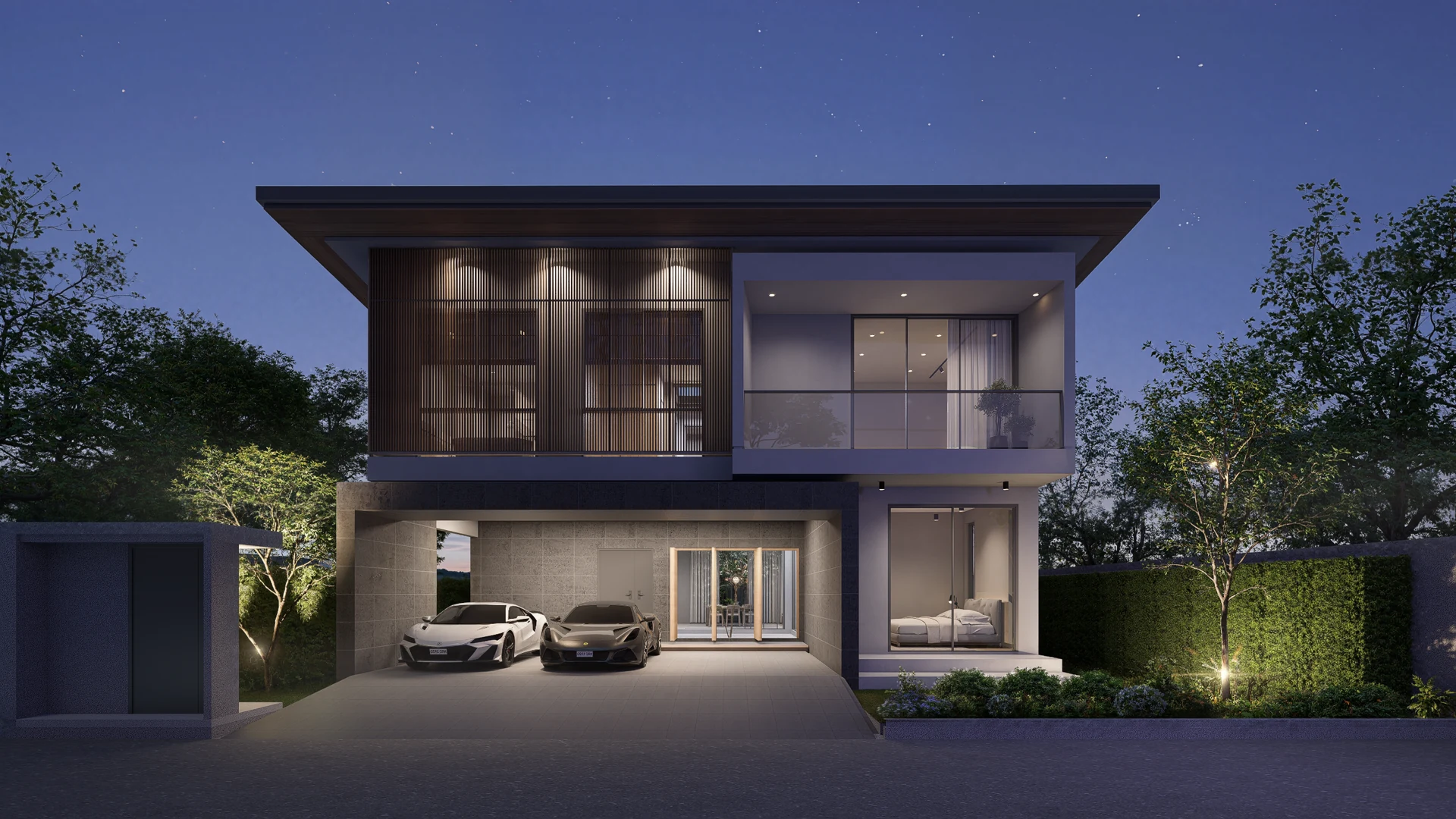
A Pool with a Wall at the Endสระว่ายน้ำที่มีปลายทางเป็นกำแพง
Written by NATTHA / Natthapon Khemmueang
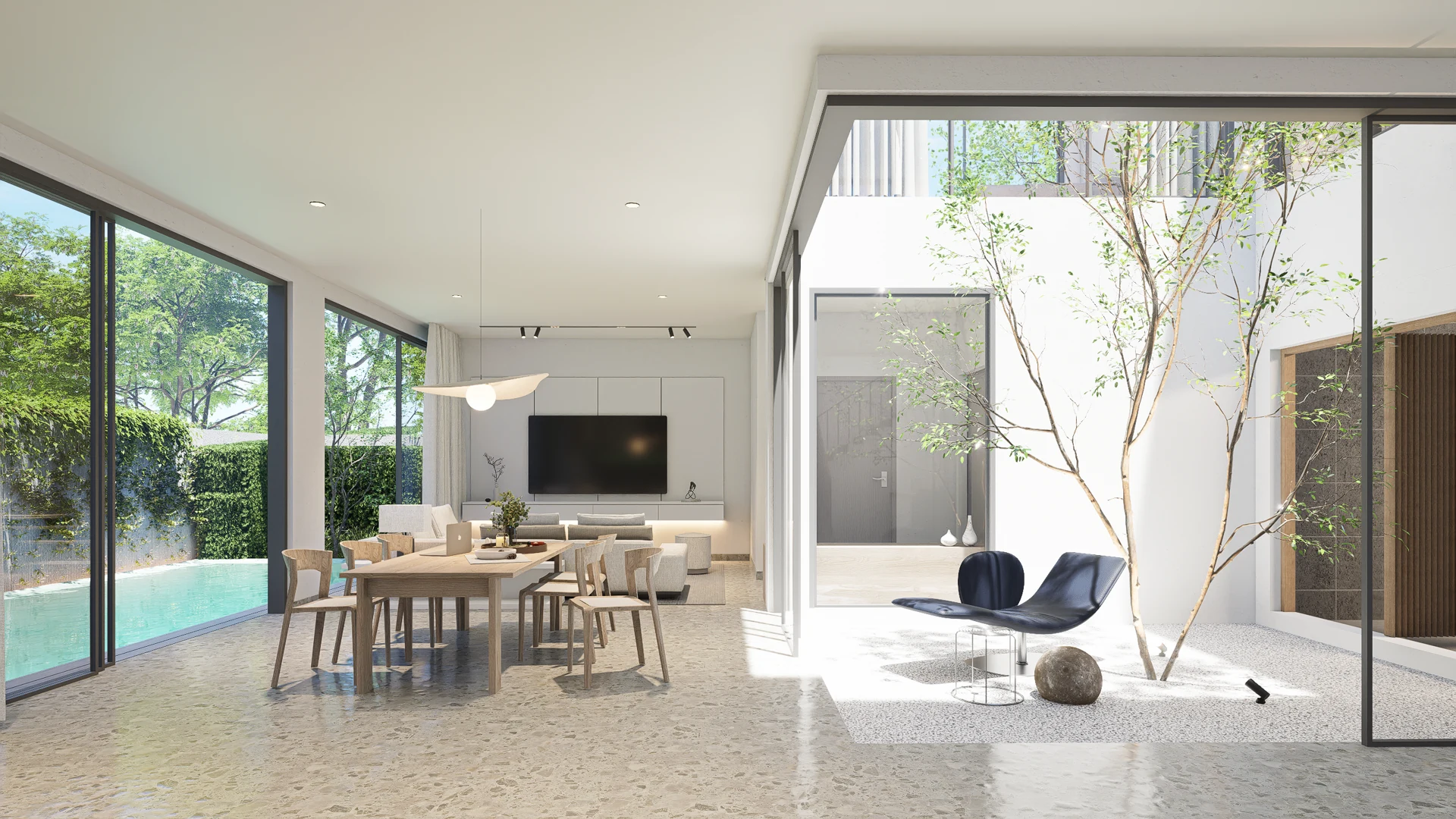
The pool does not end in a horizon. Water runs along one side of PRAWET's shared interior, then the eye arrives at a boundary wall and planting. That is the whole visible proposition, and it makes me suspicious of the usual advice to make a room feel open by giving it the biggest possible distant view. Sometimes there is no distant view worth borrowing. Sometimes what sits just beyond the glass has been considered more carefully than anything several hundred metres away.
สระว่ายน้ำข้างห้องส่วนกลางของ PRAWET ไม่ได้ทอดยาวไปสุดขอบฟ้า สายตาเคลื่อนไปตามน้ำแล้วพบกำแพงกับแนวต้นไม้ นี่คือองค์ประกอบที่มองเห็นจากภาพ และมันทำให้ผมลังเลกับคำแนะนำคุ้นหูที่ว่าหากอยากให้ห้องโปร่งก็ควรเปิดรับวิวไกลให้มากที่สุด บางที่ดินไม่มีวิวไกลที่ควรฝากความหวังไว้ บางครั้งสิ่งที่อยู่ถัดจากกระจกไปเพียงไม่กี่เมตรกลับถูกพิจารณาอย่างตั้งใจมากกว่าสิ่งที่อยู่ไกลออกไปหลายร้อยเมตรเสียอีก
A distant view usually arrives as something already made by the world. Mountains, a skyline or a broad expanse of water may be appreciated through a window, but the architect rarely controls what happens beyond the property. The pool at PRAWET offers a smaller field of responsibility. Its edge, the planting beside it and the wall that closes the view are composed within the design. That does not mean their appearance is guaranteed to remain the same. It means the near landscape can be discussed as an arrangement with decisions behind it. The wall ceases to be only the place where vision fails. It becomes one of the surfaces that gives the water a legible end.
วิวไกลมักเป็นสิ่งที่โลกจัดไว้ก่อนเรา ภูเขา เส้นขอบฟ้า หรือผืนน้ำใหญ่มีอยู่ให้คนชมผ่านหน้าต่าง แต่สถาปนิกแทบไม่ควบคุมสิ่งที่เกิดขึ้นนอกที่ดิน ส่วนสระของ PRAWET ให้ขอบเขตความรับผิดชอบที่ใกล้กว่า ขอบสระ แนวต้นไม้ และกำแพงที่ปิดปลายวิวถูกจัดร่วมกันในงานออกแบบ ไม่ได้หมายความว่าหน้าตาทุกอย่างจะคงเดิมตลอด แต่หมายความว่าเราคุยเรื่องวิวใกล้ได้ในฐานะองค์ประกอบที่มีการตัดสินใจรองรับ กำแพงจึงไม่ใช่เพียงจุดที่สายตามองต่อไม่ได้ แต่กลายเป็นพื้นผิวหนึ่งที่ช่วยให้น้ำมีปลายทางชัดเจน
What we call a view is often a promise of distance. Real estate descriptions celebrate mountains, city skylines and uninterrupted horizons, as though the eye should travel as far as possible before a space can be generous. The PRAWET pool suggests a more contained proposition. The water has an end. So does the part of the site available for design. Instead of concealing those facts, the arrangement gives the eye surfaces to encounter along the way. Water establishes a horizontal foreground, planting breaks up the harder edge and the wall becomes a background rather than a disappointment. A short view can be deliberate without pretending to be infinite.
เวลาเราพูดถึงวิว มักมีคำสัญญาเรื่องระยะไกลติดมาด้วย โฆษณาอสังหาริมทรัพย์ชอบภูเขา เส้นขอบฟ้าเมือง และภาพที่มองไปได้ไม่มีอะไรกั้น ราวกับว่าสายตาต้องเดินทางไปให้ไกลที่สุดก่อนห้องจึงจะใจกว้างได้ แต่สระของ PRAWET ให้คำตอบที่อยู่ในขอบเขตมากกว่า ผืนน้ำมีจุดสิ้นสุด และที่ดินก็มีขอบที่ออกแบบได้ แทนที่จะปกปิดความจริงนั้น แบบจัดให้สายตาพบพื้นผิวระหว่างทาง น้ำเป็นระยะหน้าในแนวนอน ต้นไม้แทรกผิวแข็ง และกำแพงกลายเป็นฉากหลังแทนที่จะเป็นความผิดหวัง วิวระยะสั้นจึงถูกตั้งใจสร้างได้ โดยไม่จำเป็นต้องทำเหมือนมันทอดไปไม่สิ้นสุด
Water occupies the foreground. The wall provides a definite end. Planting interrupts what could otherwise become an uninterrupted expanse of hard surface. Together these elements offer the dining and living rooms a set of distances to read. It is a close landscape, almost impossible to detach from the architecture because its edges and orientation matter so much. A window alone would not make this scene. Ground had to be reserved, the rooms positioned and the boundary made part of the view. The design of looking outward started before anybody drew the glazing.
น้ำเป็นสิ่งที่สายตาพบก่อน กำแพงทำให้วิวมีปลายทางชัด และต้นไม้เข้ามาแบ่งผิวแข็งที่อาจเรียบยาวจนไม่มีอะไรให้สังเกต เมื่ออยู่ด้วยกัน สิ่งเหล่านี้สร้างระยะหลายชั้นให้ห้องอาหารและห้องนั่งเล่นได้อ่าน เป็นภูมิทัศน์ใกล้ตัวที่แยกจากสถาปัตยกรรมแทบไม่ได้ เพราะขอบและทิศทางของพื้นที่สำคัญมาก หน้าต่างบานเดียวสร้างภาพนี้ไม่ได้ ต้องกันพื้นที่ให้สระ วางห้องให้รับมัน และคิดว่าขอบเขตจะอยู่ในสายตาอย่างไร การออกแบบการมองออกไปจึงเริ่มก่อนจะวาดแนวกระจกเสียอีก
This close arrangement changes the scale of what deserves attention. A viewer is more likely to notice the meeting of a planted edge and the water than a remote building which appears small on the horizon. A wall may register through the contrast of its surface with foliage, not through the material name alone. Such observations can be made from the design imagery, but they do not establish a particular sensation of coolness, sound or smell. The purpose of the composition is not to invent sensory data for a future resident. It is to offer a set of visible relations whose proportions and limits have been considered. Architectural writing can describe those relations without treating a picture as evidence of how the space feels to inhabit.
องค์ประกอบที่อยู่ใกล้เปลี่ยนขนาดของสิ่งที่คนควรสังเกต จุดที่แนวต้นไม้มาพบขอบน้ำอาจดึงสายตามากกว่าอาคารไกลที่เหลือเพียงรูปร่างเล็ก ๆ บนขอบฟ้า กำแพงถูกอ่านผ่านความต่างระหว่างผิวของมันกับใบไม้ ไม่ใช่แค่ชื่อวัสดุ ข้อสังเกตเหล่านี้ทำได้จากภาพออกแบบ แต่ยังไม่ใช่หลักฐานความเย็น เสียง หรือกลิ่นที่คนอยู่จริงจะรับรู้ เป้าหมายของการจัดองค์ประกอบไม่ใช่สร้างข้อมูลประสาทสัมผัสแทนผู้ใช้ในอนาคต แต่ให้ความสัมพันธ์ที่มองเห็นได้ถูกพิจารณาเรื่องสัดส่วนและขอบเขต งานเขียนสถาปัตยกรรมสามารถเล่าตรงนี้ได้โดยไม่เอาภาพไปแทนประสบการณ์การอยู่อาศัย
The first design act is not necessarily opening the glass. It is deciding what occupies the ground beside it. If the window is wide but faces a miscellaneous service strip, the room and the exterior may be connected only in the most literal sense. PRAWET's long water surface, planted boundary and wall make a different relationship possible from the shared interior. The outlook has a composition because each part is placed with the others in mind. This distinction helps separate the fashionable language of indoor outdoor living from an actual arrangement. A large opening is a device. The space beyond it decides much of what the device can offer.
การตัดสินใจแรกอาจไม่ใช่การเปิดกระจกกว้างที่สุด แต่อยู่ที่จัดอะไรไว้บนพื้นข้างกระจกนั้น ถ้าหน้าต่างใหญ่แต่หันไปหาแถบบริการที่วางของปะปน ห้องกับภายนอกอาจเชื่อมกันเพียงความหมายตามตัวอักษร สระยาว แนวปลูกต้นไม้ และกำแพงของ PRAWET ทำให้ห้องส่วนกลางมีความสัมพันธ์อีกชนิด วิวมีองค์ประกอบเพราะแต่ละส่วนถูกวางโดยคิดถึงอีกส่วนไว้ด้วย ความต่างนี้ช่วยแยกคำโฆษณาว่า Indoor Outdoor Living ออกจากการจัดพื้นที่จริง กระจกกว้างเป็นเพียงเครื่องมือ ส่วนพื้นที่อีกด้านต่างหากที่กำหนดมากว่าสิ่งนั้นให้คนใช้ได้แค่ไหน
The most consequential decision may have happened before the glazing was made large. A window cannot produce a compelling near landscape if the land beyond it has never been given a purpose. PRAWET places water and planting beside the rooms that share daily activities, making the outlook part of their arrangement rather than an incidental strip left over after the building is set out. This choice also demands cooperation between architecture, structural decisions, pool equipment and landscape work. The supplied images identify the spatial proposition, not the complete technical resolution. To respect the design is to recognise both that intention and the further work needed to make a view remain serviceable over time.
การตัดสินใจที่สำคัญที่สุดอาจเกิดก่อนทำกระจกให้บานใหญ่ เพราะหน้าต่างสร้างวิวใกล้ที่ดีไม่ได้ หากพื้นดินข้างนอกไม่เคยถูกกำหนดหน้าที่ PRAWET วางน้ำกับต้นไม้ข้างห้องที่ใช้กิจกรรมร่วมกัน ทำให้วิวเป็นส่วนหนึ่งของการจัดพื้นที่ ไม่ใช่แถบที่ดินเหลือหลังวางอาคาร ทางเลือกนี้ยังต้องอาศัยความร่วมมือของงานสถาปัตยกรรม โครงสร้าง ระบบสระ และภูมิทัศน์ ภาพที่แนบบอกความตั้งใจทางพื้นที่ แต่ไม่ได้ยืนยันรายละเอียดเทคนิคครบทุกจุด การให้เกียรติงานออกแบบจึงต้องเห็นทั้งเจตนานั้นและงานอีกหลายส่วนที่ทำให้วิวดูแลต่อได้เมื่อเวลาผ่านไป
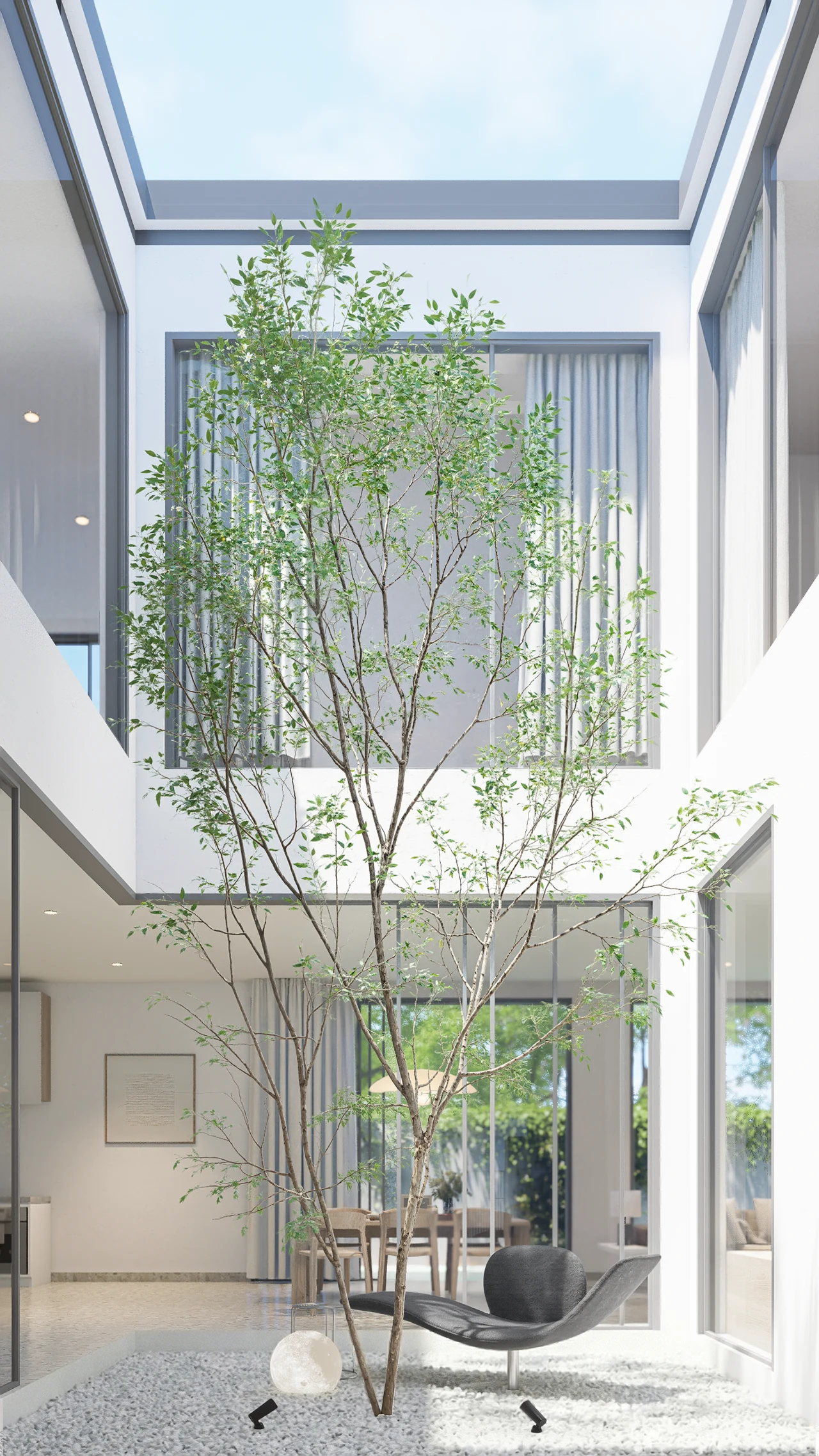
Return to the dining table and the comparison becomes clearer. On one side, the view follows water horizontally until it meets a surface. In another direction, the courtyard tree rises towards the sky through an opening above. The body remains at roughly the same place, while its attention can move across two very different landscapes. Neither asks the site to pretend it has no limits. The court has edges. The pool has an end. Perhaps that is why the arrangement reads with some clarity. The lines that protect and contain the house have been allowed to become part of what makes it pleasant to look at.
ลองกลับมาที่โต๊ะอาหารอีกครั้ง ด้านหนึ่งสายตาเดินตามผิวน้ำในแนวนอนก่อนหยุดที่พื้นผิวกำแพง อีกด้านมีต้นไม้ในคอร์ตพาสายตาขึ้นหาท้องฟ้าผ่านช่องเปิดด้านบน ร่างกายยังอยู่เกือบตำแหน่งเดิม แต่ความสนใจเคลื่อนไปในภูมิทัศน์สองแบบที่ต่างกัน ทั้งสองด้านไม่ได้ทำเหมือนว่าที่ดินไม่มีขอบเขต คอร์ตมีกรอบ สระมีปลายทาง และบางทีการยอมให้มองเห็นขอบเหล่านี้เองที่ทำให้องค์ประกอบชัดเจน เส้นที่ปกป้องและกำหนดพื้นที่บ้านได้กลายเป็นส่วนหนึ่งของวิวที่น่ามอง
The pool and courtyard offer opposite kinds of visual movement. Across water the eye follows a surface before it meets planting and the wall. Through the court, the eye can travel upward along the tree towards a framed sky. Neither is a panoramic view in the usual sense. Each depends on precise edges and on the room's position relative to them. Together they prevent the shared interior from having only one way of facing outside. A dining table can participate in more than one landscape without becoming an outdoor room itself. The architecture is doing work here through orientation rather than through the removal of every enclosing element.
สระกับคอร์ตพาสายตาเดินทางคนละแนว มองข้ามน้ำ เราเห็นผืนผิวที่ทอดไปก่อนพบต้นไม้กับกำแพง แต่เมื่อมองผ่านคอร์ต สายตายกขึ้นตามต้นไม้ไปหาท้องฟ้าที่มีกรอบ ทั้งสองไม่ใช่วิวพาโนรามาอย่างที่เราเข้าใจทั่วไป ต่างพึ่งขอบเขตและตำแหน่งห้องที่แม่นยำ เมื่ออยู่ด้วยกัน มันทำให้ภายในส่วนกลางมีมากกว่าหนึ่งทิศทางที่จะพบโลกภายนอก โต๊ะอาหารอาจสัมพันธ์กับภูมิทัศน์หลายชนิดได้โดยไม่ต้องกลายเป็นพื้นที่ภายนอกเสียเอง สถาปัตยกรรมทำงานผ่านการจัดทิศทาง ไม่ใช่การลบสิ่งปิดล้อมทั้งหมดออกไป
It is easy to treat the pool and court as two versions of the same indoor-outdoor connection. Their routes for the eye are different. The court introduces an opening upward into the centre of the plan. The pool extends a line along one edge until wall and foliage stop it. Sitting in the shared interior, a person may have access to both without either being physically within the room. The windows keep the weather outside while admitting those outlooks. The distinction between seeing outside and stepping into it should remain visible. A glazed wall does not on its own prove that a path, threshold or wet surface is safe or convenient to cross.
เรามักเหมารวมสระกับคอร์ตว่าเป็น Indoor Outdoor Connection เหมือนกัน แต่เส้นทางของสายตาต่างกัน คอร์ตเปิดขึ้นด้านบนเข้ามากลางผัง สระทอดเป็นแนวตามขอบด้านหนึ่งก่อนถูกหยุดด้วยกำแพงกับใบไม้ คนที่นั่งในพื้นที่ส่วนกลางอาจมองเห็นทั้งสองด้านโดยไม่จำเป็นต้องออกไปอยู่ข้างนอก กระจกช่วยกั้นสภาพอากาศและเปิดให้รับวิวพร้อมกัน เราจึงควรแยกการมองเห็นภายนอกจากการเดินออกไปใช้งานภายนอก ผนังกระจกไม่ได้พิสูจน์ด้วยตัวเองว่าทางผ่าน ขอบระดับ หรือพื้นเปียกจะปลอดภัยและสะดวกต่อการใช้งาน
A wall is not an innocent object. It occupies space, has a height, casts its own conditions and presents another face to somewhere beyond the property. A beautiful inward view does not prove that the other side of the boundary is equally considered. The source material does not document neighbouring occupants or their experience. I therefore cannot praise or criticise that outcome. Yet the unanswered question belongs to design, not merely to public relations. A wall that makes one room's view possible still has to be assessed as part of a real site and a shared urban setting.
กำแพงไม่ใช่วัตถุที่ไม่มีผลต่อใคร มันกินพื้นที่ มีความสูง สร้างเงื่อนไขของตัวเอง และหันอีกด้านไปหาสิ่งที่อยู่นอกที่ดิน วิวสวยจากด้านในไม่ได้พิสูจน์ว่าอีกด้านได้รับการพิจารณาดีพอ ข้อมูลที่มีไม่ได้บันทึกประสบการณ์ของผู้ใช้พื้นที่ข้างเคียง ผมจึงไม่อาจชมและไม่ควรตำหนิสิ่งที่ไม่รู้ แต่คำถามนี้เป็นเรื่องของการออกแบบจริง ไม่ใช่เพียงการจัดการภาพลักษณ์ กำแพงที่ทำให้ห้องหนึ่งมีวิวได้ดี ยังต้องถูกประเมินในฐานะส่วนของพื้นที่และเมืองที่มีคนอื่นอยู่ด้วย
The boundary deserves a little scepticism because it has become attractive in the composition. From the pool it appears to be the surface on which light and planting are arranged. From the other side it is a real piece of enclosure facing a neighbouring condition. Nothing in the supplied material describes how that side is experienced. A truthful project essay cannot claim it has improved the neighbours' lives, and it should not invent their dissatisfaction either. It can say what the wall visibly does within the designed view, while keeping open the questions about construction, appearance, height, drainage and legal separation that would have to be settled through the appropriate drawings and approvals.
กำแพงสมควรถูกตั้งคำถามเล็กน้อยเพราะมันกลายเป็นของสวยในองค์ประกอบ เมื่อมองจากสระ มันเป็นพื้นผิวให้แสงกับต้นไม้ปรากฏ แต่จากอีกด้าน มันเป็นสิ่งปิดล้อมจริงที่หันไปหาพื้นที่ข้างเคียง ข้อมูลที่แนบไม่ได้เล่าว่าฝั่งนั้นรับรู้หรือใช้งานอย่างไร บทความที่ซื่อตรงจึงไม่ควรอ้างว่ากำแพงทำให้เพื่อนบ้านอยู่ดีขึ้น และไม่ควรแต่งความไม่พอใจของเขาเช่นกัน เราเล่าได้ว่ากำแพงทำหน้าที่อะไรในวิวที่ออกแบบ และยังต้องเก็บคำถามเรื่องก่อสร้าง ผิว ความสูง การระบายน้ำ และขอบเขตตามกฎหมายไว้ให้แบบรายละเอียดกับการอนุญาตที่เกี่ยวข้องตอบ
A boundary is never experienced from one side alone. Inside the property it may offer a controlled foreground. On its other face it meets whatever conditions belong to the adjoining place. We have no documented account of that experience for PRAWET. Nor does a pleasant rendering establish wall construction, drainage or legal compliance. These limits should be carried into technical coordination, not used to discredit the spatial idea. A carefully composed near view is an architectural possibility. It is not permission to forget that the material providing it has responsibilities at its base, on its exposed surface and beyond the line visible from the dining table.
กำแพงไม่เคยถูกใช้งานหรือรับรู้จากด้านเดียว ฝั่งในที่ดินมันอาจให้ฉากใกล้ที่กำหนดได้ ส่วนอีกหน้าต้องพบเงื่อนไขของพื้นที่ข้างเคียง เรายังไม่มีบันทึกว่าฝั่งนั้นมีประสบการณ์อย่างไรใน PRAWET และ Render ที่น่ามองก็ไม่ได้ยืนยันวิธีก่อสร้าง การระบายน้ำ หรือการผ่านกฎหมาย ข้อจำกัดเหล่านี้ต้องไปอยู่ในการประสานเทคนิค ไม่ใช่เอามาลบคุณค่าทางพื้นที่ที่ตั้งใจไว้ วิวใกล้ที่จัดดีเป็นความเป็นไปได้ทางสถาปัตยกรรม แต่ไม่ได้อนุญาตให้ลืมว่าวัสดุที่สร้างวิวต้องรับผิดชอบทั้งฐาน ผิวที่โดนสภาพภายนอก และสิ่งที่พ้นแนวสายตาจากโต๊ะอาหาร
There is another cost that arrives more quietly. The water and planting which complete the picture will need continuing care. A cloudy surface, a failing plant or a blocked maintenance route can change what the room faces every day. The correct response is not to eliminate all water and greenery for fear of work. It is to keep their care in the calculation of what the beauty asks from the household. A room overlooking a pool may look effortless on a website while depending on very ordinary future access, time and attention.
ยังมีต้นทุนอีกชนิดที่ตามมาเงียบกว่า น้ำและต้นไม้ซึ่งทำให้ภาพสมบูรณ์ต้องได้รับการดูแลต่อไป น้ำที่เริ่มขุ่น ต้นไม้ที่ไม่แข็งแรง หรือทางเข้าบำรุงรักษาที่ติดขัด สามารถเปลี่ยนสิ่งที่ห้องต้องมองเห็นทุกวันได้ คำตอบไม่ใช่เลิกใช้น้ำหรือสีเขียวทั้งหมดเพราะกลัวงานดูแล แต่ต้องนับงานเหล่านั้นเป็นส่วนของสิ่งที่ความงามเรียกร้องจากบ้าน ห้องที่มองเห็นสระอาจดูไม่มีความพยายามเลยบนเว็บไซต์ ทั้งที่อนาคตต้องอาศัยทางเข้าถึง เวลา และความใส่ใจซึ่งธรรมดามาก
Water makes its condition unusually difficult to ignore. Because the surface is expected to be looked at, changes in clarity or maintenance may alter the character of the room's daily outlook. That gives the pool a dual role as a recreational feature and as part of the view. The two functions will not always have identical operational priorities. Keeping water safe and serviceable involves systems and procedures that a visual essay cannot specify from an image. This is not an argument against having a pool close to a living area. It is a reason to count the required care as part of the intended architectural experience rather than outsource it to a future footnote.
น้ำเป็นสิ่งที่ละเลยสภาพของมันในสายตาได้ยาก เพราะบ้านตั้งใจให้คนมองเห็นผิวน้ำ การเปลี่ยนแปลงความใสหรือการดูแลอาจเปลี่ยนบุคลิกวิวประจำวันของห้องด้วย สระจึงทำหน้าที่สองอย่าง เป็นพื้นที่ใช้งานและเป็นองค์ประกอบให้มอง ซึ่งสองหน้าที่อาจมีลำดับความสำคัญด้านการเดินระบบต่างกัน การรักษาน้ำให้ปลอดภัยและใช้งานได้ต้องมีระบบกับวิธีทำงานที่บทความไม่อาจกำหนดจากภาพ นี่ไม่ได้โต้แย้งการมีสระใกล้ห้องนั่งเล่น แต่ชวนให้นับภาระดูแลเป็นส่วนของประสบการณ์ทางสถาปัตยกรรมที่ตั้งใจไว้ ไม่ใช่โยนไปเป็นหมายเหตุในอนาคต
It is tempting to make water responsible for cooling the entire house, or to claim that the pool guarantees a particular feeling of serenity. The images cannot tell us that. Water may affect local conditions, but any statement about thermal performance would require climatic, geometric and technical evidence beyond the appealing surface in the perspective. What the project record does support is a visual relationship. The shared rooms are arranged to look towards the pool and planted boundary. That is a design intention with visible spatial consequences. It needs no unverified temperature figures or claims about residents' emotions to remain an intelligible and valuable choice.
ผิวน้ำชวนให้เราเผลออ้างว่าสระจะทำให้บ้านเย็นลงทั้งหลัง หรือรับประกันความสงบแบบหนึ่งให้ผู้อยู่ แต่ภาพไม่อาจบอกเช่นนั้น น้ำอาจมีผลต่อสภาพเฉพาะจุด ทว่าการอ้างสมรรถนะด้านอุณหภูมิต้องมีข้อมูลอากาศ รูปทรง และระบบมากกว่าผิวสวยใน Perspective สิ่งที่เอกสารโครงการรองรับชัดคือความสัมพันธ์ทางสายตา ห้องส่วนกลางถูกจัดให้มองสระกับแนวต้นไม้ นี่เป็นความตั้งใจออกแบบที่มีผลด้านพื้นที่ให้เห็นอยู่จริง และไม่จำเป็นต้องยืมตัวเลขอุณหภูมิหรืออารมณ์ของคนอยู่อาศัยที่ยังไม่มีการตรวจเพื่อทำให้ทางเลือกนี้มีคุณค่า
The case for an inwardly composed view has limits. Trees on surrounding plots can disappear. New buildings may rise above the boundary. Weather and daylight will make the same wall appear different. Composing the near ground does not grant the owner control over everything beyond it. It does, however, reduce the demand that a room's pleasure depend entirely on a perfect external panorama. I find that modest distinction convincing. The design has made some decisions about the immediate scene and remains answerable for their consequences.
วิวที่จัดขึ้นภายในที่ดินมีขอบเขตของมัน ต้นไม้ในที่ข้างเคียงอาจหายไป อาคารใหม่อาจสูงขึ้นเหนือกำแพง สภาพอากาศและแสงทำให้ผนังเดิมเปลี่ยนหน้าตา การประกอบวิวระยะใกล้ไม่ได้มอบสิทธิ์ควบคุมทุกอย่างข้างนอกให้เจ้าของบ้าน แต่ช่วยลดการพึ่งพาว่าความสุขในการมองออกไปต้องตั้งอยู่บนภาพกว้างที่สมบูรณ์แบบของที่ดินคนอื่น ผมเห็นด้วยกับความพอดีของคำตอบนี้ เพราะแบบตัดสินใจบางอย่างเกี่ยวกับฉากใกล้ตัวแล้ว และยังต้องรับผิดชอบต่อผลของการเลือกนั้นต่อไป
The strongest case against designing a view around a wall is that it may feel too inward, making the building less responsive to the wider setting. That is a real possibility, and the designer should test it against the particular site and occupants rather than treating enclosure as a virtue. PRAWET's brief, however, explicitly gives privacy from the street and adjacent land weight alongside openness to greenery. The near landscape allows the shared rooms to look outward without placing the entire experience in the hands of what neighbours build next. It is an answer shaped by this brief, not a rule for every house. Some owners may prefer a more extensive outlook even with the exposure that accompanies it.
ข้อค้านที่ดีที่สุดต่อวิวซึ่งจบที่กำแพงคือมันอาจทำให้บ้านหันเข้าด้านในมากเกินไปและสัมพันธ์กับรอบข้างน้อยลง ความเป็นไปได้นี้มีจริง ผู้ออกแบบควรทดสอบกับที่ดินและคนใช้เฉพาะราย ไม่ใช่มองการปิดล้อมเป็นคุณธรรมในตัวเอง แต่โจทย์ PRAWET ระบุชัดว่าความเป็นส่วนตัวจากถนนและที่ข้างเคียงมีน้ำหนักร่วมกับการรับสีเขียว วิวใกล้ช่วยให้ห้องส่วนกลางมองออกไปได้โดยไม่ต้องฝากความรู้สึกทั้งหมดไว้กับสิ่งที่เพื่อนบ้านจะสร้างต่อไป มันเป็นคำตอบจากโจทย์นี้ ไม่ใช่กฎใช้ได้ทุกบ้าน เจ้าของบางคนอาจชอบวิวไกลกว่าแม้ต้องรับการเปิดเผยตามมาด้วย
A close view makes maintenance more visible as well as pleasure. Water that is meant to be seen every day requires an operating plan for cleaning and treatment. Planting placed near the edge must remain serviceable as it grows. The attractive image does not show whether somebody can safely access each part of the pool or how equipment will be arranged. That is work for drawings, specification and coordination. The essay can nevertheless ask the right question. If a surface is deliberately brought into a room's everyday visual field, what must be provided so that its future condition is more than a hope? The design includes tomorrow, not merely the day of the image.
วิวที่อยู่ใกล้ตัวทำให้ภาระดูแลอยู่ใกล้สายตาด้วย น้ำที่ตั้งใจให้มองเห็นทุกวันต้องมีแผนเดินระบบและทำความสะอาด แนวต้นไม้ข้างขอบต้องเข้าดูแลได้เมื่อมันโตขึ้น ภาพที่สวยไม่ได้แสดงว่าคนเข้าถึงสระทุกส่วนอย่างปลอดภัยหรือจัดอุปกรณ์ไว้อย่างไร เรื่องเหล่านี้เป็นหน้าที่ของแบบ รายการประกอบแบบ และการประสานงาน แต่บทความสามารถถามคำถามที่ถูกต้องได้ว่า เมื่อเราตั้งใจเอาพื้นผิวหนึ่งมาอยู่ในสายตาทุกวัน ต้องเตรียมอะไรไว้ให้สภาพของมันในอนาคตไม่ใช่แค่ความหวัง การออกแบบต้องเผื่อพรุ่งนี้ ไม่ใช่เฉพาะวันที่สร้างภาพ
Perhaps the most useful question for this pool is where the view truly begins. Not at the far wall and not at the water alone, but at the relation between a room's position, the glass, the ground reserved beside it and the boundary the eye eventually reaches. Change one part and the whole account changes. That is why a view should be designed with the room rather than appended to it as decoration. It is also why the technical work needed to keep the outside usable must remain part of the design decision. PRAWET offers a clear visual proposal about that relationship, and leaves measured performance to evidence of another kind.
บางทีคำถามที่มีประโยชน์ที่สุดสำหรับสระนี้คือวิวเริ่มตรงไหน ไม่ใช่ที่กำแพงสุดท้าย และไม่ใช่ที่น้ำอย่างเดียว แต่เริ่มจากความสัมพันธ์ของตำแหน่งห้อง กระจก พื้นดินข้างห้องที่กันไว้ และขอบที่สายตาไปถึง หากเปลี่ยนส่วนหนึ่ง เรื่องเล่าทั้งหมดก็เปลี่ยน จึงควรออกแบบวิวพร้อมห้อง ไม่ใช่แปะเพิ่มเป็นของตกแต่งทีหลัง และนี่เป็นเหตุผลว่าทำไมงานเทคนิคที่ทำให้ภายนอกใช้งานต่อได้ต้องเป็นส่วนหนึ่งของการตัดสินใจ PRAWET มีข้อเสนอทางสายตาที่ชัด ส่วนสมรรถนะที่วัดได้ต้องใช้หลักฐานอีกชนิดมารองรับ
Perhaps the pool will be most persuasive on an unremarkable afternoon when nobody feels the need to comment on its design. From the room, there is water, then planting, then a wall. You can see where the view ends. I think that is enough of a beginning.
บางทีสระอาจทำหน้าที่ได้ดีที่สุดในบ่ายธรรมดาที่ไม่มีใครรู้สึกว่าต้องอธิบายงานออกแบบ จากในห้องมีน้ำ ถัดไปเป็นต้นไม้ แล้วจึงมีกำแพง เรามองเห็นชัดว่าวิวสิ้นสุดตรงไหน สำหรับผม แค่นี้ก็เป็นจุดเริ่มต้นของความน่าอยู่ที่น่าสนใจแล้ว
The city will keep changing outside the boundary. A neighbouring site may acquire a new building, different planting or another pattern of activity. Even the light falling on the wall will change. The inward composition offers a measure of agency over the near view, not immunity from the surrounding place. I find that limitation healthy. It turns the designer's claim away from a fantasy of total control and towards something testable. The ground immediately outside the shared room has been arranged to offer water, foliage and an edge. Their relationship is what the architecture can take responsibility for. Everything beyond it still deserves to be considered, but cannot be frozen by the project.
เมืองจะยังเปลี่ยนต่อไปนอกกำแพง ที่ดินข้างเคียงอาจมีอาคารใหม่ ต้นไม้อีกแบบ หรือกิจกรรมที่ต่างไป แม้แต่แสงที่ตกบนกำแพงเดิมก็เปลี่ยนได้ องค์ประกอบด้านในช่วยให้เราจัดวิวระยะใกล้ได้ระดับหนึ่ง ไม่ใช่ทำให้บ้านอยู่เหนือบริบททั้งหมด ผมเห็นว่าข้อจำกัดนี้เป็นเรื่องดี เพราะมันพาข้ออ้างออกจากความฝันว่าจะควบคุมได้ทุกอย่าง กลับมาหาสิ่งที่ตรวจสอบได้ พื้นที่หน้าห้องส่วนกลางถูกจัดให้มีน้ำ ใบไม้ และขอบเขต ความสัมพันธ์ของสิ่งเหล่านี้คือสิ่งที่สถาปัตยกรรมรับผิดชอบได้ ส่วนสิ่งที่อยู่นอกนั้นยังควรถูกพิจารณา แต่ไม่ได้ถูกหยุดเวลาไว้ด้วยแบบบ้านหลังเดียว
PROJECT CREDIT
Design Direction NATTHA / Natthapon Khemmueang
Design Development & Project Delivery Piaoform Studio