Quiet architecture still has to tell you where to enterอาคารที่สงบ ยังต้องบอกให้รู้ว่าเข้าตรงไหน
I like buildings that do not need to shout across the street.
ผมชอบอาคารที่ไม่จำเป็นต้องตะโกนแข่งกับถนน
But “quiet” can become an excuse surprisingly quickly. If someone arrives for the first time and has to scan every opening to guess which one is the entrance, the restraint belongs to the image, while the effort has been transferred to the visitor.
แต่คำว่า “สงบ” กลายเป็นข้ออ้างได้ง่ายกว่าที่คิด ถ้าคนมาครั้งแรกต้องไล่มองช่องเปิดทุกบานเพื่อเดาว่าประตูอยู่ไหน ความนิ่งอาจอยู่ในภาพ แต่ภาระในการทำความเข้าใจถูกโยนไปให้คนใช้แทน
That tension is visible in SUKHUMVIT 105. The upper part of the building is comparatively solid. The lower level becomes more transparent. The clinic name sits on a horizontal band, and the glass begins to show the activity behind it. None of these elements needs to be spectacular on its own. Together, they have to give enough hierarchy for the building to be read.
ความตึงระหว่างสองเรื่องนี้มองเห็นได้ใน SUKHUMVIT 105 มวลด้านบนค่อนข้างทึบ ส่วนชั้นล่างเปิดมากขึ้น ชื่อคลินิกอยู่บนแถบแนวนอน และกระจกเริ่มเผยให้เห็นกิจกรรมด้านหลัง แต่ละองค์ประกอบไม่จำเป็นต้องโดดเด่นด้วยตัวเอง ทว่ารวมกันแล้วต้องมีลำดับมากพอให้อาคารอ่านออก
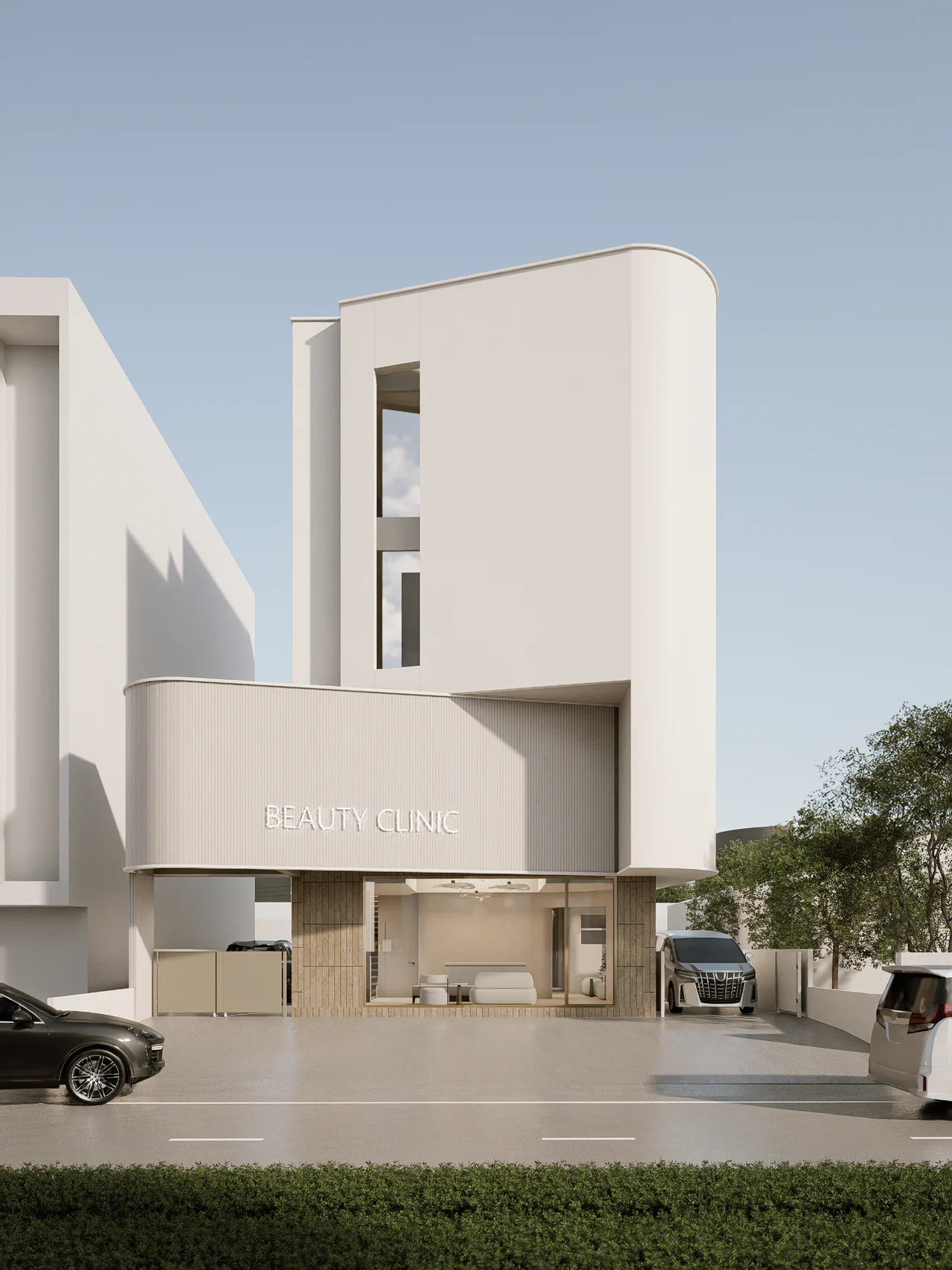
For me, quiet architecture is not architecture that says less at any cost. It is architecture that knows which information deserves to arrive first.
สำหรับผม Quiet Architecture ไม่ใช่อาคารที่พยายามพูดให้น้อยที่สุด
แต่เป็นอาคารที่รู้ว่า ข้อมูลอะไรควรมาถึงก่อน
Images are design visualisations.
ภาพประกอบเป็นภาพออกแบบ
PROJECT CREDIT
Project SUKHUMVIT 105
Design Direction NATTHA / Natthapon Khemmueang
Design Development & Project Delivery Piaoform Studio