When the Table Is Clearedเมื่อโต๊ะอาหารว่าง แต่งานของใครบางคนยังไม่จบ
Written by NATTHA / Natthapon Khemmueang
Series date (assigned) ·
A family meal has a convenient ending in photographs. The dishes are arranged, the chairs are occupied, and the scene holds together long enough for the camera. In life, the ending is less well defined. Someone stands, carries a plate away and returns for the next one. A working surface has to be cleared. Food must be stored. The room that welcomed everybody remains a place of labour after the gathering is over. NA KLUEA began with an affectionate account of the mother cooking for her family, an apron and a familiar stove, with seafood, vegetables and fruit arriving from outside. The warmth of that account is real as an intention reported by the owners. But I do not want the design story to stop at the moment food is served.
ในภาพถ่าย มื้ออาหารของครอบครัวมักมีตอนจบที่สะดวกต่อการเล่า อาหารถูกจัดลงจาน เก้าอี้มีคนนั่งครบ และทุกอย่างหยุดนิ่งพอให้กล้องบันทึก แต่ในชีวิตจริงตอนจบไม่ได้ชัดขนาดนั้น ใครบางคนลุกขึ้นถือจานออกไปแล้วกลับมาหยิบใบถัดไป เคาน์เตอร์ต้องถูกเช็ด อาหารที่เหลือต้องถูกเก็บ ห้องที่ต้อนรับทุกคนยังเป็นพื้นที่ทำงานต่ออีกระยะหลังวงสนทนาจบ NA KLUEA เริ่มต้นจากเรื่องเล่าแสนอบอุ่นของคุณแม่ที่ชอบทำอาหารให้ครอบครัว มีผ้ากันเปื้อน หน้าเตาที่คุ้นมือ และของสดที่สมาชิกซื้อกลับมา ความอบอุ่นนั้นเป็นความตั้งใจที่เจ้าของบ้านเล่าให้ฟังจริง แต่ผมไม่อยากให้เรื่องเล่าของงานออกแบบหยุดตรงวินาทีที่ยกอาหารขึ้นโต๊ะ
Some of the work begins before anyone enters the kitchen. Someone remembers what is running low, plans the next meal and notices which leftovers need attention. A floor plan cannot distribute that responsibility. It can, however, give the family a concrete setting in which to discuss it. I would want the conversation about this kitchen to include who can find things and take over a task.
งานบางส่วนเริ่มก่อนใครจะเดินเข้าครัว มีคนต้องจำว่าอะไรใกล้หมด คิดมื้อต่อไป และสังเกตว่าอาหารที่เหลือควรจัดการเมื่อไร ผังบ้านแบ่งความรับผิดชอบนี้แทนครอบครัวไม่ได้ แต่ช่วยให้มีเรื่องจับต้องได้มาคุยกัน ผมอยากให้การคุยเรื่องครัวรวมถึงว่าใครหาของเจอและรับช่วงงานต่อได้บ้าง
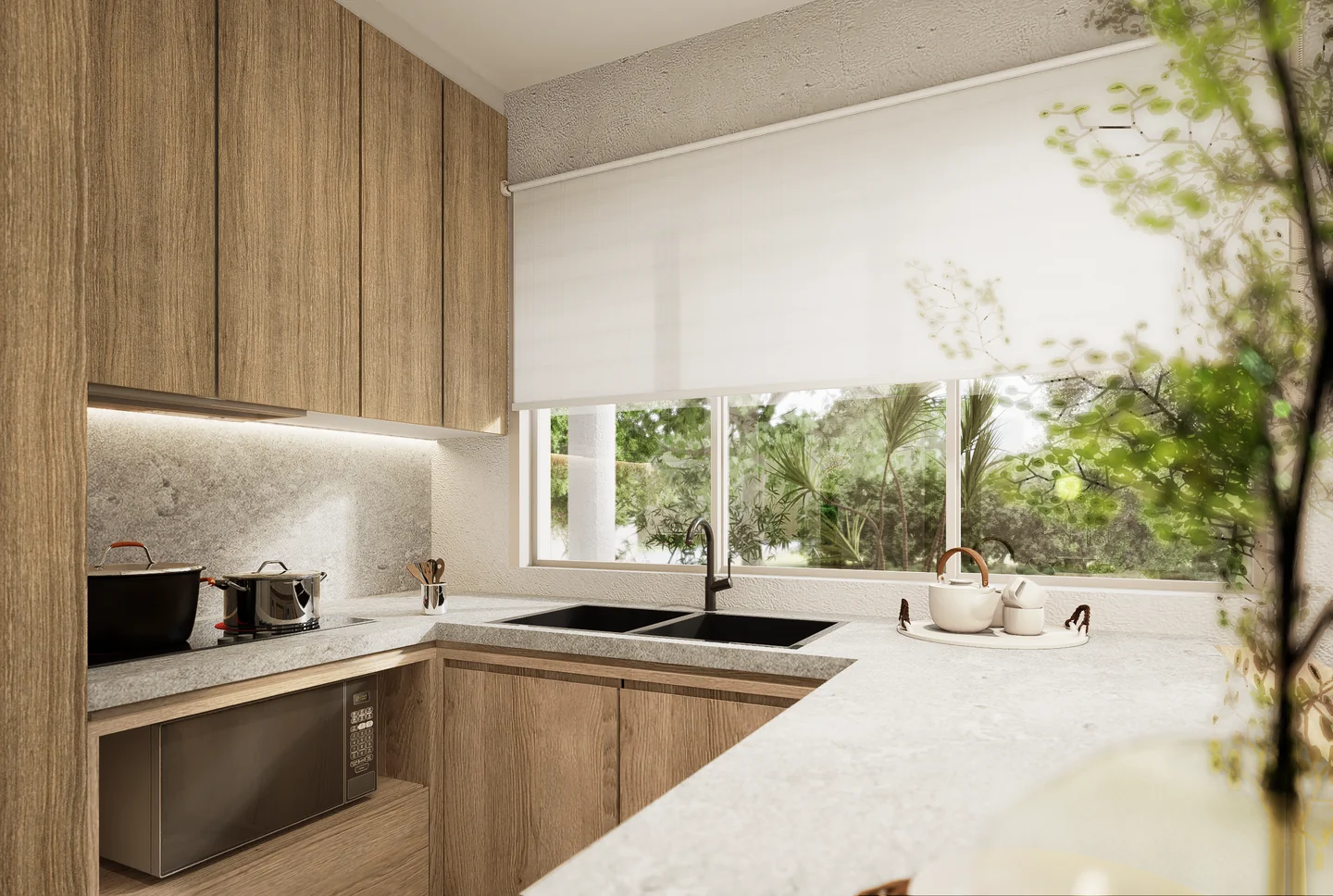
Offering help is easier when there is somewhere to put it into practice. A usable stretch of counter can give another person a task without requiring the cook to leave the sink or stove. The perspective invites us to examine that possibility through the relationship between work surfaces. The final dimensions and movements still need to be checked with the actual equipment and furniture.
การเสนอช่วยจะเกิดขึ้นง่ายขึ้นเมื่อมีพื้นที่ให้ลงมือจริง เคาน์เตอร์ช่วงหนึ่งที่ใช้งานได้อาจให้คนอีกคนรับงานไปทำโดยคนทำอาหารไม่ต้องหลบจากอ่างหรือเตา ภาพ Perspective ชวนให้พิจารณาความเป็นไปได้นี้ผ่านความสัมพันธ์ของพื้นผิวทำงาน ส่วนระยะและการเคลื่อนที่ยังต้องตรวจร่วมกับอุปกรณ์และเฟอร์นิเจอร์จริง
Help can become another demand if the person already working must explain every drawer and supervise every movement. Clear storage and familiar routines may reduce that burden, but the household must decide how to share knowledge as well as chores. I would regard a kitchen that other members can learn to use as more considerate than one that makes a single expert permanently indispensable.
การช่วยอาจกลายเป็นภาระเพิ่ม หากคนที่กำลังทำงานต้องอธิบายทุกลิ้นชักและคอยกำกับทุกการเคลื่อนที่ ที่เก็บของที่เข้าใจง่ายกับกิจวัตรที่คุ้นเคยอาจลดภาระนี้ได้ แต่ครอบครัวยังต้องแบ่งทั้งความรู้และงาน ผมมองว่าครัวที่คนอื่นเรียนรู้การใช้ได้ใส่ใจคนทำอาหารมากกว่าครัวที่ทำให้ต้องพึ่งผู้เชี่ยวชาญคนเดิมตลอดไป
Efficiency alone is an incomplete measure of care. A layout might shorten the movements of the person cooking while leaving everyone else dependent on that person. I would ask whether the arrangement also makes it possible to exchange roles. The distinction matters because doing the same work faster and being able to leave that work to someone else are different forms of relief.
ความรวดเร็วเพียงอย่างเดียวยังวัดความใส่ใจได้ไม่ครบ ผังอาจลดการเดินของคนทำอาหารแต่ยังทำให้ทุกคนต้องพึ่งคนเดิม ผมอยากถามต่อว่าการจัดวางเปิดให้สลับหน้าที่กันได้ด้วยหรือไม่ ความต่างนี้สำคัญ เพราะการทำงานเดิมเร็วขึ้นกับการฝากงานนั้นให้คนอื่นรับช่วงเป็นการผ่อนแรงคนละแบบ
There is also a difference between helping with a task and taking responsibility for finishing it. Carrying a plate away is one action. Knowing where it should go, what needs washing and when the surface is ready for the next use is a longer sequence. The design can make that sequence visible and workable, while leaving the family to agree how it is shared.
การช่วยทำช่วงหนึ่งกับการรับผิดชอบให้งานจบก็เป็นคนละเรื่อง ยกจานออกจากโต๊ะเป็นการกระทำหนึ่ง แต่การรู้ว่าต้องเอาไปไหน อะไรต้องล้าง และเมื่อไรพื้นผิวจะพร้อมใช้ครั้งต่อไปเป็นลำดับที่ยาวกว่า งานออกแบบช่วยให้ลำดับนี้มองเห็นและใช้งานได้ ส่วนครอบครัวเป็นผู้ตกลงว่าจะรับช่วงกันอย่างไร
There is something worth questioning in the familiar picture of the woman happily preparing food while everyone else returns home. The owners have told us that the mother enjoys cooking. That is her preference and deserves to be heard as such. It should not be used to write a permanent job description for her. A person can love preparing a meal and still want to sit down, talk, read, rest or be helped. I would be uneasy with an interior that celebrates the apron but forgets the chair the cook will eventually need. If a home is designed around an act of care, it must make room for the person offering that care to receive some in return.
มีสิ่งหนึ่งที่ควรถูกตั้งคำถามในภาพคุ้นเคยของผู้หญิงที่ทำอาหารอย่างมีความสุขขณะสมาชิกคนอื่นเดินกลับบ้าน เจ้าของโครงการบอกเราว่าคุณแม่ชอบทำกับข้าว นั่นคือความชอบของท่านและควรได้รับการฟังอย่างเคารพ แต่ไม่ควรถูกนำไปเขียนเป็นคำบรรยายหน้าที่ประจำตลอดชีวิต คนหนึ่งอาจรักการทำอาหารและในเวลาเดียวกันก็อยากนั่งคุย อ่านหนังสือ พัก หรือได้รับความช่วยเหลือบ้าง ผมคงไม่สบายใจกับห้องที่ชื่นชมผ้ากันเปื้อน แต่ลืมเก้าอี้ที่คนทำอาหารจะต้องใช้ในที่สุด หากเราออกแบบบ้านจากการดูแลใครสักคน บ้านก็ควรเหลือที่ให้ผู้ดูแลเป็นฝ่ายได้รับการดูแลกลับบ้าง
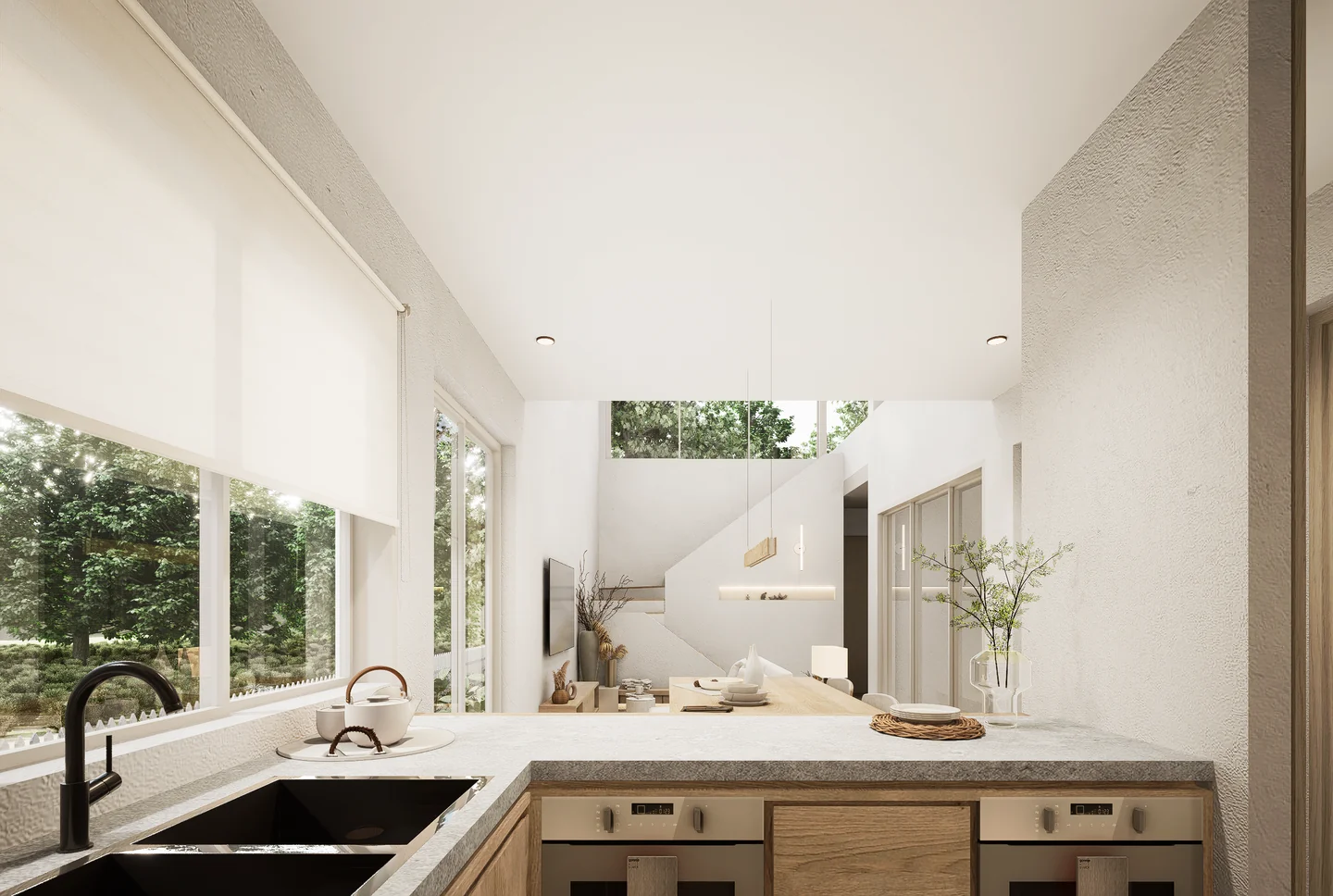
Materials enter this discussion through the work they ask of someone later. A beautiful surface may need frequent attention to stay presentable. A joint or corner that is awkward to reach may turn a quick wipe into a longer task. These are questions to resolve in the specifications, not qualities I can infer from the timber tone of a render. Appearance should be considered alongside the effort of keeping it usable.
วัสดุเข้ามาอยู่ในเรื่องนี้ผ่านงานที่มันจะฝากไว้ให้ใครสักคนในภายหลัง พื้นผิวสวยอาจต้องดูแลบ่อยจึงจะยังดูเรียบร้อย รอยต่อหรือมุมที่เอื้อมลำบากอาจทำให้การเช็ดสั้นๆ กลายเป็นงานนานขึ้น ทั้งหมดเป็นเรื่องที่ต้องตอบในรายละเอียดวัสดุ ไม่ใช่คุณสมบัติที่ผมอนุมานจากโทนไม้ในเรนเดอร์ได้ รูปลักษณ์ควรถูกคิดพร้อมแรงที่ต้องใช้รักษามันให้ใช้งานต่อได้
The lunchbox in the brief brings time into focus. The handover may last only a moment, but preparation begins earlier and washing follows later. I would not judge the kitchen only at the brief instant when food changes hands. Its usefulness extends across the less visible intervals on either side, including the moments when nobody else is there to notice the work.
กล่องข้าวในโจทย์ทำให้เรื่องเวลาชัดขึ้น การส่งให้กันอาจใช้เพียงครู่เดียว แต่การเตรียมเริ่มก่อนหน้าและการล้างตามมาทีหลัง ผมจึงไม่อยากตัดสินครัวเฉพาะวินาทีสั้นๆ ที่อาหารเปลี่ยนมือ ประโยชน์ของมันกินเวลาต่อไปถึงช่วงเงียบๆ ทั้งก่อนและหลัง รวมถึงตอนที่ไม่มีใครอยู่เห็นงานนั้นด้วย
A room in use will not always look ready to receive a visitor. Leaving room for temporary disorder matters when the kitchen sits near arrival and shared spaces. I would ask which things need immediate attention and which can wait without blocking movement. The aim is not to conceal all evidence of work, but to avoid making constant tidiness another condition imposed on the person doing it.
ห้องที่กำลังใช้งานย่อมไม่ได้ดูพร้อมรับแขกตลอดเวลา เมื่อครัวอยู่ใกล้ทางเข้าและส่วนกลาง การยอมให้มีความไม่เรียบร้อยชั่วคราวจึงสำคัญ ผมอยากแยกว่าอะไรต้องจัดการทันทีและอะไรพักไว้ก่อนได้โดยไม่ขวางทาง เป้าหมายไม่ใช่ซ่อนร่องรอยของงานทั้งหมด แต่ไม่ทำให้ความเรียบร้อยตลอดเวลากลายเป็นเงื่อนไขเพิ่มของคนที่ทำงานอยู่
The work continues beyond the meal. The utility image brings a washing machine, a counter, a basket and towels into the discussion. Laundry and the handling of household items have their own cycles of sorting, waiting and putting away. A considered home should give these tasks usable space too, without allowing the attractive story of the kitchen to absorb all our attention to domestic work.
งานยังดำเนินต่อไปนอกมื้ออาหาร ภาพพื้นที่ซักล้างนำเครื่องซักผ้า เคาน์เตอร์ ตะกร้า และผ้ามาอยู่ในบทสนทนา การซักและจัดการของใช้ในบ้านมีรอบของการแยก รอ และเก็บเข้าที่เช่นกัน บ้านที่คิดอย่างรอบคอบควรให้พื้นที่ที่ใช้งานได้กับงานเหล่านี้ด้วย ไม่ปล่อยให้เรื่องเล่าที่น่ามองของครัวดึงความสนใจเรื่องงานบ้านไปทั้งหมด
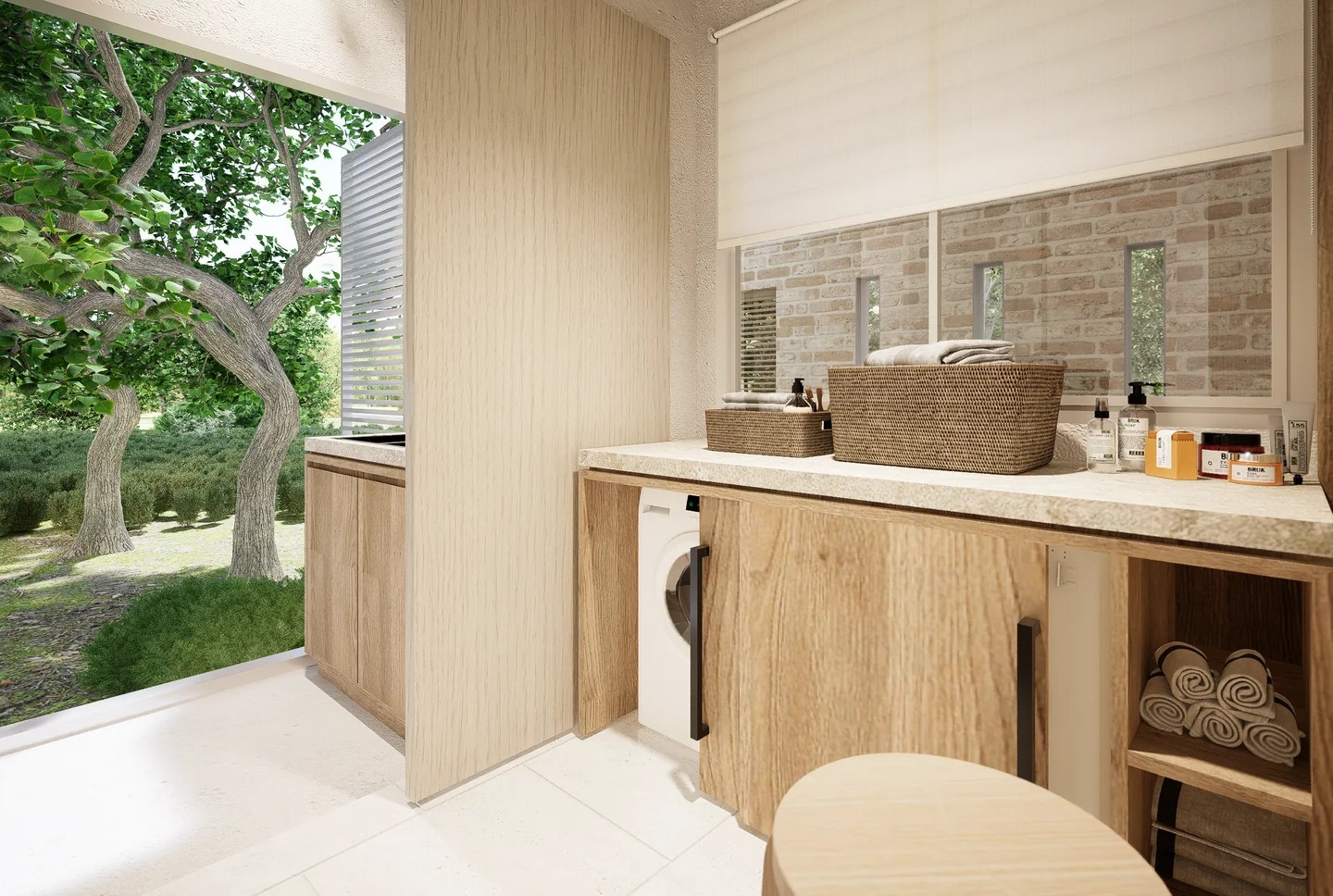
The ability to stop is worth designing for as deliberately as the ability to begin. A clear surface for the next person, storage that can be understood and a route back to the table may make a handover less cumbersome. None can ensure that work is shared fairly. They give the family fewer physical obstacles when it chooses to share it.
ความสามารถในการหยุดงานควรถูกคิดอย่างตั้งใจพอๆ กับการเริ่ม พื้นผิวที่พร้อมให้คนถัดไปใช้ ที่เก็บของที่เข้าใจได้ และทางกลับไปนั่งโต๊ะอาจทำให้การรับช่วงไม่ยุ่งยาก สิ่งเหล่านี้รับรองความเป็นธรรมในการแบ่งงานไม่ได้ แต่ช่วยลดอุปสรรคทางกายภาพเมื่อครอบครัวเลือกจะแบ่งกัน
There is a difference between making somebody indispensable and making a house considerate towards that person. The first can be flattering, even sentimental. The second demands more of the design. Can another member help without obstructing the sink? Can food be carried to the table without crossing a congested work area? After the meal, can the person who cooked sit down while someone else clears away? These questions may lead to very ordinary technical answers, and they must be checked against the final coordinated plan. I would rather let the room be judged by such ordinary ease than by a claim that it creates loving relationships. A house cannot teach affection. It can avoid making affection unnecessarily exhausting.
การทำให้คนหนึ่งดูขาดไม่ได้ต่างจากการทำให้บ้านใส่ใจคนคนนั้น เรื่องแรกอาจชวนภูมิใจและฟังดูอ่อนโยน แต่เรื่องหลังเรียกร้องการออกแบบมากกว่า สมาชิกอีกคนเข้าไปช่วยได้โดยไม่ขวางอ่างล้างหรือไม่ ยกอาหารไปโต๊ะได้โดยไม่เดินตัดพื้นที่ทำงานซึ่งกำลังวุ่นวายหรือเปล่า หลังมื้ออาหาร คนที่ทำกับข้าวได้นั่งพักขณะที่คนอื่นเก็บจานแทนได้ไหม คำถามเหล่านี้อาจนำไปสู่คำตอบเทคนิคที่ธรรมดามาก และยังต้องตรวจจากผังประสานงานฉบับสุดท้าย ผมอยากให้ห้องถูกประเมินจากความสะดวกธรรมดาเหล่านี้ มากกว่าจากคำอ้างว่ามันสร้างความรักในครอบครัวได้ บ้านสอนให้คนรักกันไม่ได้ แต่มันไม่ควรทำให้การแสดงความรักเป็นงานที่เหนื่อยเกินจำเป็น
A finished kitchen perspective records the room before it has to do any of this. I would like the final judgement on the design to be less photogenic. When the food has been served and the table cleared, does the kitchen still respect the person who prepared the meal? That is where the story of this room should continue, long after the image has finished telling us how lovely dinner looks.
ภาพ Perspective ของครัวที่เสร็จสมบูรณ์บันทึกห้องไว้ก่อนที่มันต้องรับงานเหล่านี้ทั้งหมด ผมอยากให้คำตัดสินสุดท้ายของงานออกแบบเป็นเรื่องที่ถ่ายภาพออกมาได้สวยงามน้อยกว่านั้น เมื่ออาหารถูกเสิร์ฟและโต๊ะถูกเก็บแล้ว ครัวยังเคารพคนที่เตรียมอาหารมื้อนั้นอยู่หรือไม่ เรื่องเล่าของห้องนี้ควรดำเนินต่อไปตรงนั้น นานหลังจากภาพได้บอกเราจนจบแล้วว่าอาหารค่ำดูน่ารักเพียงใด
PROJECT CREDIT
Design Direction NATTHA / Natthapon Khemmueang
Design Development & Project Delivery Piaoform Studio