The Children Have Not Written Their Answer Yetลูกยังไม่ได้บอกคำตอบสุดท้ายของห้องนี้
Written by NATTHA / Natthapon Khemmueang
Series date (assigned) ·
The adults must make the first decision, even though the room is not ultimately theirs. They determine where the walls will stand, how the windows will open and what furniture the children can use today. A house cannot postpone all those decisions until its young occupants are old enough to answer for themselves. Yet there is an ethical unease in designing too complete a future for somebody who has barely begun to describe the present. At NA KLUEA, the owners asked us to study several configurations for the children's room instead of drawing its divisions as though every stage of growing up were already known. That request does more than change the arrangement of beds. It acknowledges that the future occupants will one day have opinions the adults cannot presently supply.
ผู้ใหญ่ต้องเป็นคนตัดสินใจครั้งแรก ทั้งที่ห้องนี้ไม่ได้เป็นของพวกเขาในที่สุด ผู้ใหญ่เลือกว่าผนังจะอยู่ตรงไหน หน้าต่างเปิดอย่างไร และเด็กจะใช้เฟอร์นิเจอร์อะไรในวันนี้ บ้านไม่สามารถเลื่อนการตัดสินใจทั้งหมดออกไปจนเด็กโตพอจะตอบคำถามทุกข้อได้ แต่ก็มีความไม่สบายใจทางจริยธรรมอยู่ในการออกแบบอนาคตให้สมบูรณ์เกินไปสำหรับคนที่เพิ่งเริ่มมีภาษาบอกความต้องการของตัวเอง ที่ NA KLUEA เจ้าของบ้านขอให้เราศึกษาผังห้องเด็กหลายแนวทาง แทนการลากเส้นแบ่งทุกส่วนราวกับรู้แล้วว่าชีวิตช่วงวัยแต่ละช่วงจะเป็นอย่างไร คำขอนี้ไม่ได้เปลี่ยนแค่ตำแหน่งเตียง แต่มันยอมรับว่าคนที่จะอยู่ในห้องวันหน้าอาจมีความคิดเห็นซึ่งผู้ใหญ่ในวันนี้ยังไม่อาจบอกแทนได้
A choice can be offered without handing over every responsibility. Adults still have to consider safe movement, usable furniture and a workable budget. Within those limits, there may be room to ask what a child wants near the bed, where unfinished work can stay or which belongings should be kept separately. Participation can begin with a manageable decision rather than a demand to design the whole room.
การเปิดให้เลือกไม่จำเป็นต้องส่งมอบความรับผิดชอบทั้งหมด ผู้ใหญ่ยังต้องคิดเรื่องการเคลื่อนที่ที่ปลอดภัย เฟอร์นิเจอร์ที่ใช้ได้ และงบประมาณ ภายในขอบเขตนั้นอาจมีพื้นที่ให้ถามว่าเด็กอยากมีอะไรใกล้เตียง งานที่ยังไม่เสร็จวางตรงไหนได้ หรือของชิ้นใดอยากเก็บแยก การมีส่วนร่วมเริ่มจากการตัดสินใจเล็กๆ ที่รับมือไหวได้ ไม่ใช่ขอให้เด็กออกแบบทั้งห้อง
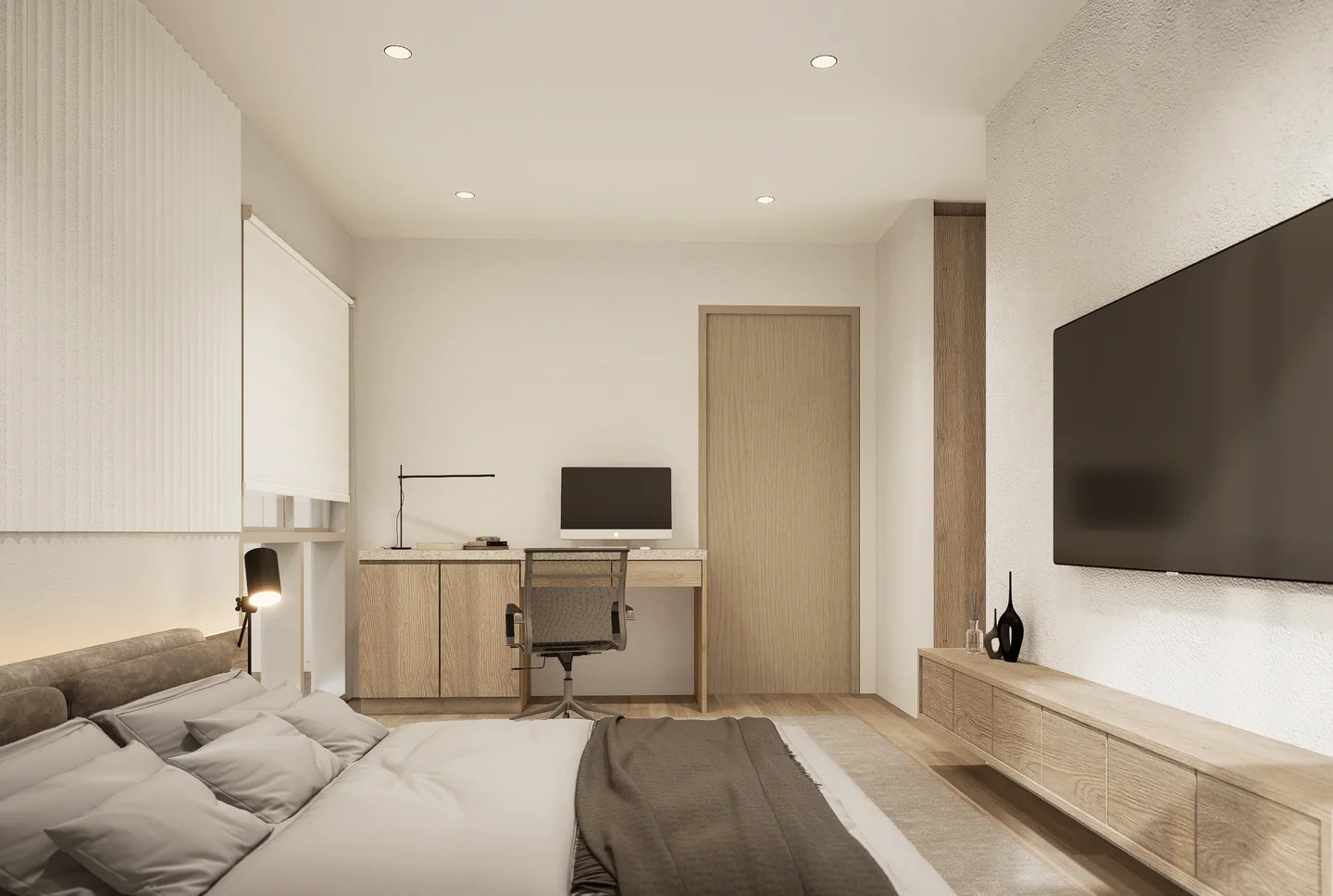
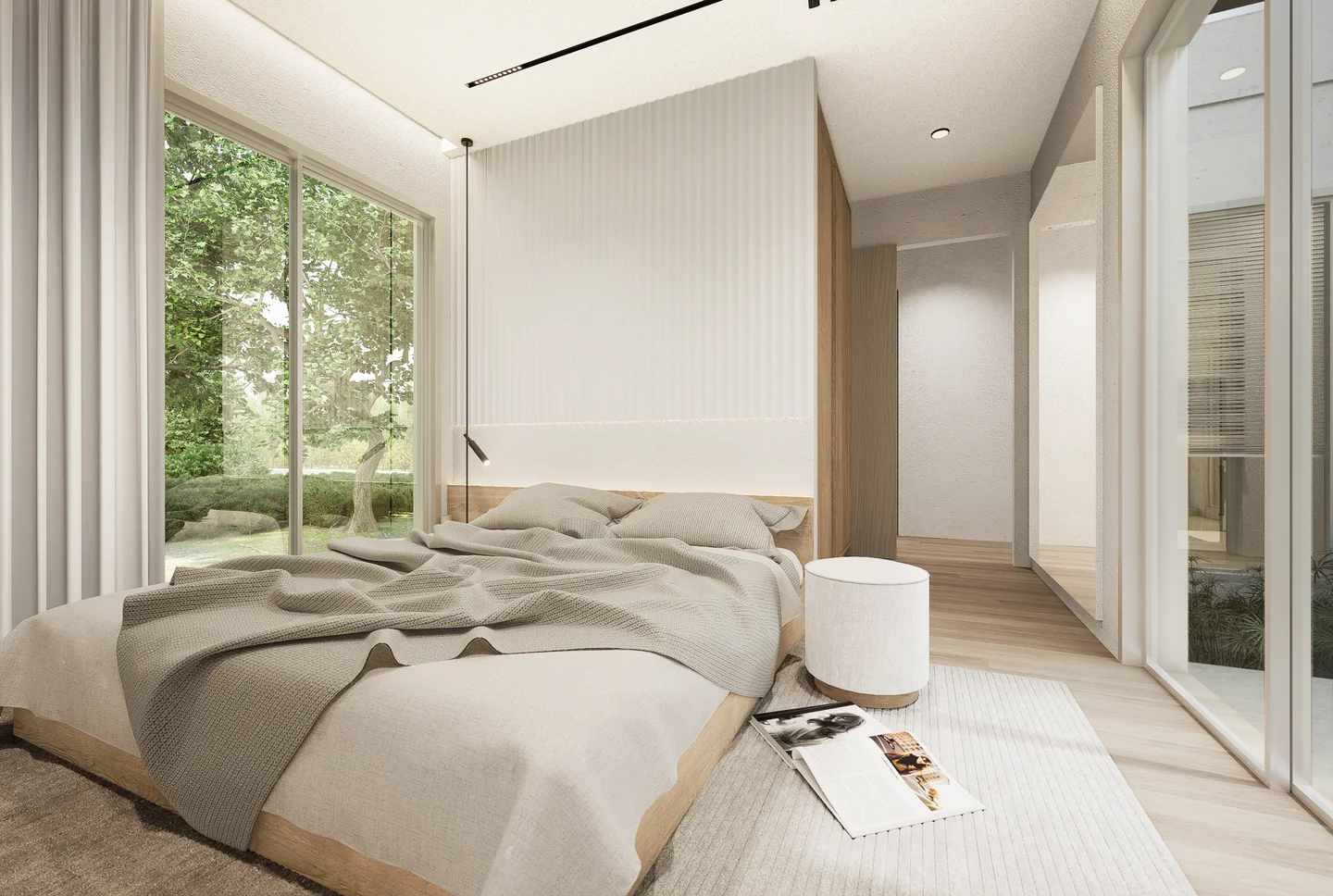
The bedroom image presents a settled arrangement of a bed, a work surface and an opening. It is useful precisely because an arrangement can be discussed. Which part would someone choose to keep, and which would they want differently? The image does not establish who occupies this particular room. The family's request for changing children's-room options comes from the brief, and needs to be tested through its own plans.
ภาพห้องนอนเสนอการจัดเตียง พื้นที่ทำงาน และช่องเปิดไว้แบบหนึ่ง ประโยชน์ของมันอยู่ที่เรานำการจัดวางนั้นมาคุยต่อได้ ส่วนไหนที่คนหนึ่งอยากเก็บไว้ และส่วนไหนอยากให้ต่างออกไป ภาพไม่ได้ยืนยันว่าใครเป็นผู้ใช้ห้องนี้โดยเฉพาะ โจทย์เรื่องทางเลือกของห้องเด็กมาจากข้อมูลครอบครัว และต้องตรวจผ่านผังของห้องนั้นต่อไป
Two children need not value the same kind of privacy. One might care about keeping belongings untouched, while another might want a place to concentrate. Those are examples to explore, not personalities we have assigned to the children of this household. Treating privacy as a single request for a new wall could miss the smaller change that would actually help.
เด็กสองคนไม่จำเป็นต้องให้ความสำคัญกับความเป็นส่วนตัวแบบเดียวกัน คนหนึ่งอาจอยากให้ข้าวของไม่ถูกแตะ อีกคนอาจอยากมีที่ใช้สมาธิ นี่คือตัวอย่างให้สำรวจ ไม่ใช่บุคลิกที่เรากำหนดให้เด็กในครอบครัวนี้ หากตีความความเป็นส่วนตัวทุกแบบว่าต้องการผนังใหม่ ก็อาจมองข้ามการเปลี่ยนเล็กกว่าที่ตอบเรื่องนั้นได้จริง
The alternatives should therefore be available for comparison, not presented as a ranking of maturity. A shared room is not automatically an earlier stage and separate rooms are not proof of progress. The useful comparison concerns what each arrangement permits, what it makes harder and what each child can reasonably influence. Growth adds information to the brief rather than supplying a predetermined next drawing.
ทางเลือกจึงควรถูกนำมาเปรียบเทียบ ไม่ใช่เรียงเป็นระดับของความโต ห้องร่วมไม่จำเป็นต้องเป็นขั้นก่อนหน้า และห้องแยกก็ไม่ใช่หลักฐานของความก้าวหน้า สิ่งที่ควรเทียบคือแต่ละแบบเปิดให้ทำอะไร อะไรยากขึ้น และเด็กแต่ละคนมีส่วนตัดสินใจได้แค่ไหน การเติบโตเพิ่มข้อมูลให้โจทย์ ไม่ได้ส่งแบบขั้นถัดไปที่ถูกกำหนดไว้แล้วมาให้
At first, there may be two beds and an open area where toys can be spread out. Another possible arrangement uses a bunk bed, makes room for two desks and begins to separate personal belongings into different wardrobes or drawers. Later, a lightweight partition may be considered if the family wants more distinct territories. We studied these alternatives because the owners wanted change to be possible, not because a child of a particular age must graduate from one furniture plan to another. Development is rarely so orderly. One child might prefer sharing longer than expected. Another may need solitude sooner. Their differences are not an inconvenience that design must correct. They are part of the people for whom the room is intended.
ในช่วงแรกห้องอาจมีเตียงสองหลังและพื้นโล่งให้กระจายของเล่น ต่อมาอาจเลือกเตียงสองชั้น เพิ่มโต๊ะสองตัว และเริ่มแยกข้าวของส่วนตัวไว้คนละตู้หรือลิ้นชัก วันข้างหน้าอาจพิจารณาผนังเบาหากครอบครัวต้องการขอบเขตชัดเจนขึ้น เราศึกษาทางเลือกเหล่านี้เพราะเจ้าของอยากให้การเปลี่ยนเกิดขึ้นได้ ไม่ใช่เพราะเด็กอายุเท่านี้ต้องเปลี่ยนจากผังแบบหนึ่งไปใช้อีกแบบหนึ่งอย่างเป็นขั้นบันได การเติบโตไม่เคยเรียบร้อยอย่างนั้นเสมอไป เด็กคนหนึ่งอาจชอบใช้ห้องร่วมกันนานกว่าที่คิด อีกคนอาจต้องการความเงียบเร็วกว่าที่ผู้ใหญ่คาด ความแตกต่างเหล่านี้ไม่ใช่ความยุ่งยากที่สถาปัตยกรรมต้องเข้าไปแก้ แต่เป็นส่วนหนึ่งของผู้คนที่ห้องถูกเตรียมไว้ให้
Personal space sometimes begins before a partition exists. It may begin with a drawer whose contents are not shared, an unfinished drawing left safely on a desk, or a shelf arranged according to one person's preferences. None of those things needs an entire bedroom to matter. Children negotiate independence in small, repeated ways. Can an object remain where one child left it? Can the other child reach a desk without moving somebody else's work? Is there a place to withdraw from a game without withdrawing from the family? These questions may look too modest for the language of architectural flexibility. Yet they are precisely where the room's changing social life can become visible through its furniture and circulation.
พื้นที่ส่วนตัวบางครั้งเริ่มต้นก่อนมีผนัง มันอาจเริ่มจากลิ้นชักซึ่งเจ้าของไม่อยากแบ่งของข้างในกับใคร รูปที่วาดค้างไว้และวางบนโต๊ะได้อย่างปลอดภัย หรือชั้นวางของที่จัดตามรสนิยมของคนคนหนึ่ง เรื่องเหล่านี้ไม่จำเป็นต้องมีห้องนอนทั้งห้องจึงจะสำคัญ เด็กเจรจาอิสรภาพผ่านการกระทำเล็กๆ ที่เกิดซ้ำ ของชิ้นหนึ่งจะยังอยู่ตรงที่เจ้าของวางได้ไหม อีกคนเดินไปถึงโต๊ะโดยไม่ต้องย้ายงานของพี่หรือน้องหรือเปล่า มีมุมให้ถอยจากการเล่นชั่วคราวโดยไม่รู้สึกว่าถอยจากครอบครัวไหม คำถามเหล่านี้อาจเล็กเกินไปสำหรับภาษาหรูของการออกแบบพื้นที่ยืดหยุ่น แต่มันเป็นจุดที่ชีวิตทางสังคมซึ่งกำลังเปลี่ยนของห้องปรากฏผ่านเฟอร์นิเจอร์และทางเดินได้จริง
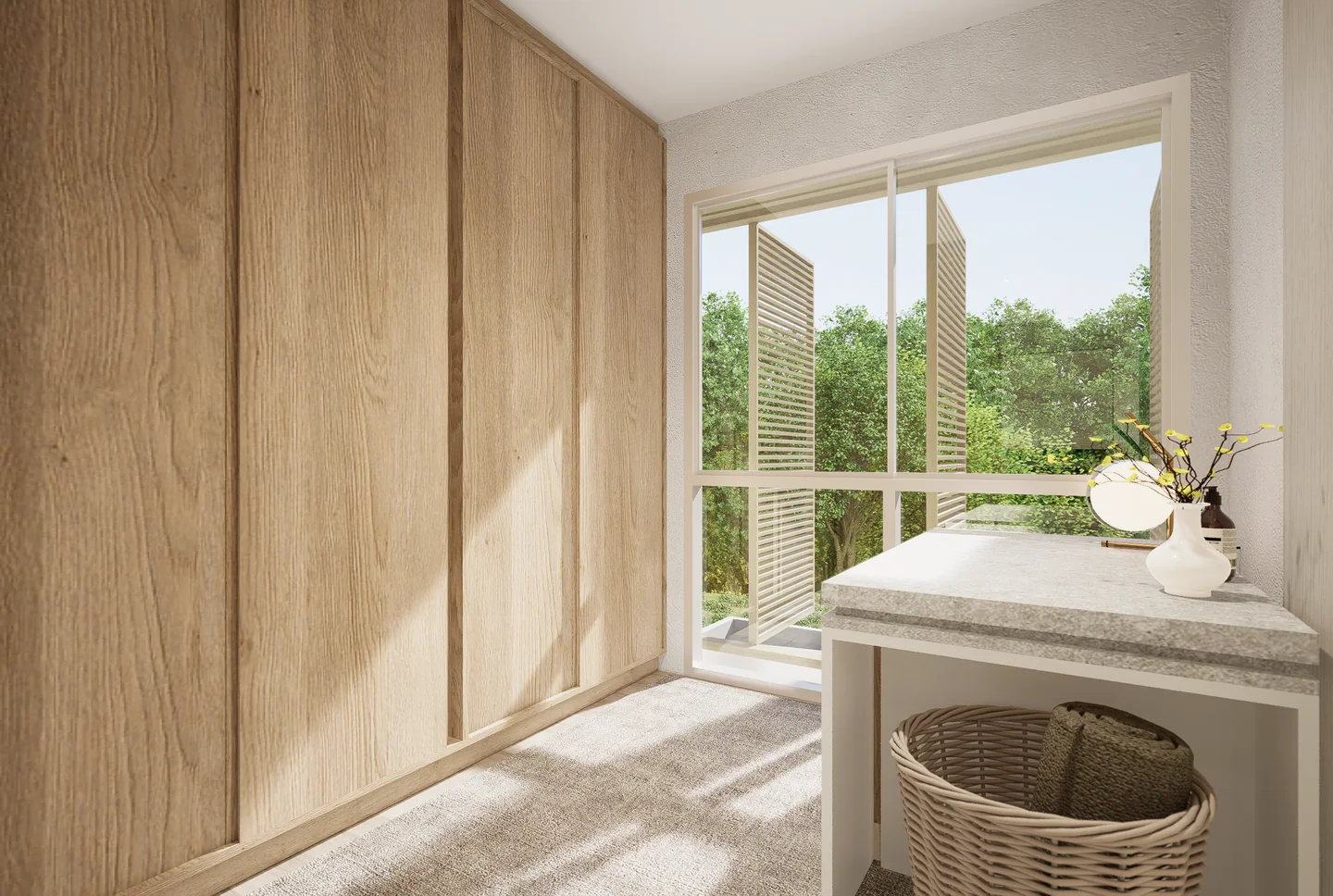
Storage gives the discussion a useful scale. Cupboards, a small surface and the space beside an opening suggest different ways of placing and reaching belongings. The question is not how many possessions a render can accommodate. It is whether an arrangement can make individual use understandable while leaving shared routes clear. A future desk or separate store should earn its place through that everyday test.
ที่เก็บของทำให้การคุยอยู่ในขนาดที่จับต้องได้ ตู้ พื้นผิวเล็กๆ และพื้นที่ข้างช่องเปิดชวนคิดวิธีวางและหยิบของต่างกัน คำถามไม่ใช่ว่าเรนเดอร์ใส่ข้าวของได้กี่ชิ้น แต่การจัดวางทำให้รู้ว่าส่วนไหนใช้ส่วนตัวพร้อมเหลือทางเดินร่วมได้หรือไม่ โต๊ะหรือที่เก็บแยกในอนาคตควรมีเหตุผลจากการใช้งานธรรมดานี้
There is a temptation to imagine a perfect timetable for the room. For the first few years, a generous shared space. After that, separate desks. Eventually, a wall. The problem is that such a sequence can make the children into characters in a script written by adults. What happens if they prefer a different order? What if they want to remain close while needing greater privacy for storage? What if rearranging furniture solves the issue better than building a partition? The responsible answer is to keep several credible options visible and their consequences understood. Future flexibility is valuable only when it preserves the family's capacity to choose rather than hiding another fixed prescription beneath the word adaptable.
เราอาจอยากสร้างตารางเวลาที่สมบูรณ์แบบให้ห้อง ช่วงแรกเป็นห้องกว้างใช้ร่วมกัน ต่อมาเพิ่มโต๊ะแยก สุดท้ายก่อผนัง ปัญหาคือลำดับเช่นนั้นอาจทำให้เด็กกลายเป็นตัวละครในบทที่ผู้ใหญ่เขียนไว้แล้ว ถ้าพวกเขาต้องการลำดับต่างออกไปจะเป็นอย่างไร หากยังอยากนอนใกล้กันแต่ต้องการที่เก็บของส่วนตัวมากขึ้นล่ะ หรือเพียงย้ายเฟอร์นิเจอร์แล้วตอบปัญหาได้ดีกว่าก่อผนังใหม่ คำตอบที่รับผิดชอบคือเก็บทางเลือกที่ทำได้จริงไว้หลายทาง พร้อมทำให้ผลตามมาของแต่ละทางเข้าใจได้ ความยืดหยุ่นในอนาคตมีคุณค่าก็ต่อเมื่อรักษาความสามารถของครอบครัวในการเลือก ไม่ใช่ซ่อนข้อกำหนดตายตัวอีกชุดหนึ่งไว้ใต้คำว่าปรับเปลี่ยนได้
Design cannot simply reserve a blank rectangle and call the matter solved. Future partitions can alter access, daylight, sound separation, air conditioning and the position of electrical points. Wardrobes and desks need their own clearances. Doors need routes that remain workable. Some decisions may be worth preparing now, while others would burden today's room with unnecessary expense or awkwardness. We do not have verified specifications for all possible configurations in the text alone, so they remain design alternatives to be coordinated and tested. The architects' responsibility is not to promise unlimited transformation. It is to be honest about which changes can be made reasonably and what each change will ask of the family.
เราไม่สามารถเว้นห้องเป็นสี่เหลี่ยมโล่งแล้วเรียกว่าตอบโจทย์อนาคตได้ทันที ผนังที่อาจสร้างภายหลังส่งผลต่อทางเข้า แสง การกันเสียง เครื่องปรับอากาศ และตำแหน่งไฟฟ้า โต๊ะและตู้ต้องมีระยะใช้งาน ประตูต้องเหลือเส้นทางที่ใช้ได้จริง บางอย่างควรเตรียมไว้ตั้งแต่วันนี้ ส่วนบางอย่างอาจเพิ่มค่าใช้จ่ายหรือสร้างข้อจำกัดแก่ห้องปัจจุบันโดยไม่จำเป็น บทความเพียงอย่างเดียวไม่ได้มีแบบรายละเอียดที่ตรวจยืนยันครบทุกทางเลือก จึงต้องถือว่าเป็นข้อเสนอในการพัฒนาและประสานงานต่อ หน้าที่ของสถาปนิกไม่ใช่รับรองว่าห้องเปลี่ยนได้ไม่จำกัด แต่ต้องซื่อตรงว่าอะไรเปลี่ยนได้อย่างสมเหตุสมผล และการเปลี่ยนนั้นจะเรียกร้องอะไรจากครอบครัว
Before a permanent alteration, a reversible trial may teach the family something. Furniture can sometimes be rearranged to test a preference before construction is considered, provided access and safety remain workable. This is a proposal for how to learn, not a claim that every pictured room permits every configuration. A request that persists after ordinary use carries different information from one imagined only during a presentation.
ก่อนเปลี่ยนแบบถาวร การลองที่ย้อนกลับได้อาจทำให้ครอบครัวรู้อะไรเพิ่ม บางกรณีอาจลองขยับเฟอร์นิเจอร์เพื่อทดสอบความชอบก่อนคิดถึงงานก่อสร้าง โดยยังต้องรักษาทางเข้าถึงและความปลอดภัย นี่เป็นข้อเสนอเรื่องวิธีเรียนรู้ ไม่ใช่คำยืนยันว่าห้องในทุกภาพจัดได้ทุกแบบ ความต้องการที่ยังอยู่หลังลองใช้จริงให้ข้อมูลต่างจากสิ่งที่นึกขึ้นเฉพาะตอนดูภาพนำเสนอ
I find the parents' request moving for a reason unrelated to the novelty of a flexible plan. They are preparing a place while accepting that the people who will inhabit it are still becoming themselves. That is an unusual generosity in design, provided it survives contact with practical constraints. It says that a house can be carefully planned without claiming authority over every later decision. The children are not absent from the design just because their future wishes are unknown. Their unknown wishes are part of what the design must respect.
ผมรู้สึกว่าสิ่งน่าประทับใจในคำขอของพ่อแม่ไม่เกี่ยวกับความใหม่ของผังปรับเปลี่ยนได้เลย พวกเขากำลังเตรียมสถานที่ให้คนที่ยังค่อยๆ เติบโตเป็นตัวเอง และยอมรับว่าคนเหล่านั้นจะมีความต้องการที่ผู้ใหญ่ยังไม่รู้ นี่เป็นความเอื้อเฟื้อที่น่าสนใจของการออกแบบ หากมันยังยืนอยู่ได้เมื่อพบข้อจำกัดทางกายภาพจริง มันบอกว่าบ้านสามารถถูกวางแผนอย่างละเอียด โดยไม่ต้องอ้างสิทธิ์ตัดสินทุกเรื่องในวันข้างหน้า เด็กไม่ได้หายไปจากการออกแบบเพียงเพราะความปรารถนาของพวกเขาในอนาคตยังไม่ชัด ความไม่รู้นั้นเองเป็นส่วนหนึ่งของสิ่งที่งานออกแบบต้องเคารพ
Listening again requires adults to accept that a later answer may differ from the one they hoped for. The room need not grant every request, but the reasons for a limit should be explainable. A structural constraint, a shared route and a preference for a particular appearance are different kinds of reasons. Making that distinction gives the children a clearer place in the conversation as they grow.
การกลับมาฟังต้องยอมรับด้วยว่าคำตอบภายหลังอาจไม่เหมือนที่ผู้ใหญ่หวัง ห้องไม่จำเป็นต้องตอบรับทุกคำขอ แต่เหตุผลที่ทำไม่ได้ควรอธิบายได้ ข้อจำกัดโครงสร้าง ทางเดินร่วม และความชอบด้านหน้าตาเป็นเหตุผลคนละชนิด การแยกให้ชัดช่วยให้เด็กมีที่ทางในบทสนทนามากขึ้นเมื่อเติบโต
One day, somebody may point to a corner and say they would rather have a desk there. We have no right to predict the words or the day. We can only hope that the room will be capable of taking that request seriously. If it can, it will not have remained unchanged. It will have remained available to the people for whom it was made.
วันหนึ่งใครบางคนอาจชี้มุมห้องแล้วบอกว่าอยากย้ายโต๊ะมาไว้ตรงนี้ เราไม่มีสิทธิ์ทำนายประโยคหรือวันที่เหตุการณ์จะเกิดขึ้น ทำได้เพียงหวังว่าห้องจะสามารถรับคำขอนั้นอย่างจริงจัง หากทำได้ มันไม่ใช่ห้องที่คงเดิมตลอดเวลา แต่เป็นห้องที่ยังมีที่ให้คนซึ่งมันถูกสร้างขึ้นมาเพื่อพวกเขาอยู่เสมอ
PROJECT CREDIT
Design Direction NATTHA / Natthapon Khemmueang
Design Development & Project Delivery Piaoform Studio