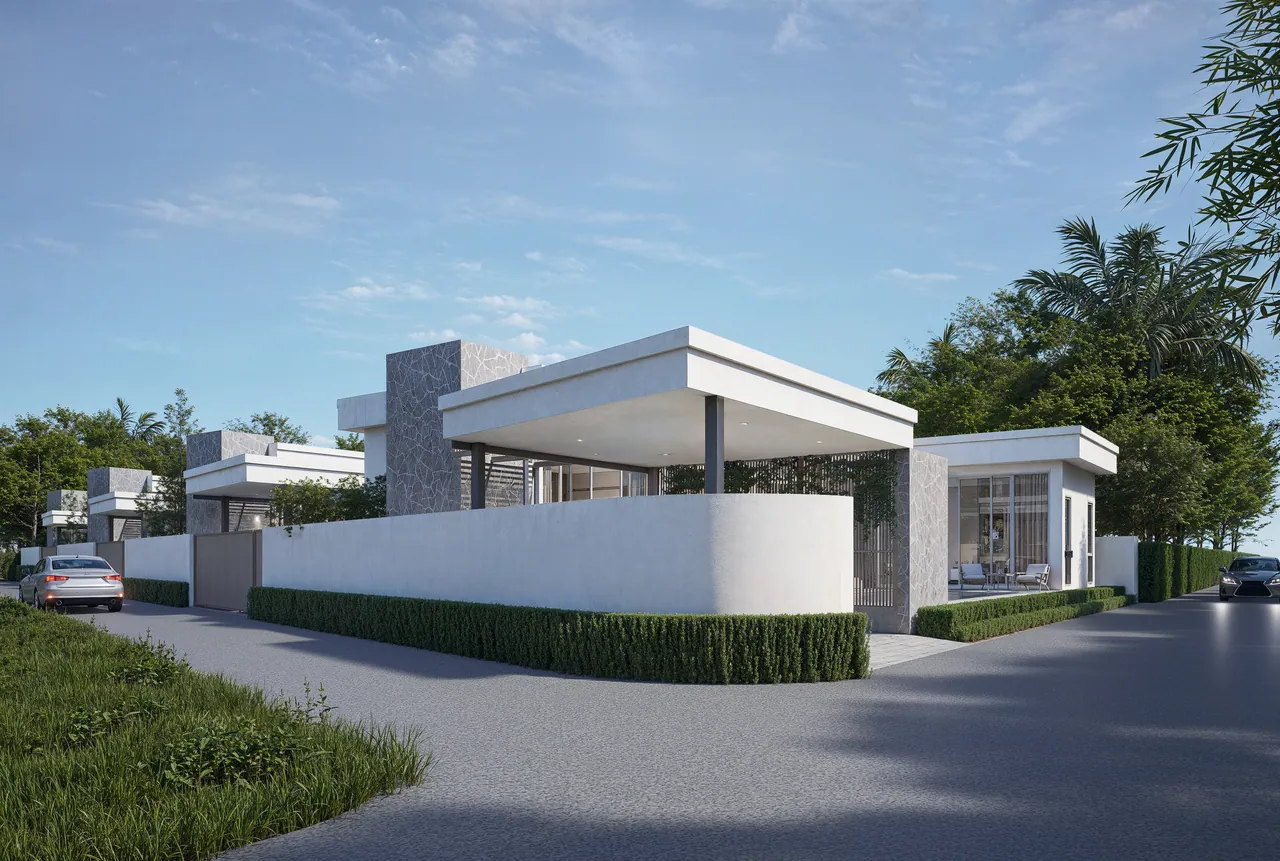
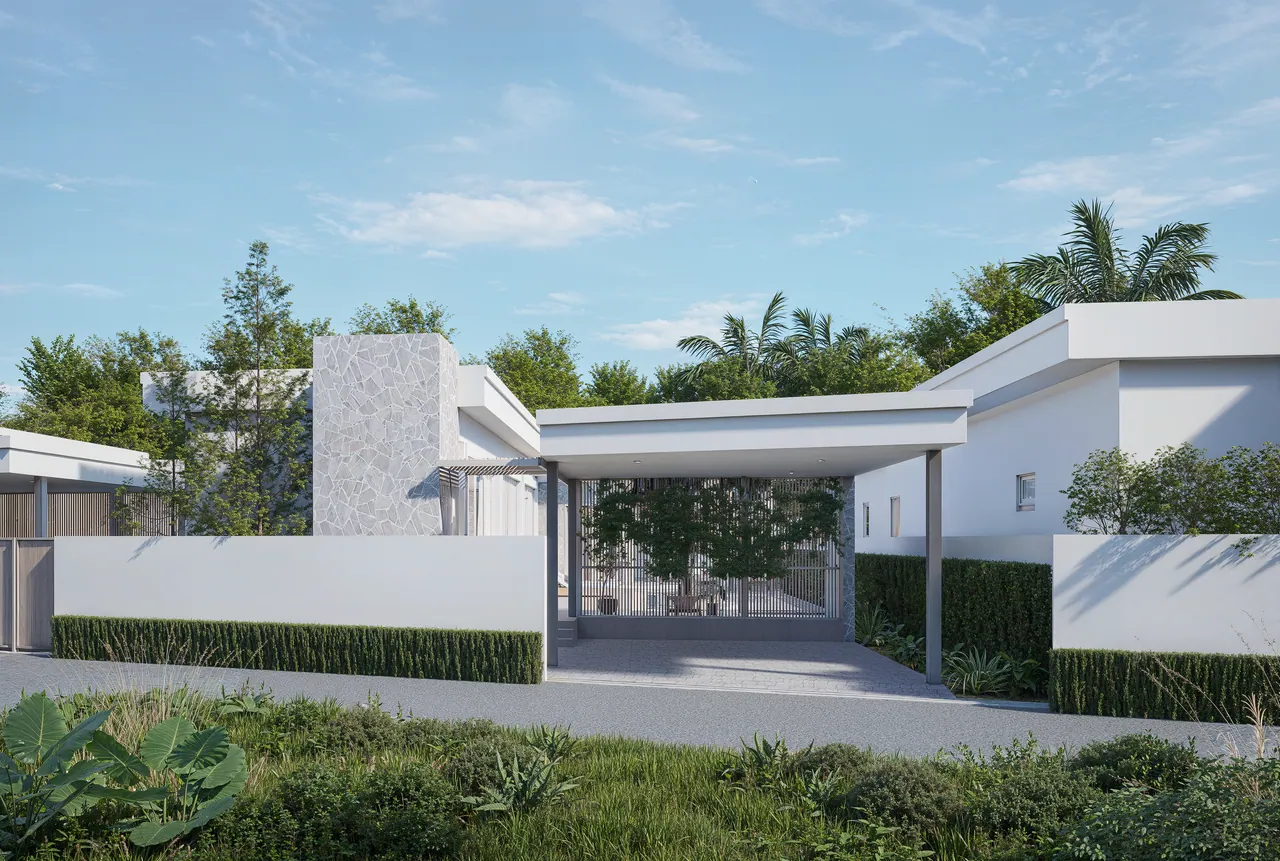
The Right Not to Be Seenสิทธิที่จะไม่อยู่ในสายตากันตลอดเวลา
Written by NATTHA / Natthapon Khemmueang
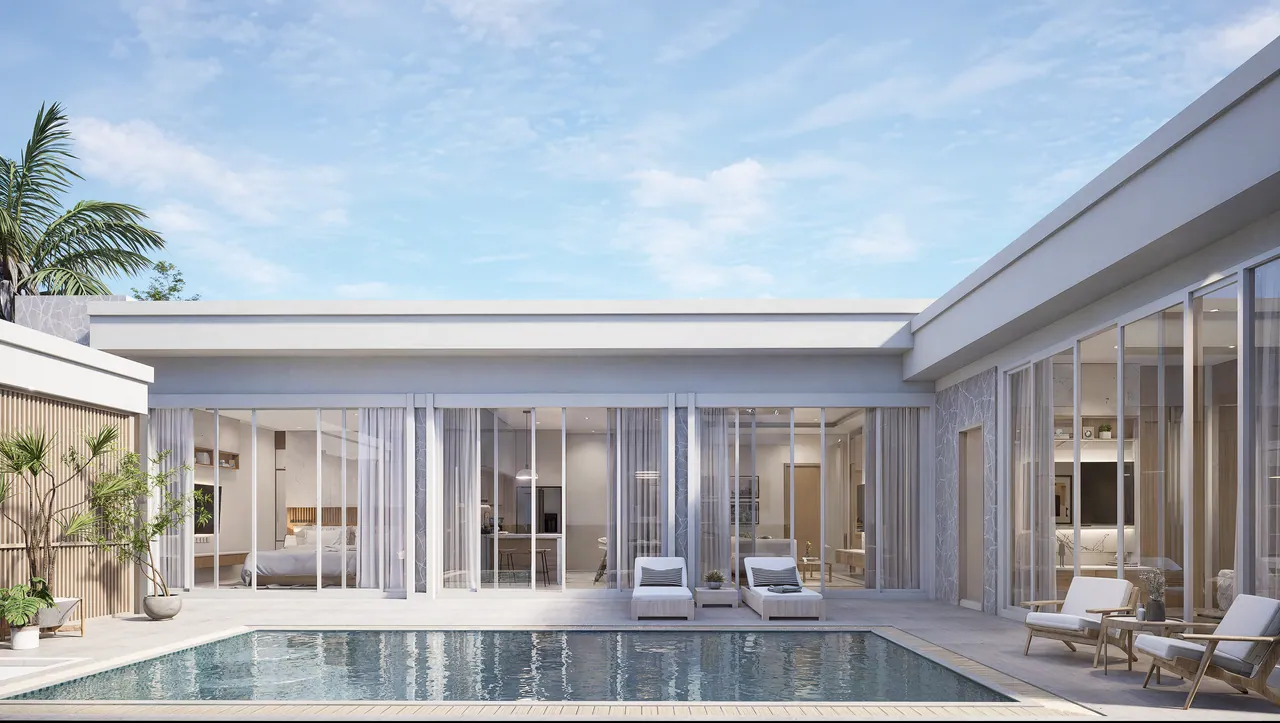
A view towards a pool can be generous and intrusive at once. At KO SAMUI, the design asks when seeing one another should remain a choice.
วิวสระว่ายน้ำอาจทั้งน่ามองและทำให้ผู้ใช้งานรู้สึกเปิดเผย KO SAMUI จึงตั้งคำถามว่าการมองเห็นกันควรเป็นสิทธิในการเลือกมากกว่าข้อบังคับของผังหรือไม่
Imagine opening your bedroom door and finding that everyone at the pool can see you before you have decided whether to join them. The view may be beautiful. The timing is less generous. Architecture makes small social decisions on our behalf every day where someone can stop without being noticed, where a greeting becomes inevitable, how far a glance can travel through a window. We tried to make those decisions negotiable in KO SAMUI.
ลองนึกถึงการเปิดประตูห้องนอน แล้วพบว่าคนที่นั่งอยู่ข้างสระมองเห็นเราได้ก่อนที่เราจะตัดสินใจด้วยซ้ำว่าจะออกไปร่วมวงหรือไม่ วิวข้างนอกอาจสวยมาก แต่จังหวะนั้นอาจไม่ใช่สิ่งที่เราต้องการ สถาปัตยกรรมตัดสินใจเรื่องสังคมเล็กๆ แทนเราอยู่เสมอ ใครจะเห็นเราเมื่อไร จะหลบมุมตรงไหนได้ และสายตาจากห้องหนึ่งจะไปหยุดที่จุดใด ผมจึงอยากให้ผัง KO SAMUI เปิดช่องว่างสำหรับการเลือก มากกว่ากำหนดว่าคนในบ้านต้องพบกันตลอดเวลา
The day begins differently for different people even when they wake under one roof. Someone enjoys seeing movement outside the bedroom. Someone else needs ten minutes without an audience. A door to the pool deck could be a privilege on a cheerful morning and a discomfort on an exhausted one. This is why I resist describing a private room as an island that must be cut off, or as a glass pavilion that must open to everything. Both descriptions make decisions too early for people we have not met.
เวลาเช้าของคนที่อยู่หลังคาเดียวกันอาจไม่เหมือนกันเลย บางคนชอบเปิดประตูออกมาเห็นความเคลื่อนไหว บางคนต้องการเวลาอีกสิบนาทีโดยยังไม่อยากพบใคร ประตูที่เปิดสู่ Pool Deck อาจเป็นข้อดีในเช้าที่อารมณ์แจ่มใส และกลายเป็นความอึดอัดในวันที่เหนื่อยมาก ผมจึงไม่ค่อยอยากให้ห้องส่วนตัวเป็นเหมือนเกาะที่ตัดขาดจากบ้าน และไม่อยากให้มันเป็นห้องกระจกที่ต้องเปิดให้ทุกสายตาเข้าถึง ทั้งสองคำตอบกำลังตัดสินใจแทนคนที่เรายังไม่รู้จักเร็วเกินไป
Two people can be together without sharing the same activity. One may swim while the other reads under shade. They may occasionally exchange a glance and return to their own worlds. I find this an interesting ambition for architecture because it cannot be guaranteed by installing a larger common room. It depends on distances, angles and whether each person can decide when to interrupt the other's solitude.
คนสองคนอาจอยู่ด้วยกันโดยไม่จำเป็นต้องทำกิจกรรมเดียวกัน คนหนึ่งลงสระ อีกคนนั่งอ่านหนังสือในร่ม บางครั้งสบตากันแล้วกลับไปอยู่กับสิ่งที่ตัวเองทำต่อ ผมสนใจความสัมพันธ์แบบนี้ เพราะมันไม่ได้เกิดขึ้นเพียงจากการทำห้องส่วนกลางให้ใหญ่ขึ้น แต่ต้องอาศัยระยะ มุมมอง และการที่แต่ละคนยังมีสิทธิเลือกว่าจะเข้าไปขัดจังหวะโลกของอีกฝ่ายเมื่อใด
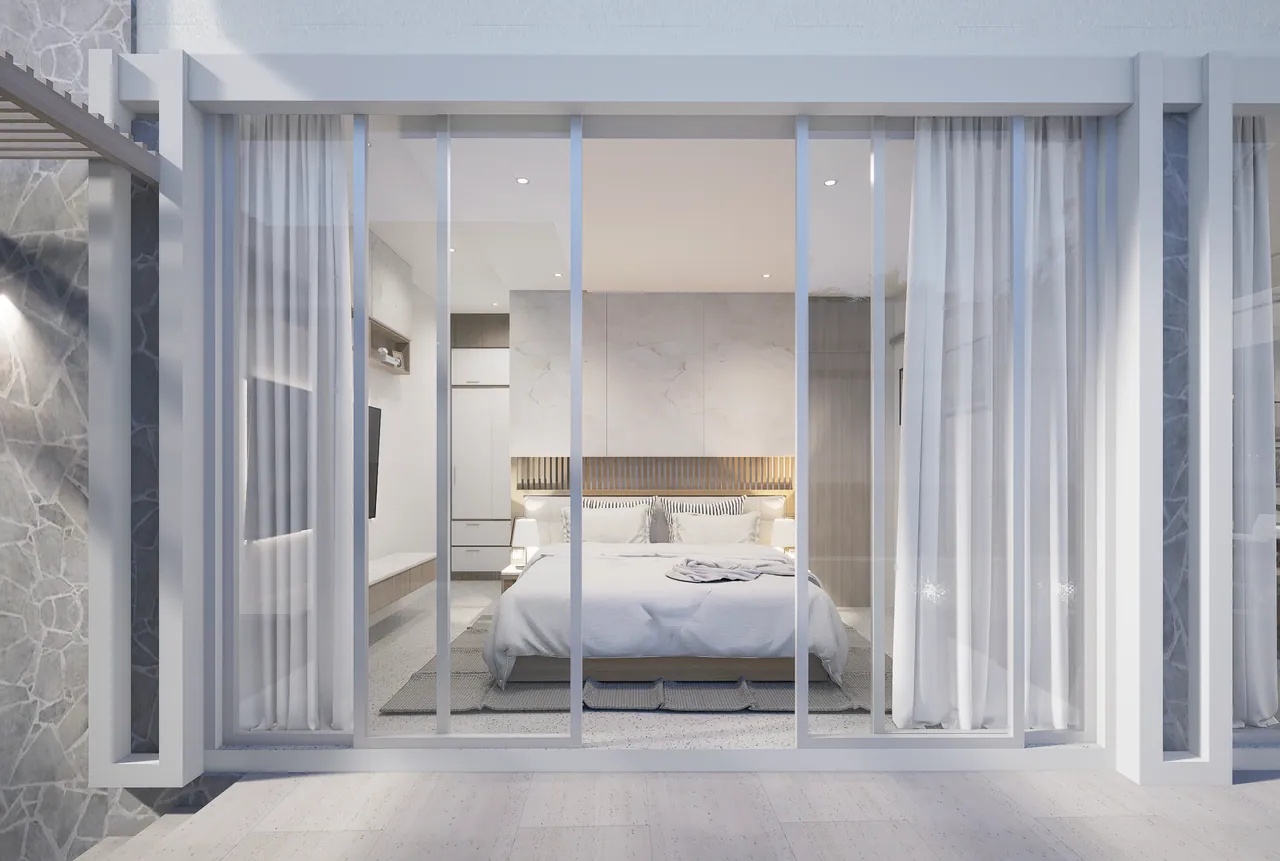
A curtain is a small device with a large social effect. Open it and the pool becomes part of the bedroom. Close it and the room becomes more self-contained. I mention a curtain as a way to test controllability, not to claim a specific window treatment has been selected. The same question extends to screens, doors and distances how many choices does a person have before their own presence becomes publicly legible to the rest of the house?
ผ้าม่านเป็นอุปกรณ์ชิ้นเล็กที่มีผลต่อความสัมพันธ์ไม่น้อย เปิดมันแล้วภาพสระเข้ามาเป็นส่วนหนึ่งของห้องนอน ปิดลงแล้วห้องกลับมาอยู่กับตัวเองมากขึ้น ผมยกผ้าม่านเป็นเครื่องมือทดสอบว่าผู้ใช้ควบคุมการมองเห็นได้เพียงใด ไม่ได้ยืนยันว่าโครงการเลือกม่านชนิดใดจริง คำถามเดียวกันส่งต่อไปถึงระแนง ประตู และระยะห่าง คนที่อยู่ในห้องมีทางเลือกมากแค่ไหนก่อนที่คนทั้งบ้านจะรับรู้การปรากฏตัวของเขา
Privacy often changes with the hour. An opening that hides a room in bright daylight may expose its interior when the lights are on at night. Planting that works as a visual filter from one direction may fail from a higher neighbouring viewpoint. So a single rendering taken under a single sky cannot establish the privacy of the pool court. It can show what the design intends. The rest requires sightline sections and the less glamorous work of checking both sides of the boundary.
ความเป็นส่วนตัวเปลี่ยนไปตามเวลาได้ ช่องเปิดที่ซ่อนห้องไว้ดีตอนกลางวันอาจเปิดเผยภายในเมื่อเราเปิดไฟตอนกลางคืน แนวต้นไม้ที่กรองสายตาจากระดับหนึ่งได้อาจไม่ช่วยเมื่อมีคนมองมาจากที่สูงกว่า ภาพเรนเดอร์ภายใต้ท้องฟ้าเพียงแบบเดียวจึงยังไม่รับรองว่า Pool Court เป็นส่วนตัวจริงได้ มันบอกเจตนาของแบบ ส่วนที่เหลือต้องใช้รูปตัดแนวสายตาและความขยันในการลองมองจากทั้งสองฝั่งของขอบเขต
The word community can hide an uncomfortable expectation that a good resident will always want company. I don't think that is a fair contract to build into a house. The shared pool and open-plan living room can offer occasions to meet, while distributed bedrooms provide another possibility, the ability to say no without making a speech. A well-placed door can be an ordinary form of tact, provided the shared heart remains worth visiting when someone chooses to come out.
คำว่า ‘สังคมเล็กๆ ’ ฟังอบอุ่น แต่แอบซ่อนความคาดหวังอยู่ข้อหนึ่งว่า คนที่อยู่ร่วมกันควรอยากเจอกันเสมอ ผมไม่คิดว่าเราควรบังคับข้อตกลงแบบนั้นลงในผังบ้าน สระว่ายน้ำกับห้องนั่งเล่นแบบเปิดอาจเป็นข้อเสนอให้คนออกมาพบกัน ส่วนการกระจายห้องนอนช่วยให้คนคนหนึ่งเลือกปฏิเสธการพบกันได้โดยไม่ต้องพูดอธิบายยาวๆ ประตูที่อยู่ถูกจุดจึงมีมารยาทของมันเอง ตราบเท่าที่พื้นที่ส่วนกลางยังน่าออกมาใช้งานเมื่อเขาพร้อม
The pool deck is a shared destination. The private rooms are not its satellites. Arranging C-shaped volumes let us explore a more complicated relationship separate quiet territories, a common open-plan living core, and multiple possible crossings between them. A resident may hear that people are gathering, look out, and still remain where they are. That should count as successful coexistence, not a failure of sociability.
Pool Deck เป็นพื้นที่ที่ชวนให้คนมารวมตัวกัน แต่ผมไม่อยากให้ห้องนอนทั้งหมดทำหน้าที่เพียงหันหน้าเข้าหามัน เราจึงใช้การจัดวางอาคารรูปตัว C และแยกห้องส่วนตัวไปตามแขนของผัง เพื่อให้มีระยะสงบของแต่ละคน ขณะเดียวกันก็มีห้องนั่งเล่นและพื้นที่รับประทานอาหารเป็นจุดที่เดินกลับมาพบกันได้ สมาชิกคนหนึ่งอาจเห็นแสงจากส่วนกลาง ได้ยินเสียงคนคุยกัน แล้วเลือกยังไม่ออกไปไหน ผมไม่คิดว่านั่นแปลว่าพื้นที่ส่วนกลางล้มเหลว
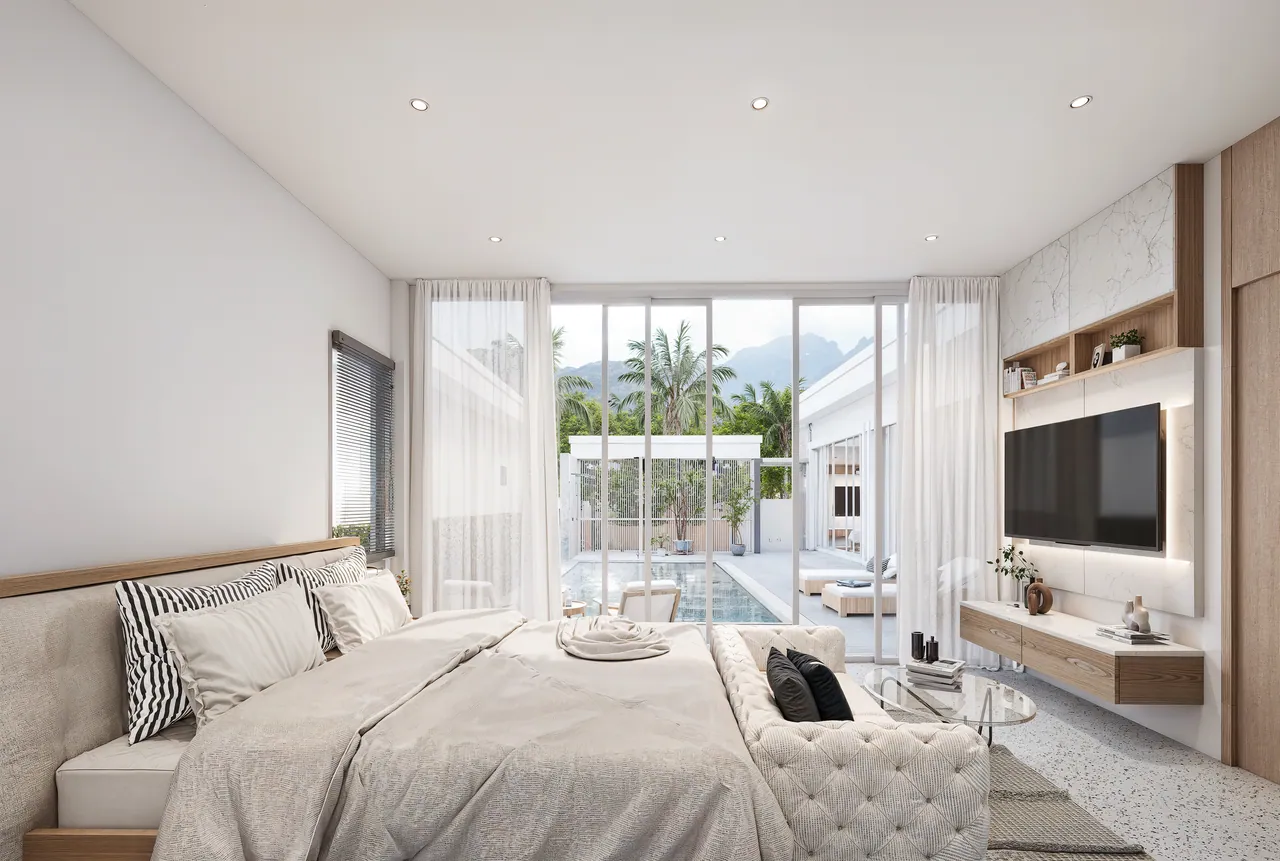
A bedroom window is never only a view outward. It is also an invitation for somebody outside to look back in. We tested the intention to connect private rooms to the pool deck against that uncomfortable reciprocity. Should the door face the busiest seat? Is there room to step out without appearing immediately at the centre of the gathering? Screens, planting and staggered openings can help shape degrees of visibility, although the actual result needs sightline checks and real dimensions.
หน้าต่างห้องนอนไม่ใช่แค่อุปกรณ์ให้คนมองออกไป เพราะมันเปิดโอกาสให้สายตาจากข้างนอกมองย้อนกลับเข้ามาได้ด้วย เราจึงต้องเอาความตั้งใจที่จะให้ห้องส่วนตัวเชื่อมกับ Pool Deck มาทดสอบกับความจริงข้อนี้ ประตูควรเปิดตรงเก้าอี้ที่คนชอบนั่งมากที่สุดหรือไม่ จะมีระยะให้คนออกจากห้องแล้วไม่ตกไปอยู่กลางวงสนทนาทันทีหรือเปล่า ระแนง พืช และช่องเปิดที่เยื้องกันอาจช่วยทำให้การมองเห็นมีหลายระดับ แต่ผลจริงยังต้องตรวจด้วยระยะและตำแหน่งสายตาที่แน่นอน
A sightline does not stop at a property boundary merely because the drawing stops there. The neighbouring side must be considered too a person beside the fence might see an angle that the designer's favourite camera misses. Before choosing screen spacing or the position of openings, we need measured plans, eye-level views from the boundaries and an understanding of how planting will actually grow. Privacy described from one attractive viewpoint is a fragile achievement.
แนวสายตาไม่ได้หยุดอยู่ตรงเส้นเขตที่ดินเพียงเพราะกระดาษแบบมีเส้นตรงนั้น เพื่อนบ้านอาจมองเห็นมุมที่กล้อง Perspective ไม่เคยถ่ายให้ดู ก่อนตัดสินใจระยะซี่ระแนงหรือทิศทางช่องเปิด เราจำเป็นต้องตรวจแปลนที่มีระยะจริง ลองมองจากระดับสายตาคนที่อยู่ข้างรั้ว และเข้าใจว่าต้นไม้จะโตเป็นรูปทรงอย่างไร ความเป็นส่วนตัวที่ดูสำเร็จจากมุมกล้องเพียงมุมเดียวเป็นความสำเร็จที่เปราะบางมาก
Privacy is often drawn as a line wall here, glass there. In reality it has degrees. A louver filters the view rather than ending it. A change in floor level changes where the eye naturally falls. A turn in the route gives a person a second before entering the scene. These devices work in combination. They also have limits, since actual views depend on eye height, neighbors, furniture and real use. The design must be checked from both sides of every threshold.
คำว่า Privacy ในแบบมักถูกย่อให้เหลือเส้นผนังทึบกับเส้นกระจก แต่ชีวิตจริงมีเฉดมากกว่านั้น ระเเนงอาจทำให้มองเห็นบางอย่างโดยไม่เปิดหมด การยกพื้นทำให้แนวสายตาเปลี่ยน การเลี้ยวทางเดินหนึ่งครั้งอาจให้เวลาเราเตรียมตัวก่อนก้าวเข้าหาคนอื่น สิ่งเหล่านี้ทำงานร่วมกันได้ แต่ไม่ได้ปลอดจากข้อผิดพลาด ระดับสายตาของคนยืนกับคนนั่งต่างกัน เพื่อนบ้านอาจมองจากมุมอื่น เฟอร์นิเจอร์จริงอาจเปลี่ยนภาพที่เราเห็น เราจึงต้องตรวจทั้งจากฝั่งคนมองและฝั่งคนถูกมอง ไม่ใช่ดูแค่ภาพมุมเดียว
Sound has an equally persistent habit of ignoring architectural diagrams. The screen can soften a view without making a late conversation disappear. A kitchen may be visually screened and still carry its activity through smell. A pool may be out of sight and still announce itself through voices and splashing water. The brief asked us to make a small community possible, and that includes deciding which forms of contact are welcome and which need distance. Walls, planting and level changes each address only part of the problem.
เสียงเองก็ไม่ค่อยเคารพเส้นในแบบ ระนาบระแนงอาจกรองสายตาได้ แต่ไม่ได้ทำให้เสียงวงสนทนาตอนดึกหายไป ครัวที่มองไม่เห็นกันอาจยังส่งกลิ่นเข้ามาได้ สระที่ถูกบังสายตาอาจยังมีเสียงคนคุยและเสียงน้ำกระทบขอบอยู่ ความตั้งใจสร้างสังคมเล็กๆ จึงต้องคิดด้วยว่าเรายอมรับการเชื่อมต่อชนิดไหน และอยากให้สิ่งใดมีระยะห่าง ผนัง ต้นไม้ และระดับพื้นต่างช่วยงานคนละส่วน ไม่มีอย่างไหนรับผิดชอบทุกเรื่องได้เพียงลำพัง
I would not want the person who enjoys company to become the standard against which everyone else is measured. Some residents will open their doors readily. Others will spend the morning quietly. Neither owes an explanation. By distributing rooms along the C-shaped arms, the proposal seeks to give the common deck and the private threshold different roles. It remains possible that a sound travels farther than a wall suggests. Visual separation must not be confused with acoustic isolation.
ผมไม่อยากให้คนที่ชอบพบปะเป็นมาตรฐานที่ทุกคนในบ้านต้องทำตาม บางคนเปิดประตูห้องออกมาพูดคุยได้ทันที บางคนใช้เวลาเช้าเงียบๆ โดยไม่ต้องอธิบายให้ใครฟัง การกระจายห้องตามแขนของรูปตัว C เป็นความพยายามแยกบทบาทของ Deck ส่วนกลางกับธรณีประตูส่วนตัวออกจากกัน ทว่าก็มีข้อจำกัด เสียงอาจเดินทางได้ไกลกว่าที่แนวผนังทำให้เรารู้สึกในภาพ การกรองสายตาไม่ได้แปลว่ากันเสียงได้ด้วย
There is a difference between being alone and being abandoned by the plan. If a bedroom sits far from the shared living room, that distance may protect quiet. It may also lengthen the trip to water, food or help. The desirable amount of separation depends on who actually stays here and what they can comfortably do. No social ideal is worth fixing into the geometry before we have tested its effect on movement and assistance.
การอยู่ลำพังกับการถูกผังทิ้งไว้ห่างจากทุกอย่างไม่ใช่เรื่องเดียวกัน ห้องนอนที่อยู่ห่างส่วนกลางอาจเงียบกว่า แต่ก็อาจเพิ่มระยะเดินไปน้ำ อาหาร หรือจุดที่มีคนช่วยเหลือได้ ระยะห่างเท่าไรจึงเหมาะจึงขึ้นกับผู้ที่จะมาใช้งานจริงและความสามารถในการเคลื่อนไหวของเขา ผมไม่อยากเอาอุดมคติเรื่องความเป็นส่วนตัวไปตรึงเป็นผัง ก่อนทดสอบว่ามันสร้างภาระต่อการเดินหรือการช่วยเหลือมากเกินไปหรือไม่
The need for privacy also changes over the course of a day. An opening that allows an easy greeting during breakfast might feel intrusive when someone returns to a bedroom at night. A deck that welcomes company when it is occupied can feel uncomfortably exposed when only one person is there. The plan is trying to leave room for those changes in intention, although actual sightlines and lighting conditions still require testing from the positions people will really occupy.
ความเป็นส่วนตัวยังเปลี่ยนไปตามช่วงเวลาของวันด้วย ช่องเปิดเดียวกันอาจเหมาะกับการทักทายกันตอนเช้า แต่ไม่เหมาะเมื่อใครสักคนกลับเข้าห้องนอนในตอนค่ำ Pool Deck ที่สนุกเมื่อมีคนรวมกันหลายคน อาจทำให้คนที่นั่งอยู่เพียงลำพังรู้สึกเปิดเผยเกินไป ผมจึงสนใจการให้ผังรองรับความตั้งใจที่เปลี่ยนไป มากกว่ากำหนดพฤติกรรมชุดเดียวให้คนทั้งบ้าน อย่างไรก็ตาม แนวสายตาและสภาพแสงจริงยังต้องทดสอบจากตำแหน่งและระดับสายตาของผู้ใช้งาน
A contrary possibility kept us honest. Suppose every room were so sheltered that its occupant could avoid everyone indefinitely. The building would succeed at preventing unwanted contact, and may lose the very social life the owner hoped to encourage. We were seeking an arrangement that allowed meetings to happen without turning them into compulsory events. That balance is more fragile than any line labelled PRIVACY on a drawing.
มีอีกสมมติฐานหนึ่งที่คอยดึงเราไม่ให้มั่นใจเกินไป ลองนึกว่าทุกห้องถูกปกป้องดีจนคนอยู่สามารถหลบทุกคนได้ตลอด บ้านอาจประสบความสำเร็จในการลดการรบกวน แต่ทำให้สังคมเล็กๆ ที่เจ้าของอยากให้เกิดไม่มีชีวิตไปพร้อมกัน เราจึงพยายามเหลือโอกาสให้คนพบกันได้ โดยไม่เปลี่ยนโอกาสนั้นเป็นหน้าที่ที่ทุกคนต้องทำ สมดุลแบบนี้เปราะบางกว่าเส้นในแบบที่เราเขียนกำกับว่า PRIVACY มากนัก
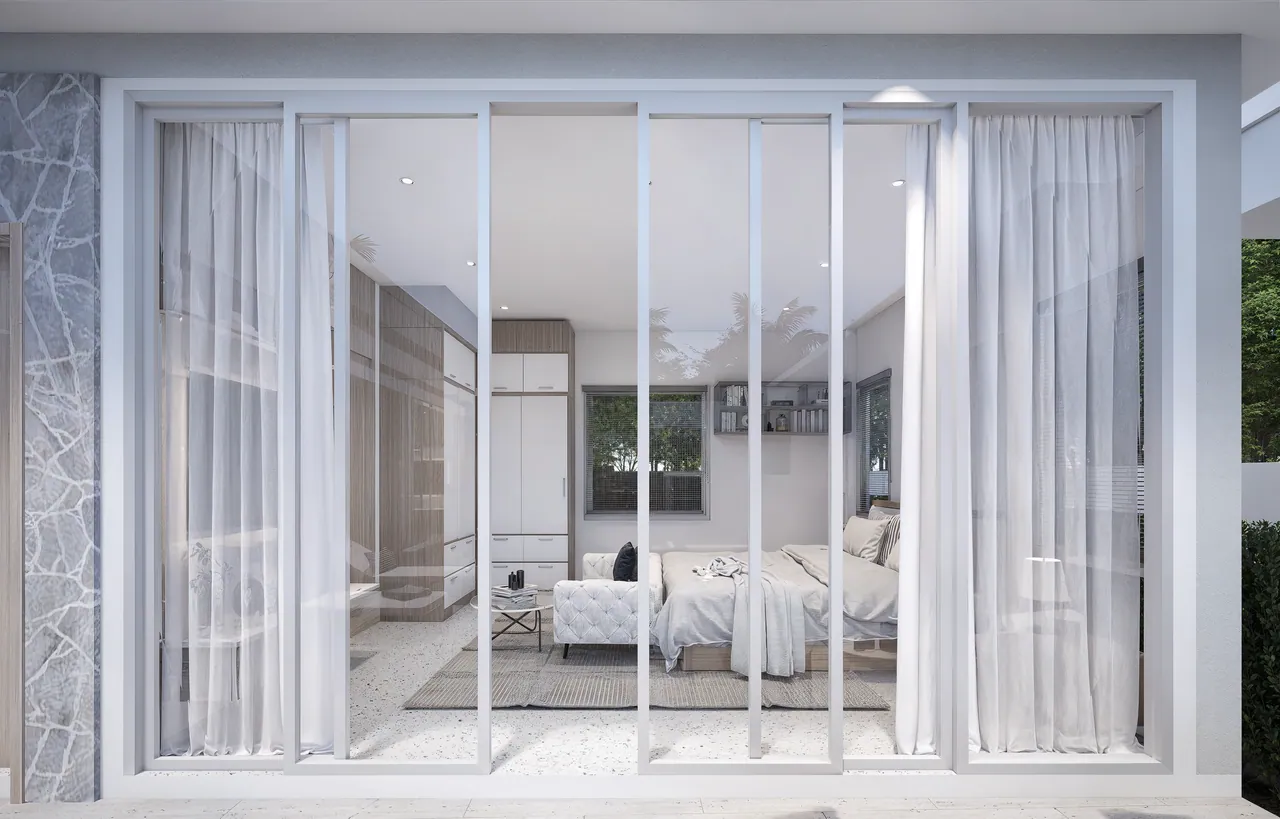
There are two cameras in this house that ought never to be confused. One is the architectural camera that searches for a persuasive perspective. The other is the eye of someone walking from a bedroom to the kitchen while half awake. The first can make the pool appear generously connected to every room. The second might notice that crossing a sightline means being visible before getting dressed for company. I want the second camera to have the final word when those two readings disagree.
ในบ้านหลังนี้มีสายตาสองแบบที่ผมอยากให้เราแยกกัน แบบแรกคือสายตากล้องสถาปัตยกรรมที่เลือกมุมให้ภาพดูน่าสนใจ อีกแบบคือสายตาคนที่เพิ่งตื่นและกำลังเดินจากห้องนอนไปครัว แบบแรกอาจทำให้สระดูเชื่อมกับทุกห้องอย่างงดงาม ส่วนแบบหลังอาจสังเกตว่าต้องเดินผ่านแนวที่คนอื่นมองเห็นก่อนจะพร้อมพบใคร เมื่อสองสายตานี้ขัดกัน ผมอยากให้ประสบการณ์ของคนที่ต้องใช้เส้นทางทุกวันมีน้ำหนักตัดสินมากกว่าภาพนำเสนอ
There is a counterargument worth keeping. Too much separation can make a group of rooms feel lonely, and visual screening can accidentally erase the easy exchanges that make shared living pleasant. I would not prescribe this arrangement for every household. What matters is the brief and the particular kind of togetherness it asks for. At KO SAMUI the aim was neither complete enclosure nor compulsory openness. We wanted people to be able to notice one another without always having to perform their presence.
แน่นอนว่าแยกกันมากเกินไปก็มีปัญหา บ้านอาจกลายเป็นกลุ่มห้องพักที่คนแทบไม่เจอกัน ระแนงที่บังมิดเกินไปอาจตัดบทสนทนาสั้นๆ ที่ทำให้การอยู่ร่วมกันสนุก ผมจึงไม่คิดว่าวิธีนี้ใช้ได้กับทุกครอบครัวหรือทุกโครงการ สิ่งที่ต้องถามคือคนกลุ่มนี้อยากใกล้กันแบบไหน สำหรับ KO SAMUI เราไม่ได้เลือกความปิดทึบ และก็ไม่ได้เลือกความเปิดโล่งจนไร้ขอบเขต เราพยายามหาจุดที่คนยังรับรู้ถึงกันได้ โดยไม่ต้องแสดงตัวตนให้กันเห็นทุกเวลา
The open centre needs its own mercy. If it becomes the only route between every activity, it risks turning all movement into public performance. If we avoid it entirely, that attractive central room could become a place people only occupy when they make a special plan. At KO SAMUI the C-shaped organisation lets us investigate several degrees of crossing and connection. The arrangement is promising, but a furniture plan and movement study are still needed to test whether people may join casually without blocking someone who simply wishes to pass.
พื้นที่ Open Plan ตรงกลางก็ต้องมีความพอดีของมัน ถ้ามันเป็นทางผ่านเพียงเส้นเดียวของทุกกิจกรรม ทุกการเดินอาจกลายเป็นการปรากฏตัวต่อสายตาคนอื่น แต่ถ้าทุกคนเลี่ยงมันได้ทั้งหมด ห้องสวยตรงกลางก็อาจกลายเป็นพื้นที่ที่ต้องนัดหมายก่อนถึงจะมีคนใช้ การจัดแขนอาคารรูปตัว C ทำให้เราศึกษาระดับการเชื่อมต่อหลายแบบได้ แต่ยังต้องลงรายละเอียดเฟอร์นิเจอร์และจำลองการเดินจริง เพื่อดูว่าคนเข้ามาร่วมวงได้อย่างเป็นธรรมชาติ โดยไม่ขวางทางคนที่เพียงอยากเดินผ่าน
What interests me most is not a perfectly empty sightline diagram. It is the moment someone notices another person but does not feel obliged to cross the space. A glance can be enough. So can a greeting from a distance. The architecture's possible contribution is to allow an encounter to remain optional. Whether residents actually use that freedom is theirs to decide. It cannot be measured from our intentions.
สิ่งที่ผมสนใจมากที่สุดไม่ใช่ Diagram แนวสายตาที่สะอาดจนไม่มีอะไรชนกันเลย แต่เป็นจังหวะที่คนหนึ่งเห็นอีกคน แล้วไม่จำเป็นต้องเดินเข้าไปหา การสบตาอาจเพียงพอแล้ว หรือทักกันจากระยะไกลก่อนต่างคนต่างทำสิ่งของตัวเองต่อ สถาปัตยกรรมอาจช่วยทำให้การพบกันยังเป็นทางเลือก ส่วนผู้อยู่อาศัยจะใช้เสรีภาพนั้นจริงอย่างไร เป็นเรื่องที่เราตัดสินจากความตั้งใจในแบบแทนเขาไม่ได้
The experiment becomes less glamorous when we change the question from 'Is this room private?' to 'Private from whom, when, and under what light?' That is the question I would want the plan, section and detail to keep answering as they develop. A peaceful rendering offers only one reply. A home will be asked again every morning and evening.
งานทดลองเริ่มจริงจังขึ้นทันทีเมื่อเราเลิกถามว่าห้องนี้ส่วนตัวหรือไม่ แล้วถามใหม่ว่า ส่วนตัวจากใคร ในเวลาไหน และภายใต้แสงแบบใด ผมอยากให้ผัง รูปตัด และรายละเอียดตอบคำถามนี้ต่อไปตลอดการพัฒนาแบบ ภาพที่สงบงามตอบได้เพียงครั้งเดียว แต่บ้านจะถูกถามคำถามเดิมอีกทุกเช้าและเย็น
Sometimes the most considerate invitation is a door that can be left closed without causing offence.
บางทีสิ่งที่สุภาพที่สุดในบ้านหนึ่งหลัง อาจเป็นประตูที่เราปิดได้โดยไม่มีใครต้องรู้สึกว่าถูกปฏิเสธ
A measure of privacy may also be whether a person can change their mind. A door can remain open during a conversation and close when rest becomes more important. A sheltered sitting place can still have a route towards the pool. What looks like an imperfect compromise in a plan may be exactly the freedom required by a shared home. We do not have the right to decide beforehand how sociable an unknown inhabitant must be.
อีกวิธีดูความเป็นส่วนตัวคือคนในบ้านเปลี่ยนใจได้หรือไม่ ประตูบานหนึ่งเปิดไว้ขณะพูดคุย แล้วปิดลงเมื่ออยากพักได้ ที่นั่งหลบมุมอาจยังมีทางเดินต่อไปยังสระ สิ่งที่ดูเหมือนประนีประนอมไม่สมบูรณ์แบบในแปลนอาจเป็นอิสระที่บ้านใช้ร่วมกันต้องการที่สุด ผมไม่มีสิทธิกำหนดไว้ล่วงหน้าว่าผู้อยู่อาศัยที่ยังไม่รู้จักจะต้องเข้ากับคนอื่นมากเพียงใด
I like that the question remains unfinished. The best plan can offer choices, but it cannot read the mood of the next person who comes to stay. One afternoon, an open door will be an invitation. On another day, a closed one may be an act of care for the relationship. A house worth sharing ought to have room for both.
ผมชอบที่คำถามนี้ยังไม่ต้องมีตอนจบแน่นอน ผังที่คิดมาดีอาจเปิดทางเลือกได้หลายแบบ แต่ไม่มีทางอ่านอารมณ์ของคนที่จะเข้ามาพักคนต่อไปได้ บ่ายวันหนึ่งประตูเปิดอาจเป็นคำเชิญให้เข้ามาคุยกัน อีกวันประตูปิดอาจเป็นการดูแลความสัมพันธ์ด้วยการปล่อยให้อีกคนอยู่ลำพัง บ้านที่เหมาะกับการแบ่งปันน่าจะมีที่ให้ทั้งสองอย่าง
PROJECT CREDIT
Design Direction NATTHA / Natthapon Khemmueang
Design Development & Project Delivery Piaoform Studio